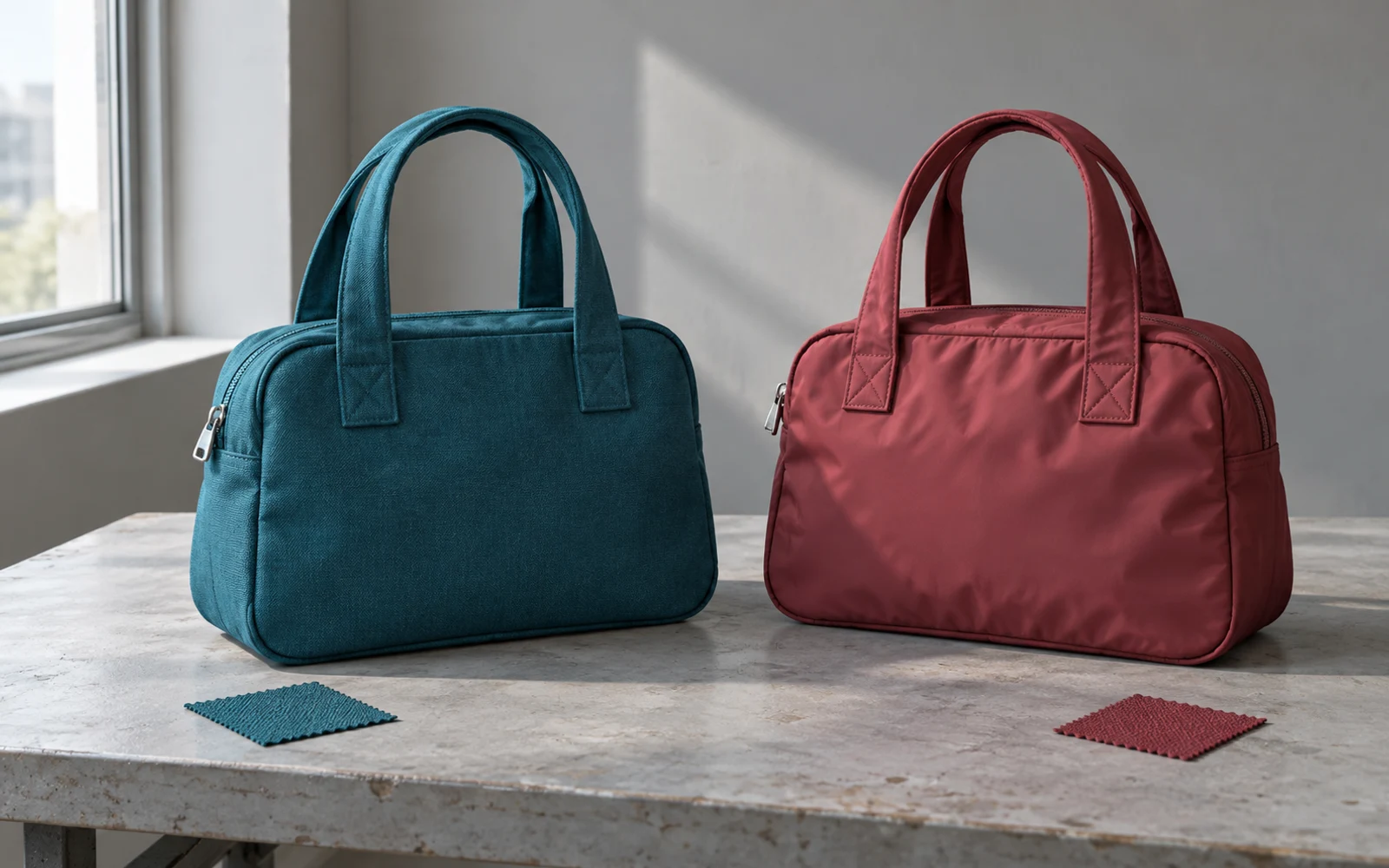
A buyer often asks, "Should this handbag be canvas or nylon?" That is a useful question, but it is not the first one a factory can answer responsibly. The better starting point is the bag brief: silhouette, size, expected softness, closure, strap construction, branding position, color plan, and how the finished product should sit on a retail shelf or product page.
Canvas and nylon can both work for custom fashion handbags, but they solve different problems. Canvas usually describes a woven fabric construction and surface character. Nylon describes a fiber family, and the final fabric still depends on yarn, weave, coating, finish, lining, and reinforcement. In real development, "canvas versus nylon" is not a simple winner list. It is a sampling decision.
At Christori, we treat fabric handbags as custom development unless a ready stock style is confirmed separately. For custom canvas or nylon handbag projects, the current planning MOQ is 200 pcs / style / color. Price, sample fee, schedule, and exact fabric availability still need to be checked against the final specification.
Start with the Handbag Brief, Not a Fabric Winner
Silhouette, carry needs and brand positioning
A compact underarm bag, a relaxed tote, and a structured flap shoulder bag do not ask the fabric to do the same job. Before choosing canvas or nylon, define the body shape and the parts that carry stress: top opening, zipper edge, shoulder strap, side seams, bottom panel, and any trim or logo area.
A soft hobo style may tolerate more fabric movement, while a structured tote needs support so the side panels do not collapse. A zip-top shoulder bag needs a stable zipper edge; a drawstring bucket bag needs the upper opening to gather cleanly. If you review tote bag silhouettes as a shape reference, treat the collection page as a style starting point, not a promise that every existing style can be changed into fabric without rechecking the pattern.
Define the actual fabric specification
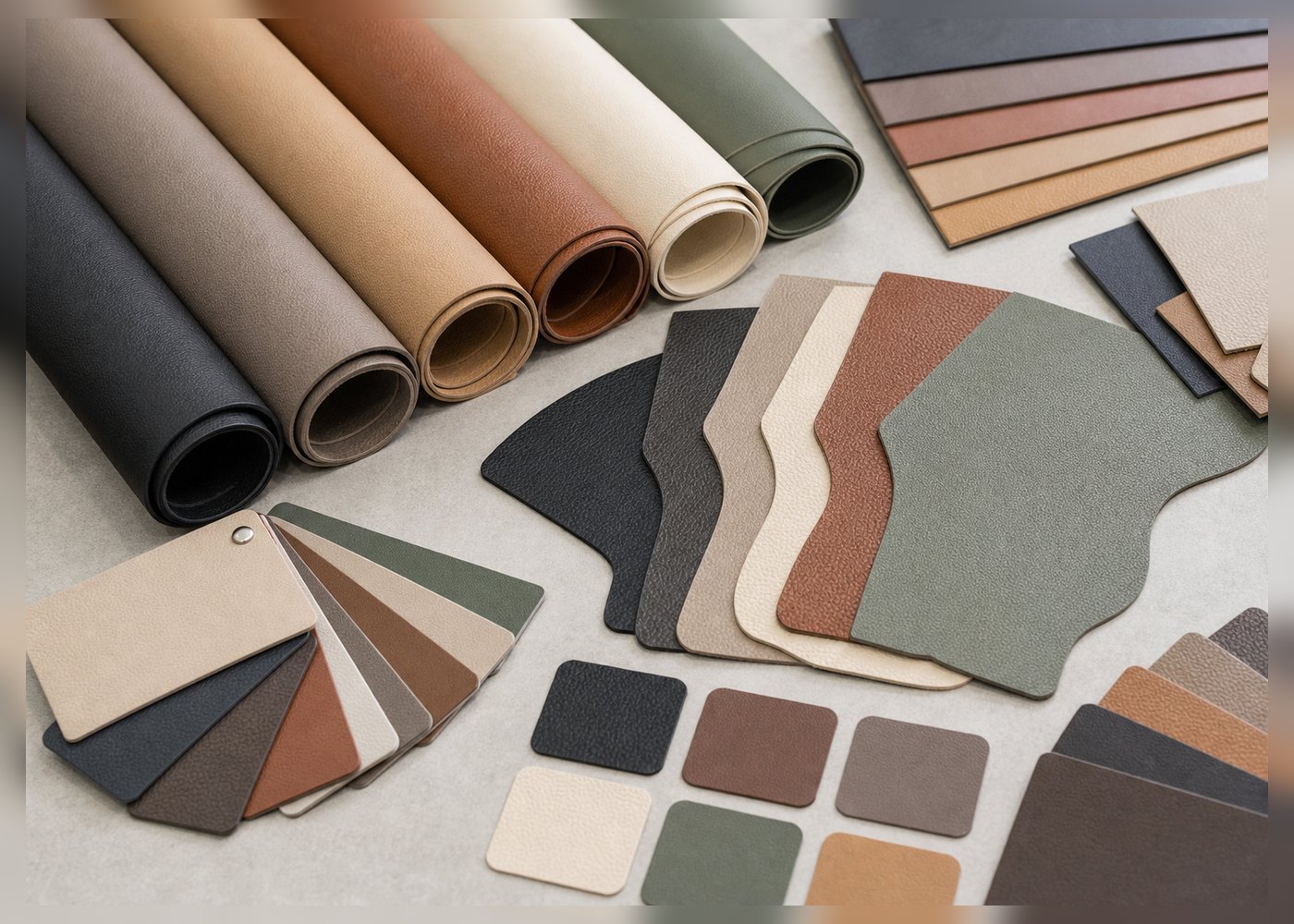
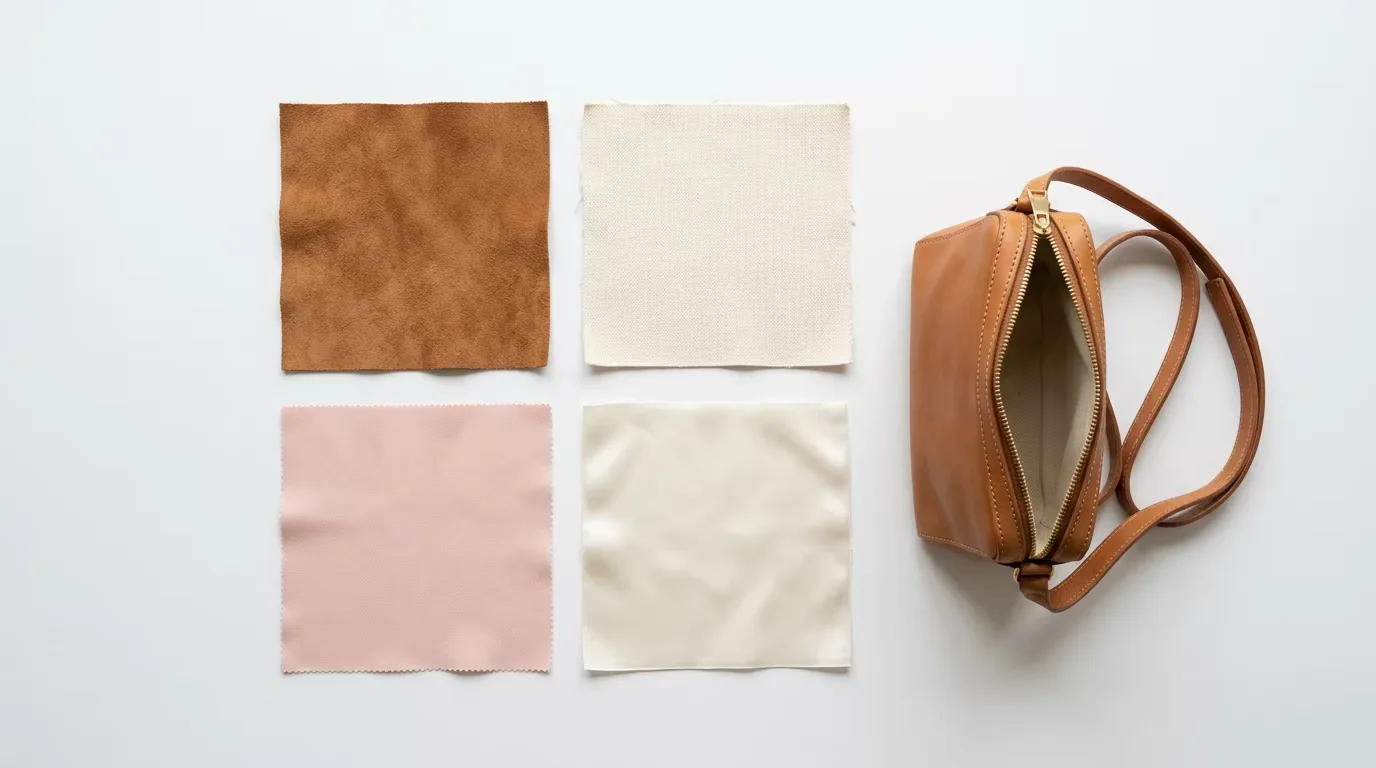
Do not send a factory a brief that says only "canvas bag" or "nylon bag." The team needs the intended outer fabric, color, hand feel, finish, and whether the fabric will be combined with PU, leather, webbing, or metal hardware. If the material is canvas, confirm the composition and weave. If the material is nylon, confirm the construction and any surface finish. Avoid assuming that thicker cloth or higher denier is automatically better; the sample has to prove it.
Compare Canvas and Nylon in the Same Design
| Sourcing point | Canvas outer fabric | Nylon outer fabric | What the buyer should check |
|---|---|---|---|
| Surface look | Usually matte with visible weave and tactile hand | Can be smooth, fine woven, crisp, or slightly technical | Review swatches in the final color, not only white or black |
| Drape and body | May need backing if the style must stand | May need padding or bonding to avoid a thin look | Fold the swatch over a curved form and check recovery |
| Stitching | Needle marks and seam bulk can be visible | Needle tension and zipper waves can show on lighter fabrics | Inspect seams under normal light and at stress points |
| Branding | Works with patches, labels, embroidery, or selected printing routes | Branding depends heavily on surface finish and backing | Test the real artwork at real size before bulk |
| Lining and support | Often benefits from planned lining, base support, and handle reinforcement | Often needs careful edge, zipper, and strap-area stabilization | Confirm interior, support layer, and attachment method together |
For canvas, review canvas material options for handbag development with the outer bag use in mind. For nylon, compare nylon material options for custom handbags without assuming that every nylon fabric is water-resistant or suitable for the same construction.
Surface, drape and structure
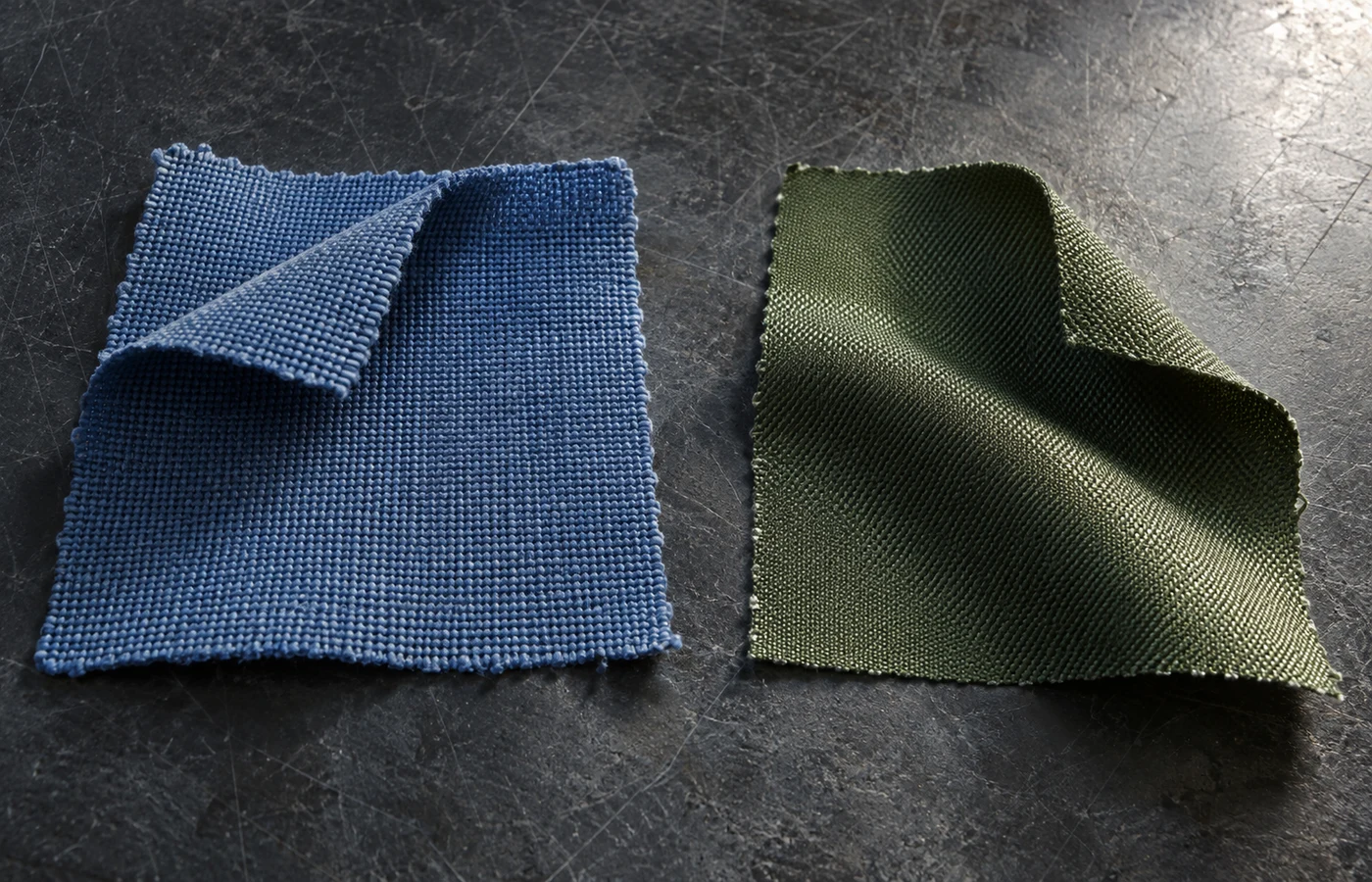
When swatches arrive, bend the fabric, fold a corner, place it over a curved form, and check how it returns. Canvas can become bulky around tight curves. Nylon can show ripples around a zipper or pocket opening if it is too light for the pattern.
Lining, base and strap attachments
The outer fabric is only one layer of the bag. A fabric handbag normally needs the lining, base support, edge handling, and strap attachments to be planned together. Lining affects pocket placement, zipper clearance, internal feel, and how the bag body recovers after packing. Buyers who need more detail can review handbag lining and interior options before finalizing the sample brief.
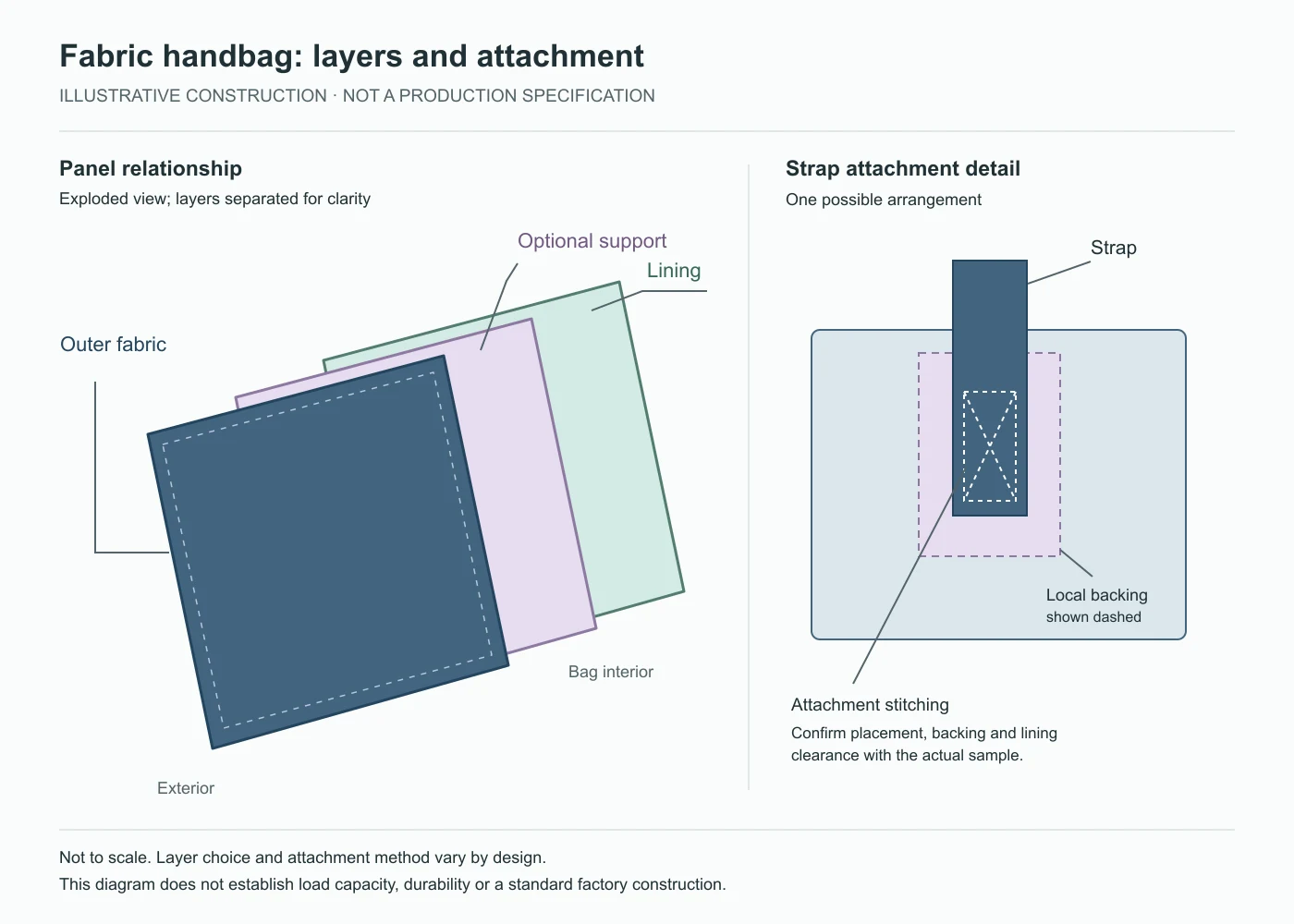
For the structure diagram below, read it as a relationship map. The outer fabric sits outside; an optional support layer may be added where shape or stability is needed; the lining forms the interior; and the strap attachment area may need local backing so stress is not held by the outer shell alone. This is not a paper pattern or sewing standard. The right method depends on the selected fabric, bag size, strap width, use expectations, and sample result.
Plan Branding Before the First Sample
Label, patch or embroidery placement
Branding should be discussed before the first sample, not after the bag shape is already approved. A logo near a seam may need extra clearance. A patch can stiffen the panel below it. Embroidery may affect the reverse side of the fabric and may need lining or backing to hide the thread path. Printing can depend on surface finish and color contrast. A woven label may be cleaner for a first small fabric program than a large technical logo treatment.
Use private label handbag options as a planning reference, but keep the brief specific to this bag. Send artwork size, position, color, and acceptable reverse-side appearance. The factory can then tell you which methods are practical enough to sample.
Test the actual artwork on the chosen fabric
Do not approve branding from a mockup alone. Ask to see the logo on the actual fabric or a production-relevant swatch. The sample must prove legibility, placement, and proportion before bulk materials are ordered.
Separate Cost Drivers from Custom MOQ
Fabric sourcing versus bag assembly
Fabric choice affects cost, but not in one simple direction. The real drivers include fabric sourcing, color availability, usable width, cutting yield, lining, support layers, hardware, sewing complexity, logo method, and packaging.
For development route planning, compare OEM and ODM development routes early. ODM may begin from an existing pattern if the structure can accept the fabric. OEM is more appropriate when the pattern, dimensions, panel structure, or brand details are original.
Quantity per style and color
For custom fabric handbag development, use 200 pcs / style / color as the planning MOQ. If the same style is ordered in two colors, that means 200 pieces for each color under this planning rule, or 400 pieces total. This is a quantity calculation, not a price promise. Existing ready stock handbags and light customization need to be checked style by style, because stock route, available colors, and branding feasibility are separate from a custom fabric MOQ.
Approve Fabric and Construction Before Bulk Production
Swatch and construction review
A practical sequence is: send the brief, confirm fabric direction, review swatches, evaluate structure and branding, make a sample, give written feedback, revise if needed, and approve the final reference before arranging bulk production. Record each decision clearly enough for the production team to repeat it.
Do not treat a water-repellent surface as a waterproof bag promise. Do not assume colorfastness, abrasion resistance, or shape recovery from a photo. If your market needs a formal claim, the test method and acceptance level should be agreed separately with the supplier before the order is confirmed.
A practical sample sign-off checklist
Before approving a canvas or nylon handbag sample, check:
- Outer fabric color, surface, hand feel, and visible weave against the approved swatch.
- Wrinkles, seam puckering, zipper waves, and corner bulk under normal viewing light.
- Strap attachment, handle base, and local backing around stress points.
- Bag shape after light filling and after being placed on a flat surface.
- Lining clearance, pocket placement, zipper movement, and interior neatness.
- Logo method, size, position, edge finish, and reverse-side appearance.
- Packaging recovery after the bag has been stuffed, wrapped, and unpacked.
Buyer FAQ and the Next Sourcing Step
Is canvas always cotton?
No. Canvas often refers to a woven fabric structure, but the composition can vary. It may be cotton, a blend, or another construction sold under a canvas description. Ask for the actual composition and finish instead of relying on the name alone.
Is a nylon handbag automatically waterproof?
No. Nylon is a fiber; the final handbag depends on fabric construction, finish, coating, seams, zipper, lining, and closure. A fabric may have a water-repellent surface without making the whole bag waterproof.
Does 200 pieces apply to ready stock?
No. The 200 pcs / style / color planning rule applies to custom fabric handbag development. Ready stock and light customization depend on the available style, color, stock status, and branding request at the time of inquiry.
What should I send for a fabric handbag quote?
Send the bag type or reference, target dimensions in W x H x D, canvas or nylon preference, quantity by style and color, logo artwork and position, lining and pocket needs, packaging request, destination market, and whether you need a sample before bulk approval.
Technical References
These industry resources explain the material and testing concepts used above. They do not certify Christori, verify the illustrated fabrics, or report test results for our handbags.
- CottonWorks: Basic Woven Fabric Designs lists canvas among plain-weave fabrics and explains yarn interlacing. This supports reviewing weave structure alongside the actual fiber composition.
- Advanced Textiles Association: Fabric facts explains how fiber, yarn, structure, and finish combine to determine fabric properties. Although written for printing substrates, its terminology helps frame the fabric specification questions in this guide.
- AATCC: The Art of Testing: Water Repellency describes TM22 as an assessment of fabric resistance to surface wetting. This explains the scope of a water-repellency check; it does not establish that a finished handbag is waterproof.
Discuss Your Canvas or Nylon Handbag Project
If you are comparing fabric choices for a custom handbag line, prepare your style reference, material direction, quantity by style and color, and branding position. Christori can review whether canvas, nylon, or another fabric route is practical for sampling, then help you discuss a fabric handbag project with the details needed for a factory quotation.
B2B Buyer Checklist
Before you request a quote, prepare the information that affects MOQ, sample cost, lead time and final unit price.
- Target product category, size and reference images.
- Expected order quantity per style and per color.
- Material preference, lining requirements and hardware finish.
- Logo method, packaging items and delivery country.
- Target retail price or target factory price range.
Decision Table
| Buyer Question | Why It Matters | What to Send the Factory |
|---|---|---|
| What is my MOQ target? | MOQ affects material sourcing, production planning and unit price. | Quantity per style, per color and launch schedule. |
| Which material should I choose? | Material controls price band, durability and brand positioning. | Reference photos, desired texture and target market. |
| How much customization do I need? | Logo, lining, hardware and packaging change sample time and cost. | Logo files, packaging references and required details. |
| What is my delivery deadline? | Sampling, production and shipping need realistic planning. | Launch date, delivery country and preferred shipping method. |