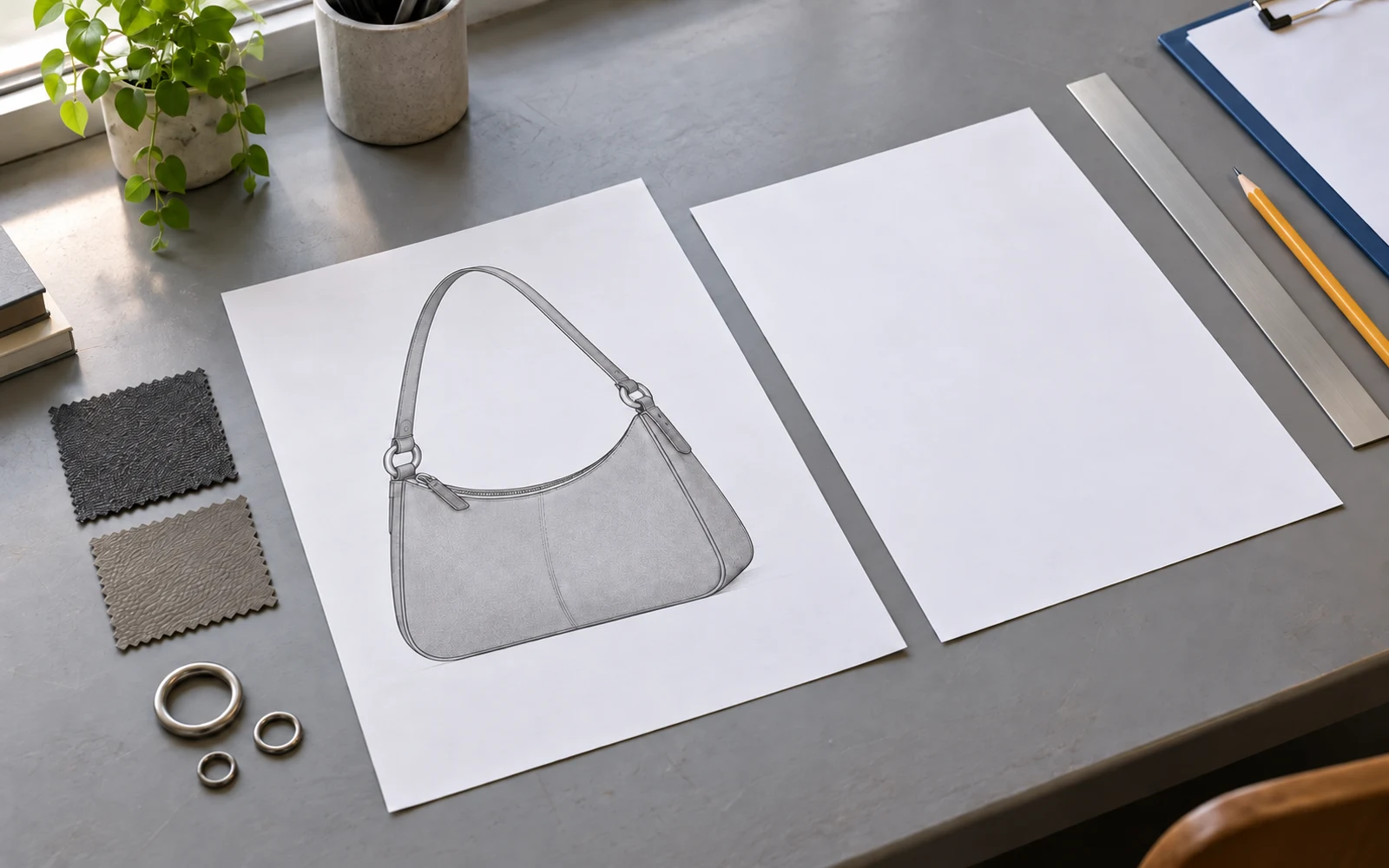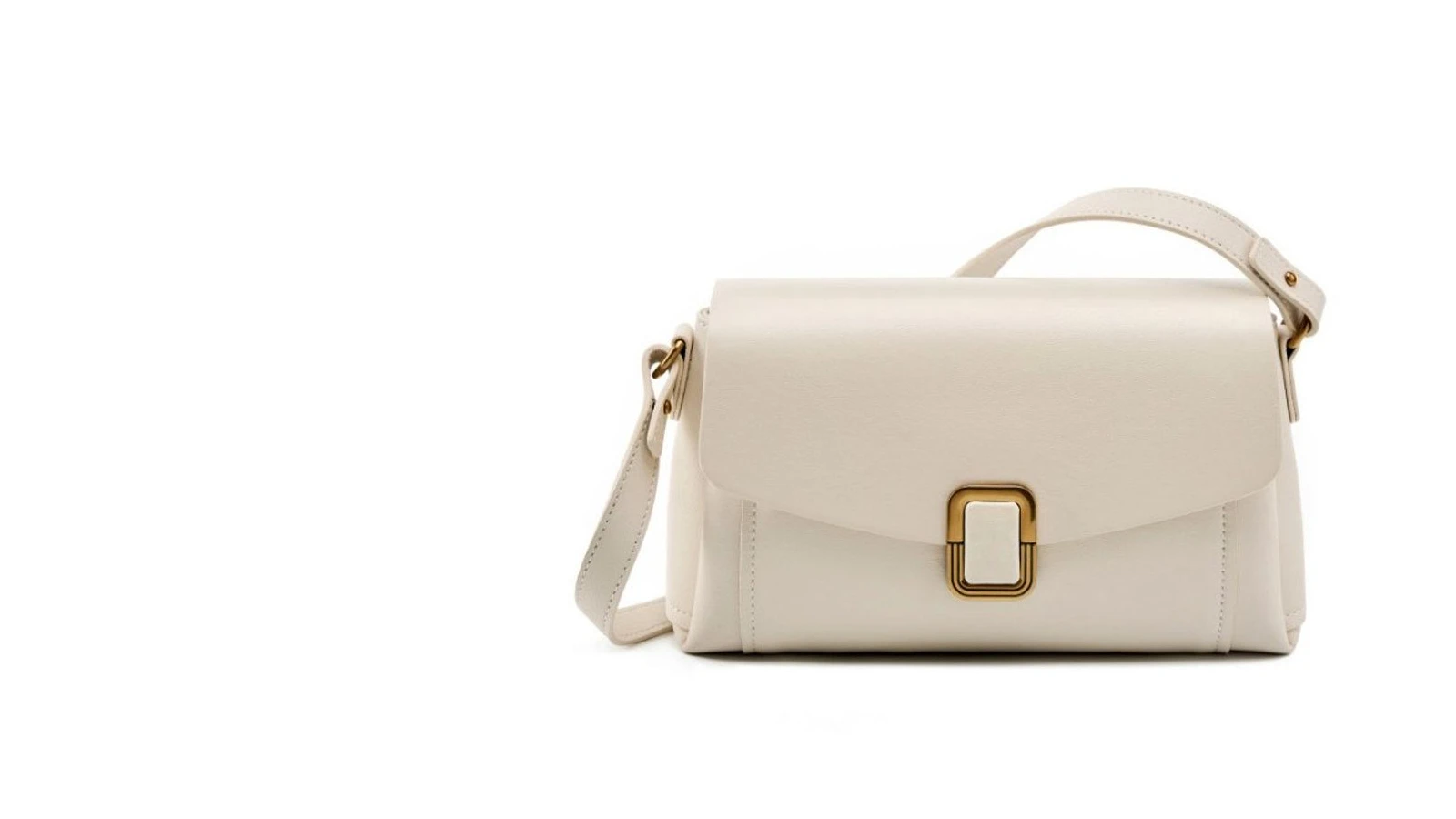
Before a crossbody bag quote or sample, confirm the strap type, material, width, length endpoints, usable adjustment range and drop measurement method. Mark attachment positions and identify hooks, rings, adjusters and closures in a component list. Separate confirmed choices from open questions, then agree which connections, finishes and functions the physical sample must demonstrate.
A photograph can communicate the shape you want without answering any of those questions. For a private-label buyer, the practical job is to turn that shape into instructions that purchasing, sampling and production can read the same way. This guide focuses on the carry system and its connection to the bag, rather than choosing dimensions for a retail market.
Choose the Strap System Before Selecting Components
Start with the intended function. Does the strap stay on the bag, detach for packing, or adjust between agreed carry positions? Fixed, adjustable and detachable describe different features, not three mutually exclusive designs. A detachable strap may also be adjustable. State both requirements instead of relying on a photograph of a hook.
Material is a separate decision. A leather or PU strap needs its layer construction, edge treatment and reverse face specified. Webbing needs an agreed material reference and end treatment. Chain requires decisions about connections and any shoulder-contact section. These are design directions for review, not a claim that every option fits an existing Christori style.
| Strap direction | Buyer must confirm | Sample review focus |
|---|---|---|
| Fixed connection | Attachment position, finished length and how the end is secured | Orientation, symmetry and access around the connection |
| Adjustable strap | Shortest and longest settings, adjuster layout and free-end management | Usable movement and whether the setting shifts during the agreed review |
| Detachable strap | Hook opening, ring fit and release direction | Connection clearance and access to the release |
| Webbing or layered strap | Material reference, width, thickness direction and end finish | Fit through the chosen fittings, surface feel and edge appearance |
| Chain or mixed-material strap | Link direction, end fittings and any shoulder section | Twisting, contact points and movement as an assembled system |
Decide which features are essential and which are open to factory suggestions. Changing only the strap can still require a different ring, tab or attachment position. For the broader project scope, use the custom handbag manufacturing service alongside the specification sheet.
Specify Length, Drop, Width and Adjustment Range
A single number labeled "strap size" is ambiguous. Write the unit beside each dimension and mark the measurement points on a sketch. Do not estimate the unfolded length from the folded strap in the cover photograph.
- Length: measure along the strap laid flat between agreed endpoints. State whether hooks, rings or other end fittings are included.
- Drop: record the vertical distance from the strap apex to the agreed bag reference, such as the top edge. Identify the adjustment setting and whether the bag is empty or contains agreed review contents.
- Width: measure across the strap, not diagonally. If it tapers or has a separate shoulder section, identify each relevant location.
- Adjustment range: record both shortest and longest usable settings with the same endpoints. A long loose tail is not necessarily usable adjustment.
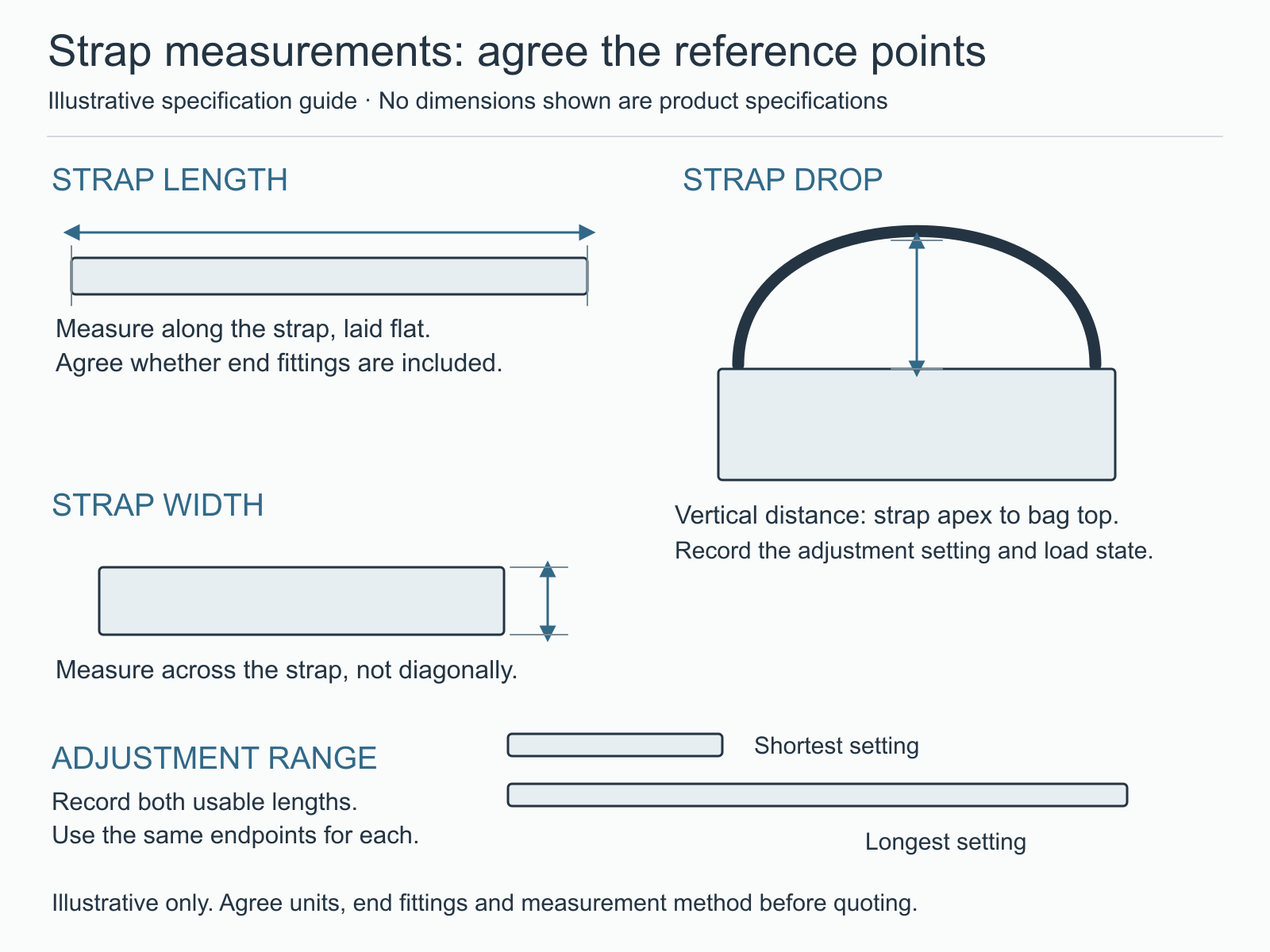
Drop and overall length are not interchangeable. Attachment spacing and the way the bag hangs affect the relationship, so do not derive one from a simple photograph or assume that doubling the drop gives the required strap length. Record the measurement method before discussing acceptance criteria.
Keep bag-body dimensions on the same drawing but distinguish them from strap measurements. The crossbody bag sizing guide covers that separate body-size discussion. Here, the key question is whether everyone measures the carry system consistently.
Define Attachment Points and Reinforcement Evidence
Mark the left and right attachment locations on front, side and back views as needed. Clarify whether the strap joins a ring, a sewn loop or a detachable hook, and whether the connection sits on a gusset, panel or seam. "Same as photo" leaves the hidden side unresolved.
A ring-and-tab arrangement can also contain a detachable hook. Likewise, a stitched tab may include backing. These descriptions overlap; they do not identify a complete construction by themselves. Ask for the proposed assembly and inside finish, including how the attachment relates to the lining.
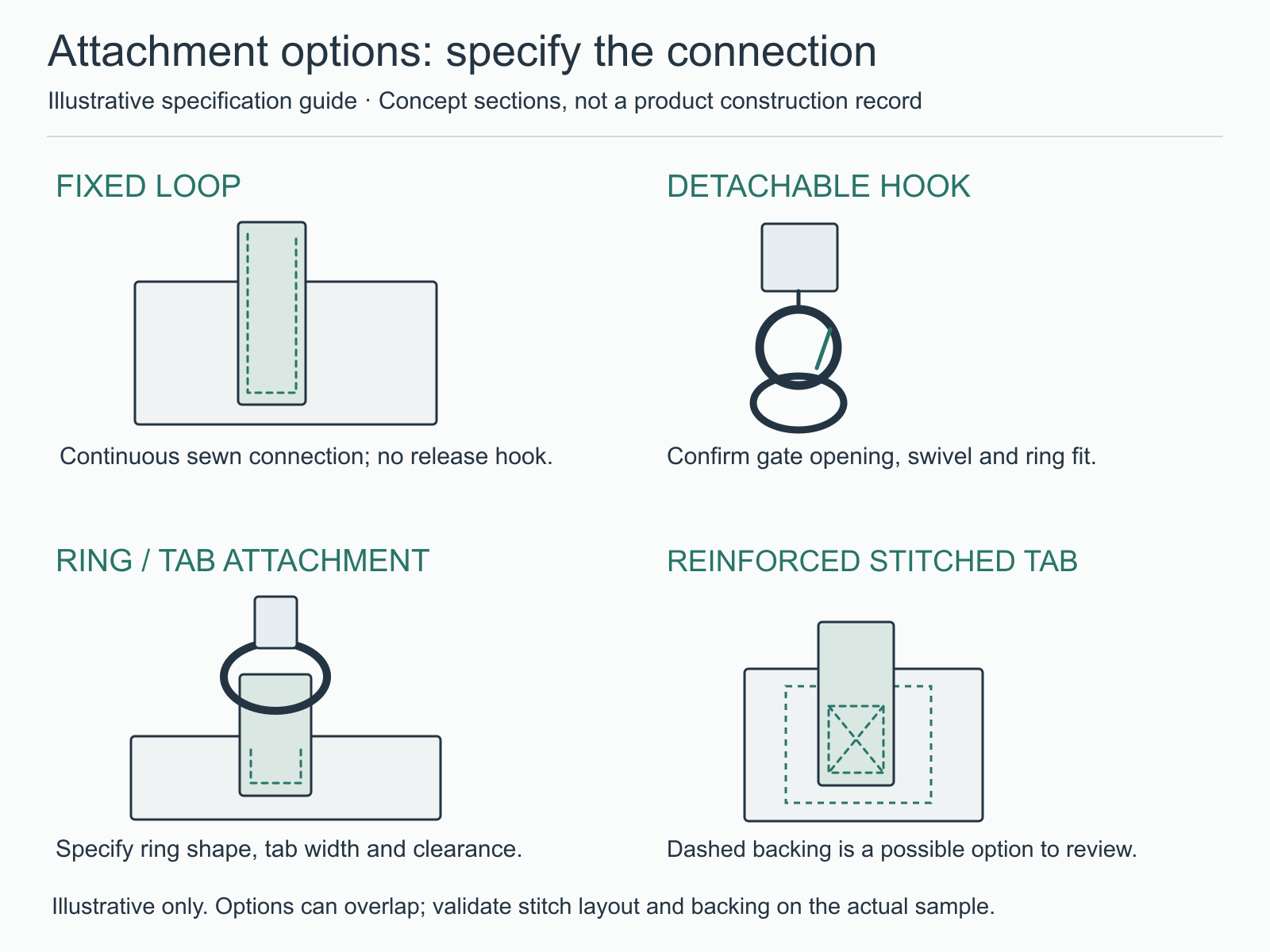
The diagram shows questions to resolve, not the internal construction of the photographed bag. The fixed loop depicts a continuous sewn connection; the hook concept highlights release access; the ring-and-tab concept highlights clearance. The dashed backing in the stitched-tab example is a possible detail to discuss, not evidence that reinforcement exists.
Exterior stitching alone does not prove hidden reinforcement or carrying strength. Request the agreed construction detail and inspect the actual sample; where necessary, ask for documentation or a view of the connection before it is concealed. Do not convert a visual approval into an unsupported load rating.
Build a Hardware and Closure BOM
Create a bill of materials, or BOM, with a separate line for each component. Give each line an identifier that also appears on the drawing. Record quantity per bag, size reference, finish direction, proposed material, attachment and confirmation status. Mark unknowns rather than letting a supplier assume that two similar-looking pieces are interchangeable.
For hooks, include opening access and whether a swivel is required. For rings, distinguish internal clearance from outside size. For buckles or sliders, check the opening and bar arrangement against the actual strap construction. Width alone cannot settle compatibility when folded ends or layers also pass through the fitting.
Treat the closure as an assembly. Identify a zipper and its slider and puller, not just the visible pull shape. For a magnetic closure or another paired fastening, record both mating parts, mounting position and the surrounding construction. Clarify whether front hardware is decorative, functional, or combined with a separate closure.
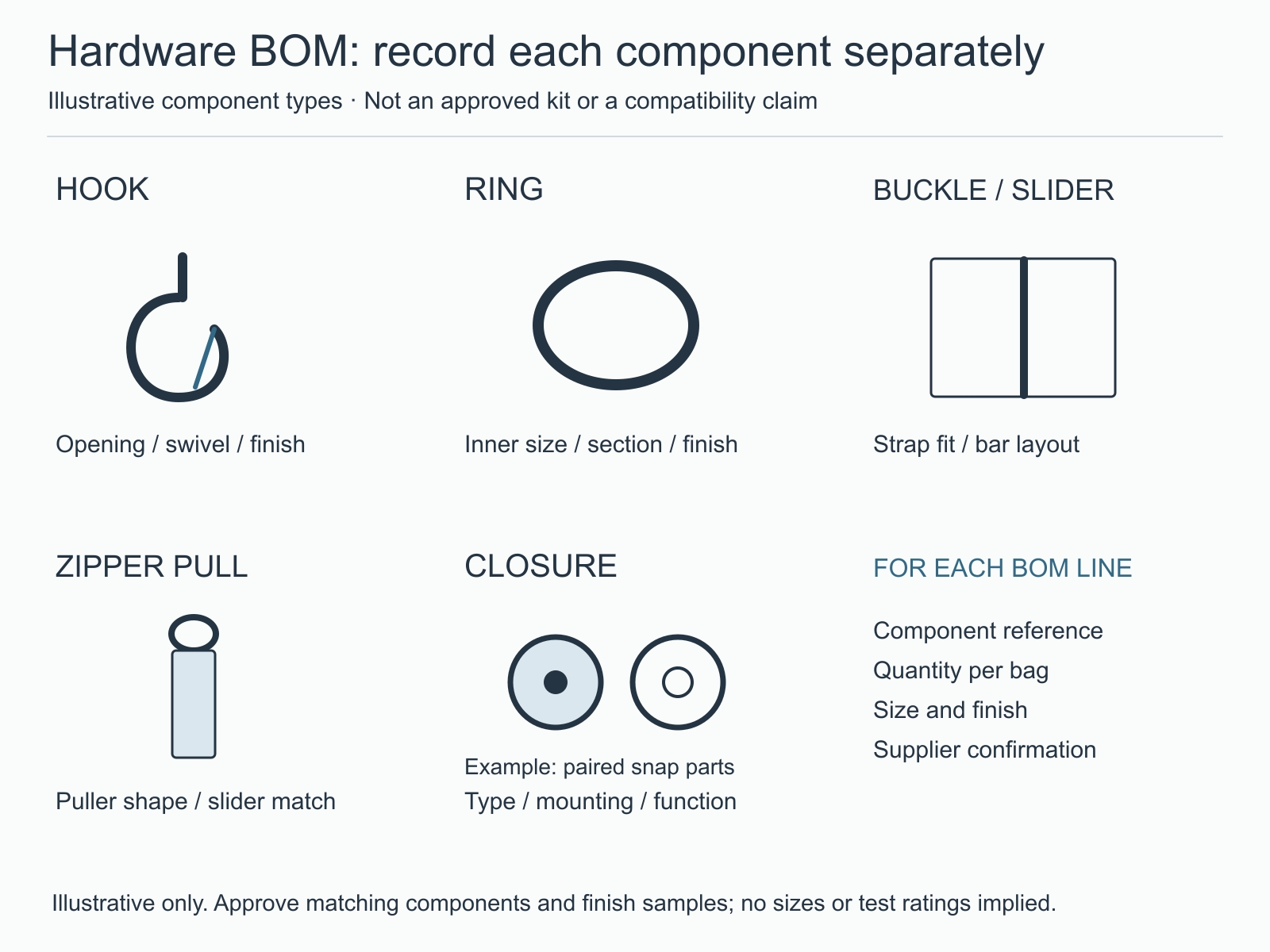
A finish name is a direction, not a matched component set. Review the hook, ring, adjuster and closure together under the same viewing conditions and retain the approved references. The handbag hardware finishes guide supports the color discussion; it does not replace confirmation of the specific parts in your BOM.
Packaging belongs in this review too. State how the strap should be arranged and which metal surfaces need separation from the bag during packing. Agree the packing method on the sample rather than assuming the loose components can be placed together without concern.
Review the Sample as an Assembled Carry System
Check individual components first, then the assembled bag. A hook may move freely on its own but be awkward to release beside a thick tab. A closure that aligns on an empty bag may need another review with the buyer's agreed contents. Record the review conditions so later comments refer to the same setup.
- Measurements: compare length, drop, width and usable settings using the agreed method.
- Orientation: check left/right symmetry, strap direction and twisting at the attachment.
- Edges and seams: inspect folded ends, edge treatment, stitching and the reverse face near skin-contact areas.
- Movement: operate hooks, sliders, swivels and closures; note catching, restricted access or unexpected setting movement.
- Carry review: assess contact points and bag position under the agreed use scenario, recording observations rather than inventing a performance rating.
- Appearance and packing: compare visible finishes together and review how the strap and hardware are protected.
Use photographs with marked locations for revisions. "Improve hardware" is difficult to action; naming the BOM line, describing the issue and identifying the intended change gives the sample team a clear question. Separate accepted items from items requiring another sample review.
These checks are practical observations, not a documented laboratory test program. Where your project requires a formal performance claim, agree the requirement and supporting evidence separately. No illustration or routine visual check establishes a test result.
Confirm the Custom Route and MOQ Scope
An existing silhouette with strap changes may suit an adapted design route; a new attachment construction may need more development. Discuss the actual changes through the OEM and ODM manufacturing service rather than choosing a label before the specification is understood.
For Christori custom project planning, the confirmed references are 100 pcs / style / color for genuine leather and 200 pcs / style / color for PU, canvas or nylon. These are custom-route references, not universal ready-stock minimums. Quantities spread across different styles or colors do not automatically satisfy a per-style, per-color requirement.
List the bag-body material and strap material separately. A mixed-material proposal needs review; do not select the lower threshold simply because one component is leather. Component availability, customization feasibility, price, sample charges and timing remain subject to the confirmed project details. Keep unresolved substitutions visible in the quotation.
Quote-Ready Buyer Checklist
Send one controlling specification version rather than several unranked images. A sourcing agent forwarding a brand brief should retain the brand's confirmed requirements and clearly identify any suggestions that still need approval.
- Reference image or sketch, with essential features and permitted changes marked.
- Bag-body dimensions and the material direction for body, lining and strap.
- Strap type, measurement units, endpoints, width, drop method and adjustment range.
- Attachment locations, proposed assembly and questions about hidden construction.
- Hardware and closure BOM with quantities, finish references and open compatibility questions.
- Logo placement, packaging method, order quantity by style/color and destination.
- Sample-review criteria, unresolved decisions and the person responsible for approval.
Before bulk approval, reconcile the drawing, BOM, reviewed sample and quotation against the same version. Record substitutions and revisions in writing. An approved visual appearance does not silently approve a changed strap material, attachment or closure; those changes need their own review.
FAQ
Can a detachable strap also be adjustable?
Yes. Detachable describes the connection to the bag, while adjustable describes how the strap length changes. Specify both functions, the shortest and longest usable settings, and how the hooks connect to the rings. Review the complete assembly on the sample, because a compatible-looking hook does not establish release clearance or comfortable adjuster placement.
Can I replace a leather strap with chain or webbing?
Treat that as a design change requiring review, not a direct substitution. Confirm the new strap's construction, width, end fittings and attachment compatibility. Chain also needs an agreed connection and shoulder-contact direction. The reference image can show the intended appearance, but it cannot establish whether the existing ring, tab or bag structure suits the revised system.
How should I specify a matching hardware finish?
List the finish direction for every relevant BOM line and ask to review the actual components together. A shared color name does not identify identical appearance across different parts. Keep the approved references and record any accepted variation or substitution. Do not treat an appearance review as evidence of plating thickness, corrosion resistance or another unverified performance claim.
Which custom MOQ should I use?
Use 100 pcs / style / color for genuine leather and 200 pcs / style / color for PU, canvas or nylon as Christori custom project planning references. Confirm mixed-material designs and the quantity breakdown before assuming eligibility. These references do not determine ready-stock terms, and they do not by themselves confirm component availability or a project's final commercial conditions.
Can I request a review before every specification is fixed?
Yes, provided you distinguish confirmed requirements from open questions. Send the preferred concept, known measurements, quantity breakdown and the strap or hardware decisions needing help. Ask which assumptions support any early estimate. A review can clarify the next step, but it is not approval of a final specification, sample outcome or production quotation.
Send a Reviewable Crossbody Brief
Put the concept, strap measurements and hardware list in one versioned package. Include your quantity and identify what still needs confirmation, so the factory can review the carry system rather than guess from the photograph.
Send your crossbody concept and confirmed strap and hardware specifications for a factory review.