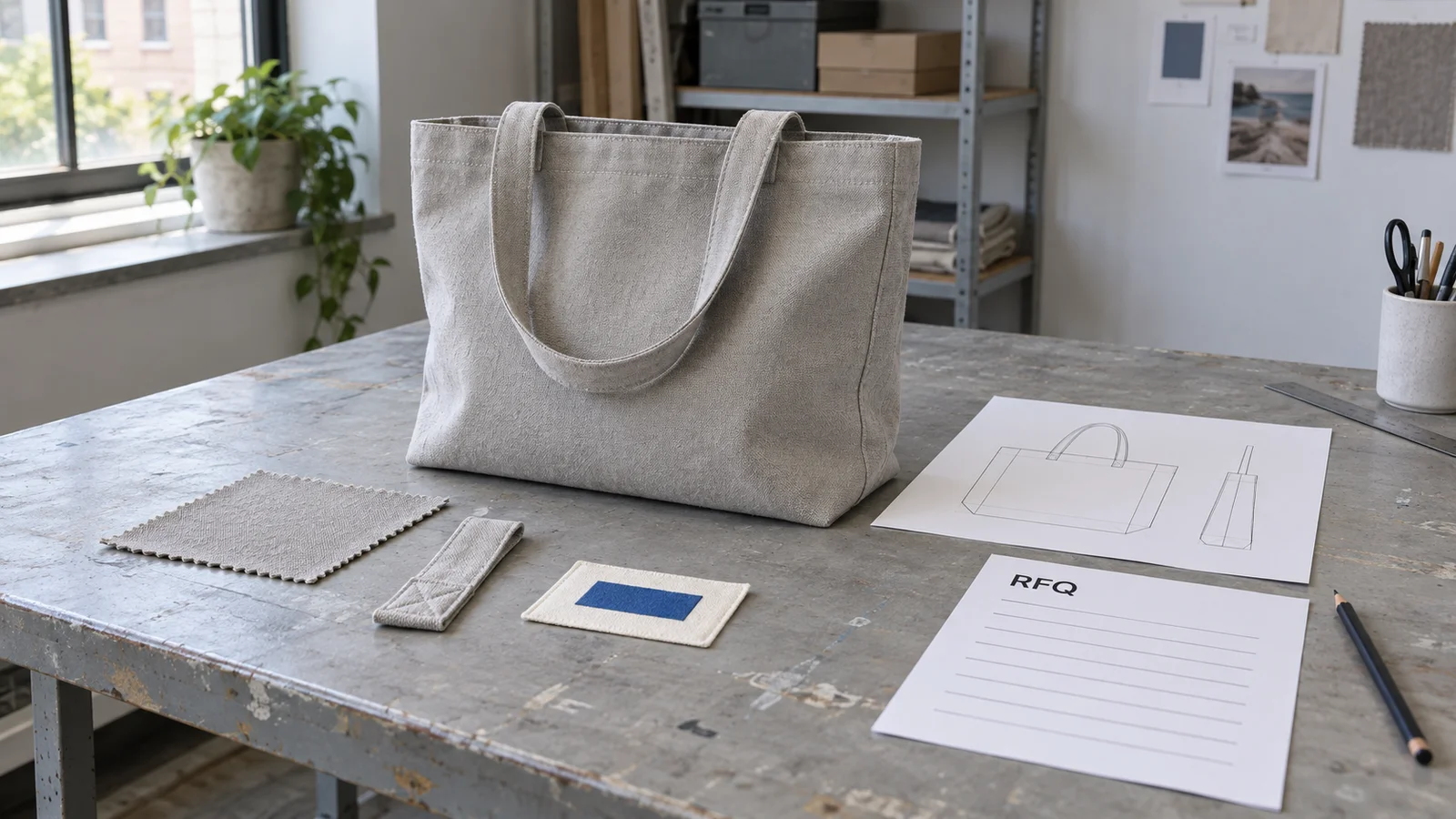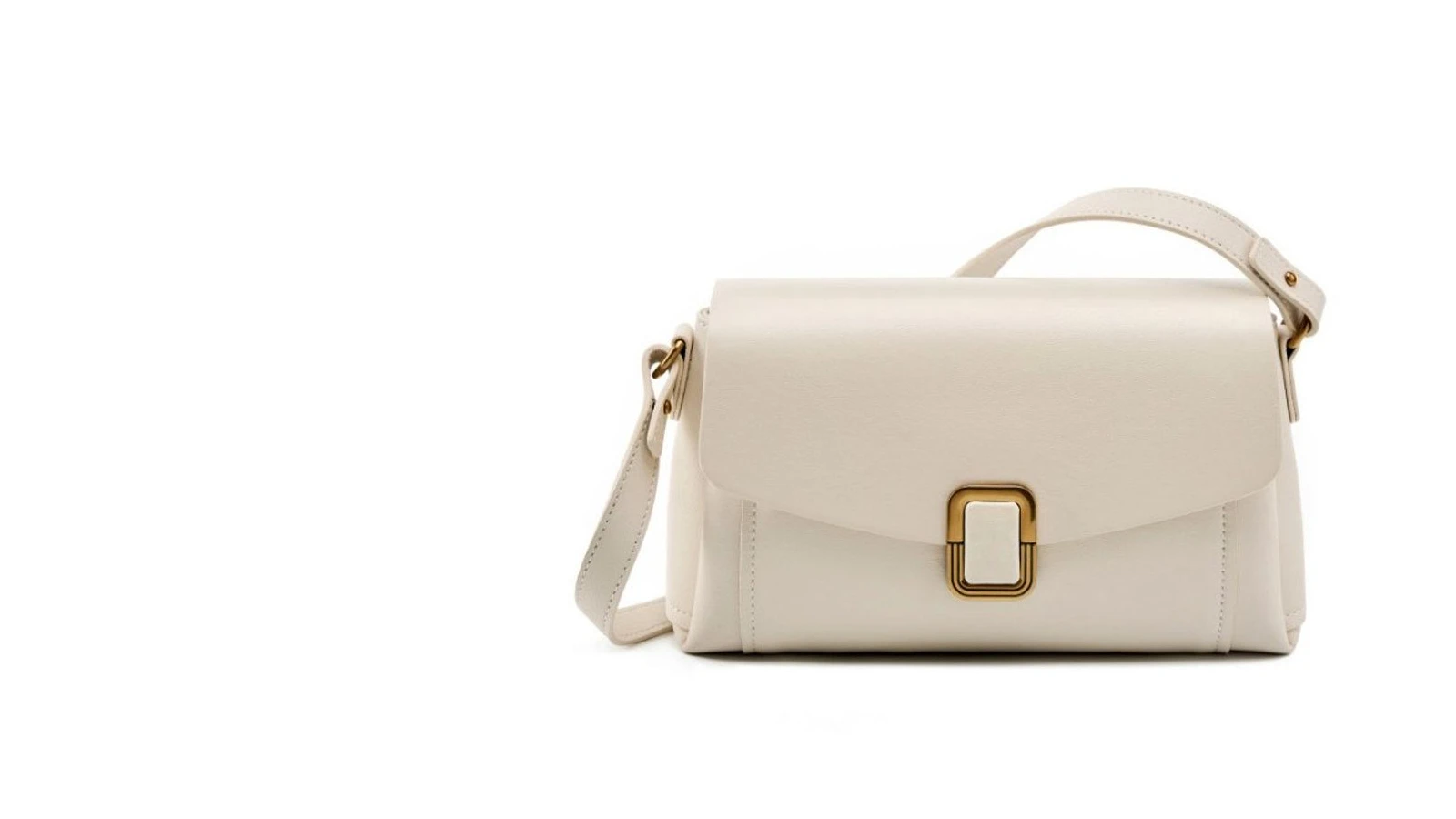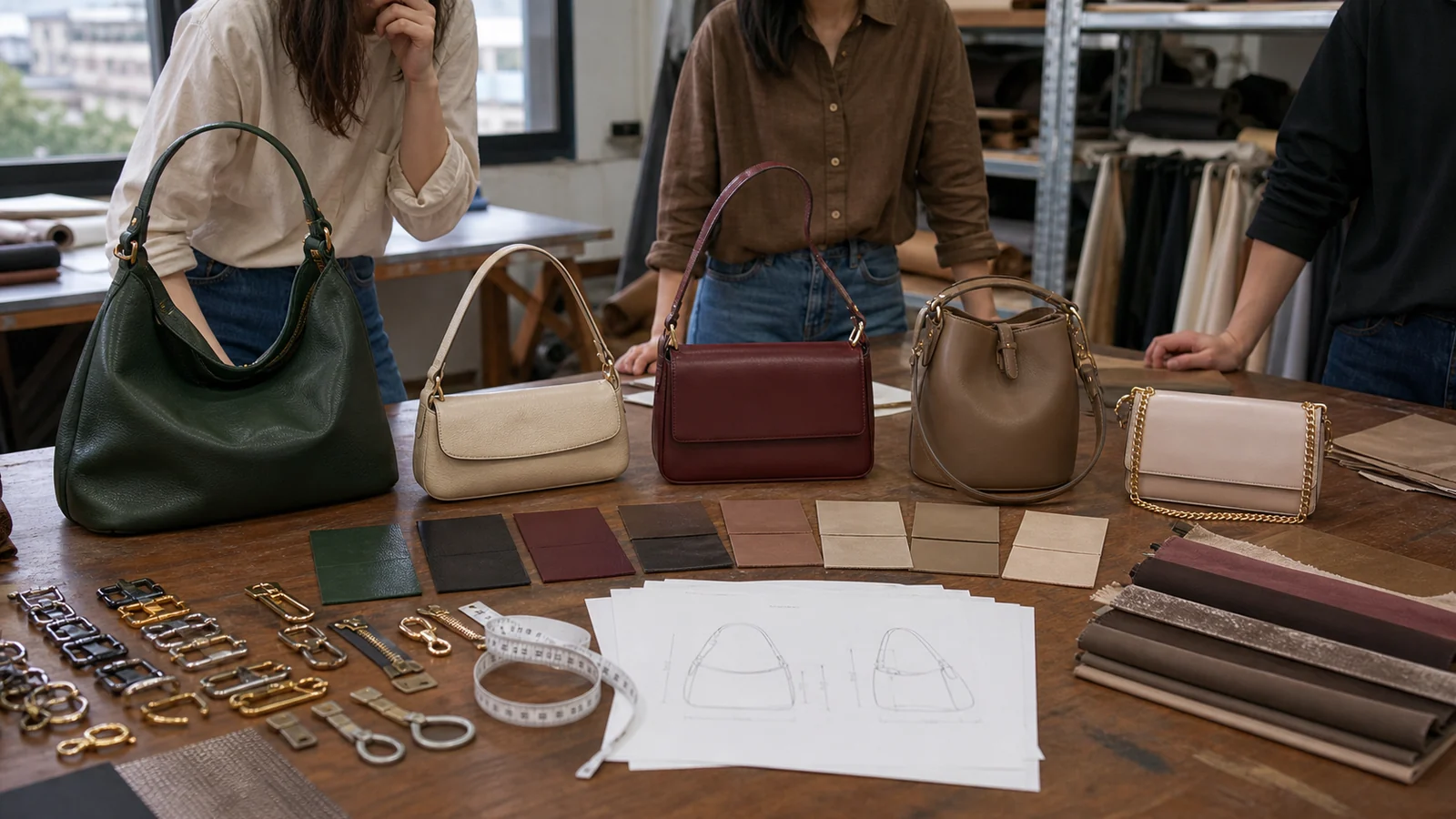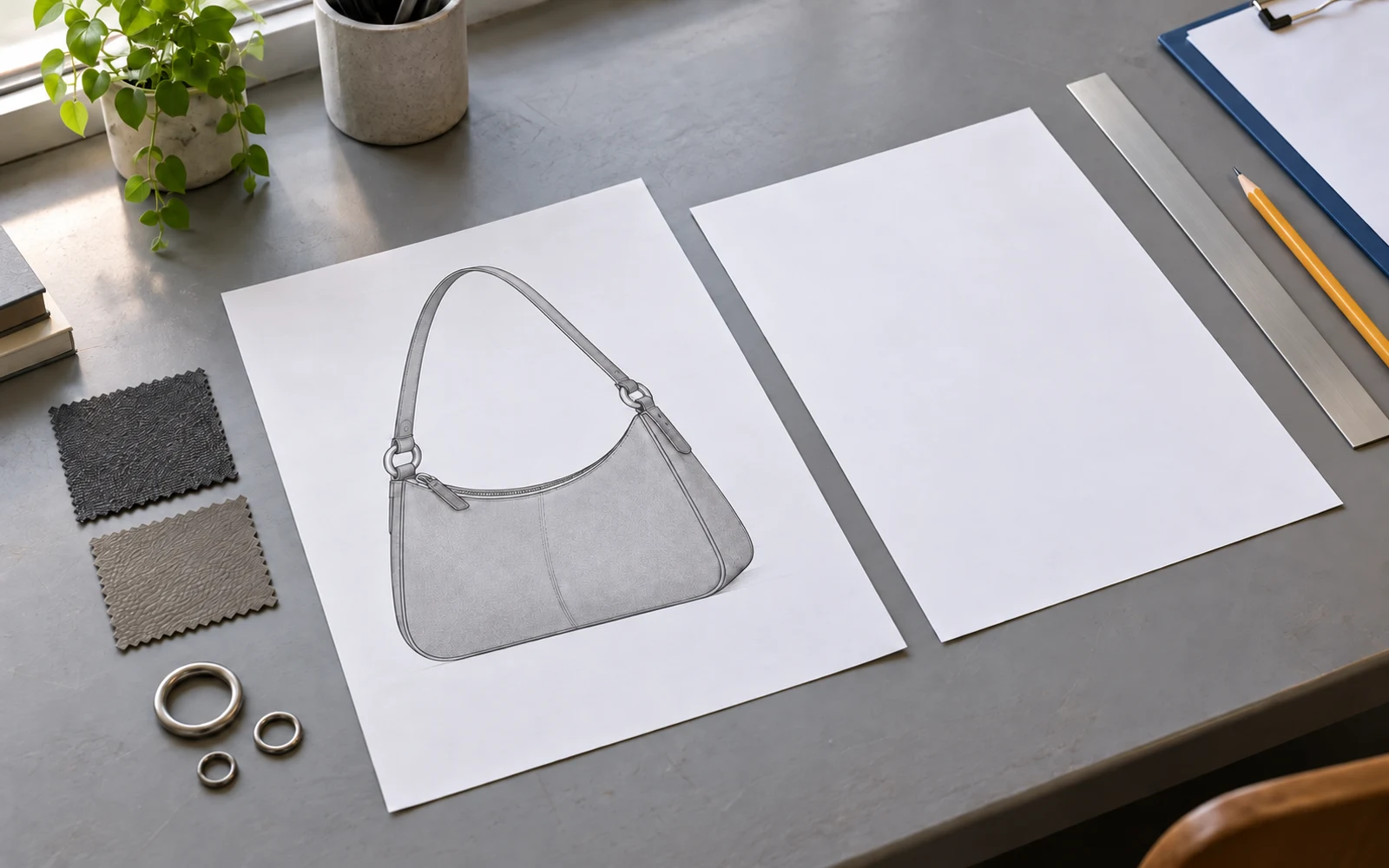
A handbag factory can use an AI image to understand your design direction, but it cannot give a reliable final production quotation from that image alone. Dimensions, materials, construction, hardware, branding, packaging, and order quantity still need confirmation. A polished rendering can hide decisions that change both the sample and the quotation.
For a brand buyer, the useful next step is not another version of the same picture. It is a short record of what must stay, what can change, and what remains undecided. This checklist helps you turn a visual concept into an RFQ a factory can evaluate, without pretending that an early idea is already a production specification.
Quick answer: An image is a design reference, not an agreed build specification. A reviewable request pairs it with written requirements and clearly marked unknowns. The factory can then identify missing information and discuss a suitable route. Any early estimate should disclose its assumptions; it should not be treated as the final production price.
What an AI Handbag Image Can Show, and What It Cannot Prove
A rendering is useful when everyone understands its limits. The apparent leather grain may be only a texture. A narrow side profile may conceal an unspecified gusset. Keep the visual direction, but separate it from details that need drawings, material references, or sample review.
| An AI image can show | The factory still needs to confirm |
|---|---|
| Overall silhouette and apparent proportions | Finished width, height, depth, and consistent back and side views |
| Mood and visible color blocking | Material identity, thickness, finish, and color reference |
| Visible hardware direction | Component type, size, attachment, and closure function |
| Apparent seams and edge styling | Stitching, edge construction, support layers, and lining layout |
| An intended finished appearance | Interior and base construction, packaging, and quantity by style and color |
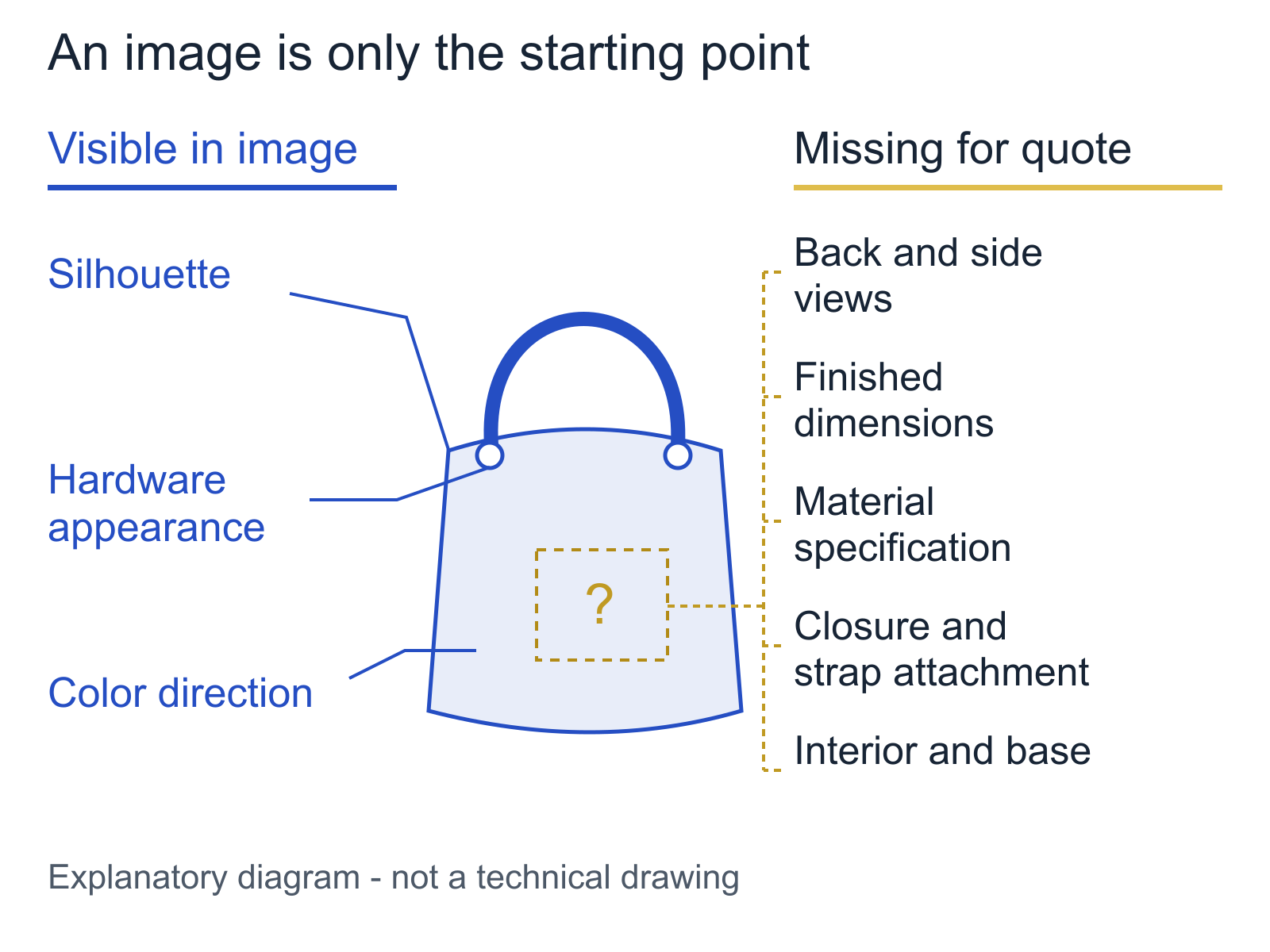
Use one preferred image version as the starting point. If other images show alternatives, label the feature each reference contributes rather than asking the factory to combine everything.
Six Conflicts a Factory Checks Before Quoting
These are review questions, not defects found in every AI image. A simple sketch or written clarification can be more useful than a more realistic rendering.
1. Inconsistent views
Check whether the front, side, and back describe the same bag. A flap may change length between images, or the side panel may imply a different depth. Identify which view controls the intended shape and mark the others as provisional. Do not let separate images silently become competing instructions.
2. An opening or closure that cannot work as shown
A closed bag can look convincing while leaving no usable opening. Trace how the flap lifts, where the zipper ends, and what gives the hand access to the interior. Clarify whether the visible closure is functional or decorative and which access requirement matters most if its position must change.
3. Floating or unsupported hardware
A ring, clasp, or metal ornament needs a physical connection that the image may omit. Point out the attachment you intend, or mark it open to suggestion. Ask whether the component can be selected from an existing option or requires separate development; a rendered shape is not a hardware specification.
4. An unclear strap attachment
Show where the strap meets the body and whether it is fixed, removable, or adjustable. The outside view does not reveal local backing or the inside finish. State the intended carry use and identify any attachment position that is essential, so the connection can be assessed with the body construction.
5. Unrealistic material behavior
The image may combine a very soft body with a rigid opening, or a thin-looking panel with a sharply standing shape. Describe the desired softness separately from the surface appearance. Leave material thickness and support open where unknown; do not assume that a photographic texture identifies a suitable production material.
6. Missing interior or base structure
An attractive exterior says little about lining, pockets, or how the base should hold its shape. Explain what the bag should contain and whether it should stand when placed down. A rough interior sketch can expose conflicts between pockets, fasteners, and the opening before they become sample assumptions.
The Minimum Information Needed for a Reviewable Handbag RFQ
Give every field below one status: confirmed, open to suggestion, or not required. Confirmed means a written requirement exists. Open means you need a recommendation, not that the factory may choose without approval. Not required is appropriate for an optional feature you have deliberately excluded, not for an unknown essential dimension.
| RFQ field | What to include | Your status |
|---|---|---|
| Category and reference | Bag type, image version, and the features to retain | ___ |
| Finished dimensions | W x H x D, units, and whether values are provisional | ___ |
| Material direction | Genuine leather, PU, canvas, or nylon; known finish preferences | ___ |
| Structure and softness | Relaxed or structured body; base support needs | ___ |
| Strap and handle | Carry use, fixed or removable attachment, adjustment needs | ___ |
| Closure and hardware | Opening function, component direction, finish preference | ___ |
| Lining and pockets | Interior layout and any intentionally omitted features | ___ |
| Logo | Artwork, intended size, position, and method if decided | ___ |
| Packaging | Required protection, branding, and retail presentation | ___ |
| Quantity | Separate quantities for each style and color | ___ |
| Destination | Target market and delivery country | ___ |
| Sample need | What the first sample should help you decide | ___ |
This is an intake record, not a substitute for a complete leather bag tech pack. At this stage, identifying the unanswered questions matters more than filling the sheet with guesses. Keep a dated version so later decisions do not get lost among messages.
Choose the Practical Route: Ready Stock, ODM or OEM
Choose the route according to how much of the design must be developed, not according to how the image was created.
| Route | Practical starting point | What remains to check |
|---|---|---|
| Ready Stock | An existing style you can accept | Current SKU availability and permitted light customization |
| ODM | An existing base style with proposed changes | Whether those changes fit its pattern and construction |
| OEM | An original concept needing design development | Missing specifications and feasibility before sampling |
The ready stock handbag route may fit when the image mainly expresses a general shape or color direction. Inventory, colors, light customization, MOQ, and dispatch timing must all be confirmed for the SKU. A new color request is not proof of immediately available stock.
For changes beyond the existing style, compare OEM and ODM development. An AI image does not automatically require OEM; equally, calling a project ODM does not make substantial structural changes minor.
From Visual Concept to Quote, Sample and Approval
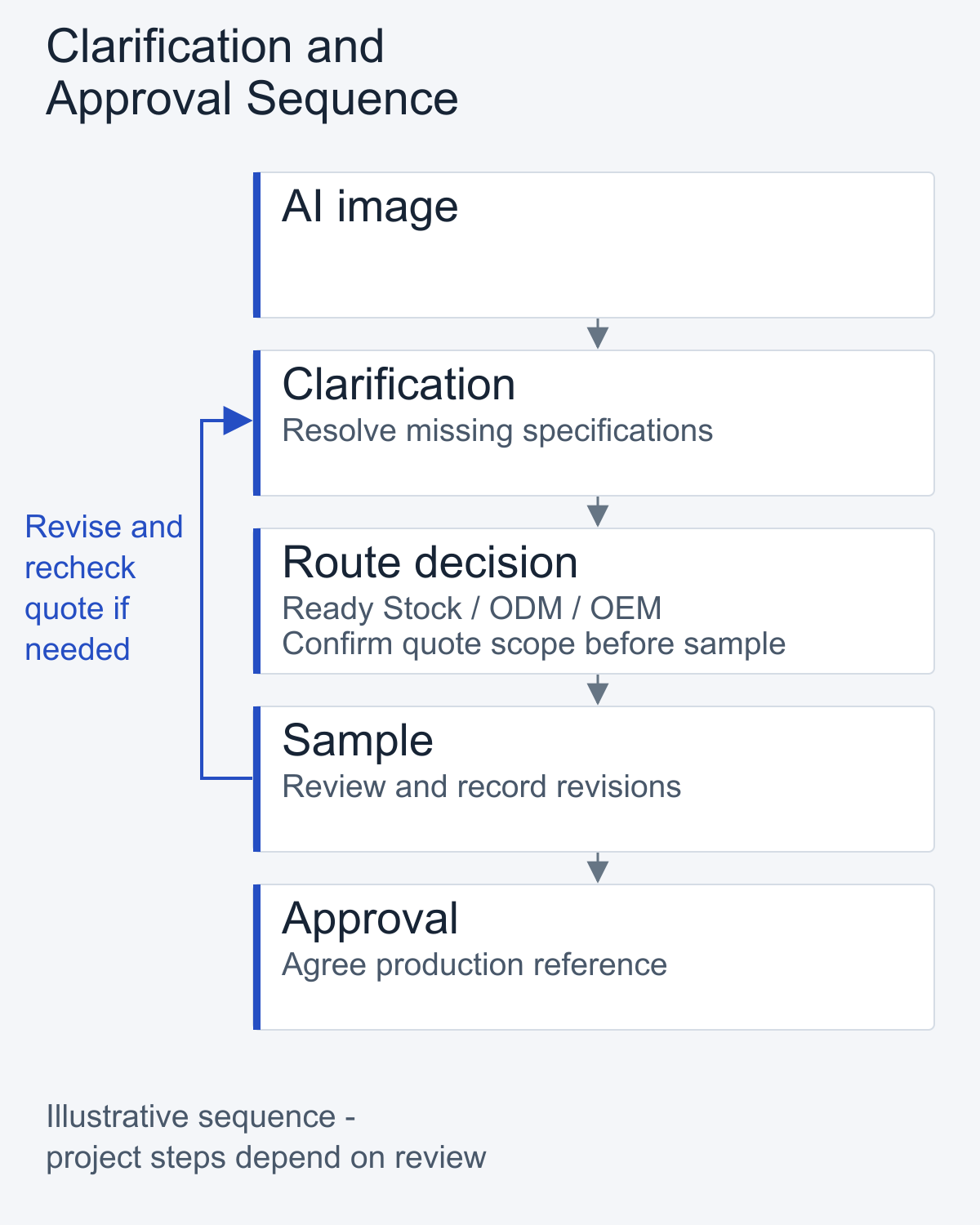
A handbag product development review connects the visual reference to the decisions needed next. Keep the sequence explicit:
- Concept intake: identify the controlling image and the features that matter.
- Feasibility questions: resolve contradictions and list missing specifications.
- Route decision: assess an existing style, an adapted base, or original development.
- Quote scope: record the specification version, quantities, assumptions, and included or excluded items before accepting a quotation.
- Sample: agree what will be made and which questions it should resolve.
- Written revision: mark each requested change against the reviewed sample, rather than replacing it with an unrelated image.
- Production reference approval: agree the final reference and outstanding commercial details before authorizing bulk production.
Not every concept will progress through this sequence unchanged. Some need another clarification round or a different construction. Sample approval should identify the version being accepted; silence about an unresolved feature is not approval. Changes to materials, hardware, packaging, or quantity may also require the quotation to be checked again.
Pre-RFQ Checklist for Brand Buyers
Use this short check before forwarding the package. Tick one status per row and attach a note for every open decision; do not tick confirmed merely because something appears in the image.
| Review item | Confirmed | Open to suggestion | Not required |
|---|---|---|---|
| Reference version and essential features identified | [ ] | [ ] | [ ] |
| Dimensions, material, and construction direction recorded | [ ] | [ ] | [ ] |
| Functional details and optional features separated | [ ] | [ ] | [ ] |
| Style/color quantities and destination supplied | [ ] | [ ] | [ ] |
| Branding, packaging, and sample questions identified | [ ] | [ ] | [ ] |
For Christori custom projects, plan 100 pcs / style / color for genuine leather and 200 pcs / style / color for PU, canvas, or nylon. Ready-stock MOQ and availability are SKU-specific; these custom thresholds do not apply automatically to stock orders. A total spread across colors does not, by itself, meet a per-color custom requirement.
FAQ
Can I request a quote without a tech pack?
Yes, you can begin with the image and the requirements you know. Mark the missing information so the factory can judge what can be discussed and what needs clarification first. That initial exchange is a review request, not evidence that the specifications are complete or that a final production price is available.
Can a factory reproduce every detail in an AI image?
No such promise should be made before review. The image may leave hidden construction unresolved or show details that conflict when the bag opens or carries weight. Explain which features define your original concept and which can change. A revised structure or a different hardware option may be needed, subject to your approval.
Which MOQ applies to my custom project?
Christori's custom planning thresholds are 100 pcs / style / color for genuine leather and 200 pcs / style / color for PU, canvas, or nylon. Confirm the route and color breakdown before making an order assumption. For Ready Stock, use the specific SKU's confirmed supply terms rather than transferring either custom threshold.
Is an initial estimate the final production price?
No. An early estimate may depend on assumptions about materials, construction, and quantity. Ask which version it covers and what is excluded, including any sample, tooling, packaging, or shipping items that need separate confirmation. The final production quotation must reflect agreed specifications and commercial conditions, not simply the appearance of the original image.
Prepare the Concept for a Useful Review
A useful first submission makes uncertainty visible. Keep your preferred image, describe the details that matter, and separate confirmed choices from questions. That gives a factory something specific to evaluate and helps your team judge any proposed changes against the same brief. You do not need to disguise an early concept as a finished specification. The next step is to establish what can be reviewed, what needs clarification, and which route fits the project before treating a number as a production commitment.
Send your AI image and known specifications for a product development review.