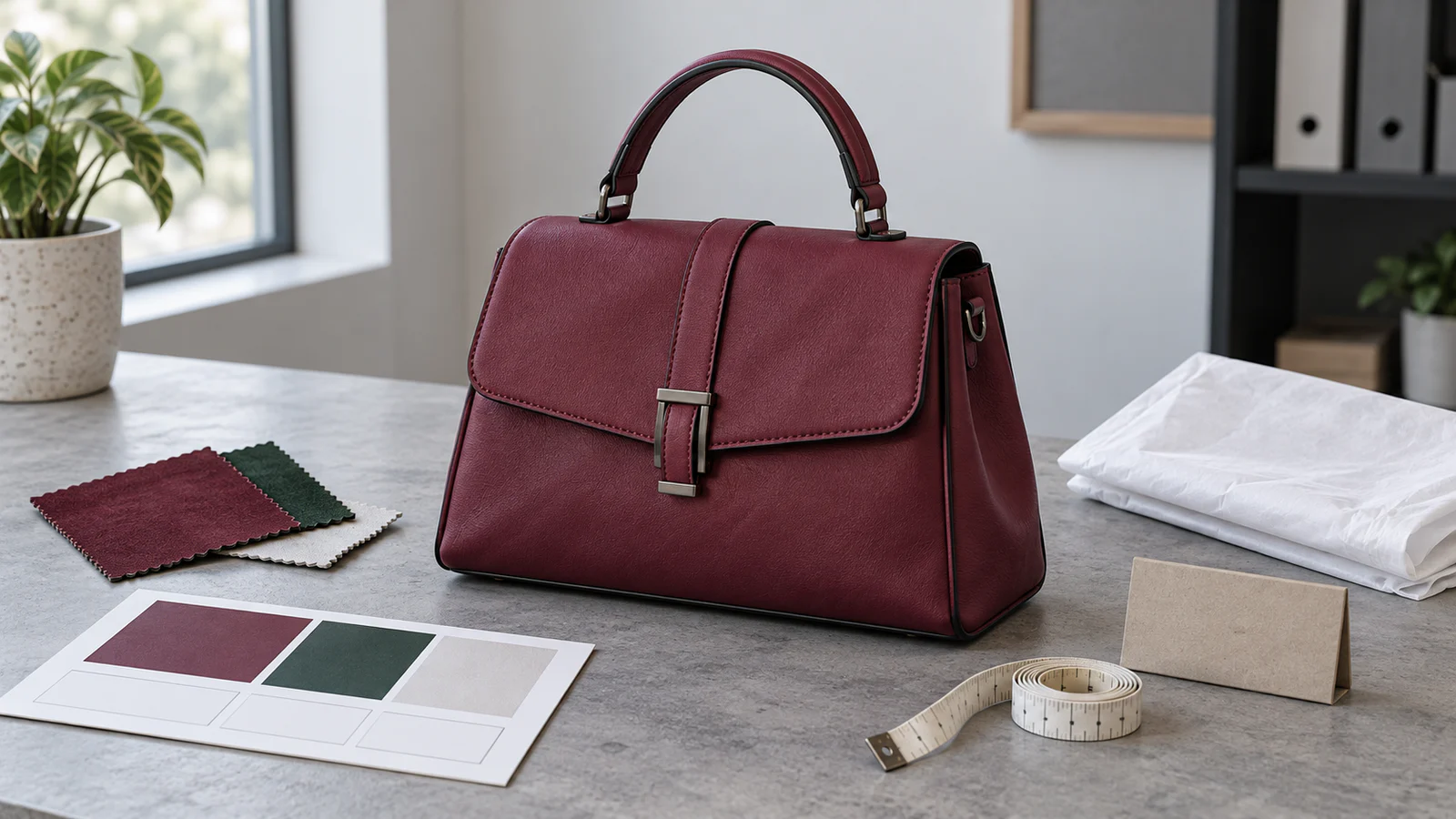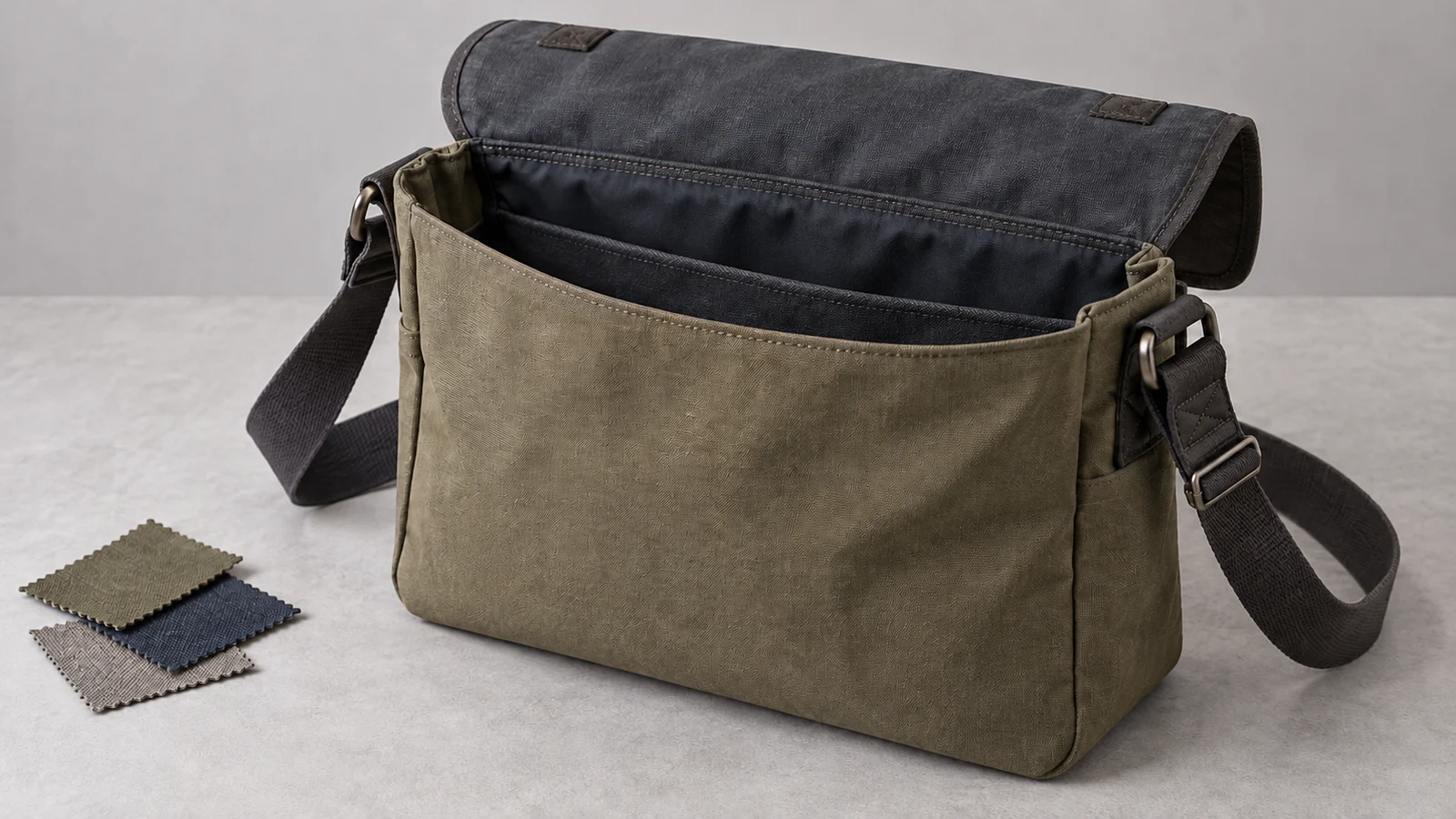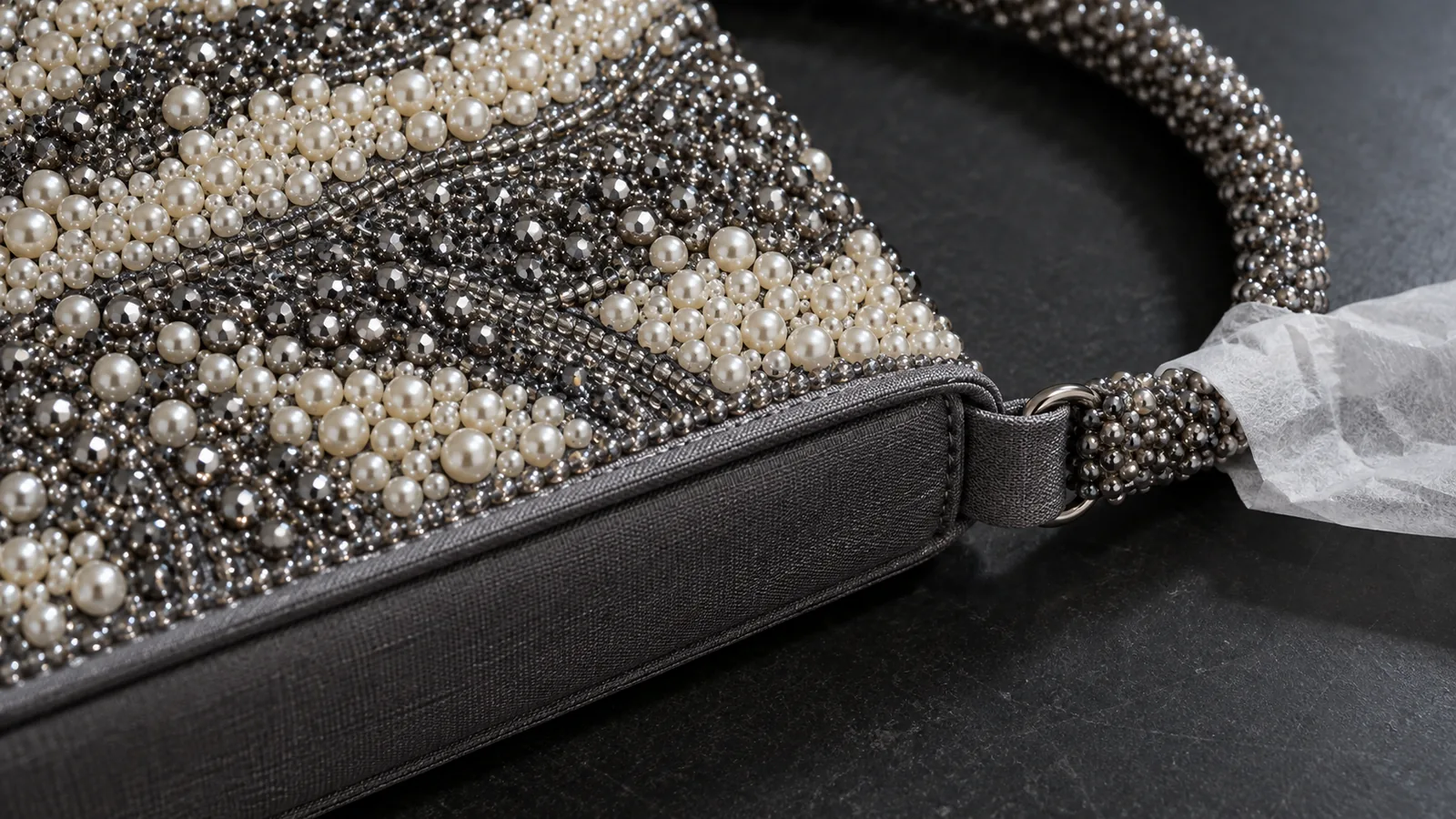
A photograph of a beaded or pearl evening bag can communicate mood, but it does not tell a factory where every embellishment begins and ends, what happens at seams and openings, or how the decorated surface should be protected in packing. A useful wholesale brief must convert the visual idea into an approved map and a set of observable sample decisions.
Strong beaded evening bags wholesale specifications identify the base bag format, embellishment zones, pattern scale, color references, plain transition areas, handle or strap integration, lining, hardware and packing. The buyer should also define what will be inspected visually and which attachment or performance questions remain unverified. This prevents a concept image from being treated as proof of a production method, attachment strength or durability result.
Define the Base Evening-Bag Format First
Surface decoration cannot compensate for an unclear base bag. Identify whether the concept is a framed clutch, envelope form, soft pouch, small top-handle bag or compact shoulder style. Provide closed and open views, dimensions, side depth, base geometry, opening method and carry direction before discussing individual beads or pearl-like elements.
The Evening Bags collection can help position the item within an assortment. The clutch bag wholesale guide explains the commercial differences among evening, wristlet and envelope formats. This article starts after the format is chosen and owns a different problem: controlling an embellished surface, its transitions and its packing.
State whether the decoration covers the front only, continues over the side or back, frames a flap, follows a border or appears in isolated motifs. A pearl clutch and a beaded pouch may share an evening-use context, but the specification should not treat “pearl,” “bead” or “embellished” as complete material or attachment descriptions.
Turn the Artwork Into an Embellishment Map
Create a front, back, side and open-view map at a known scale. Mark the decorated zones, undecorated zones, pattern centerline, repeat direction and intended relationship to seams, corners, edges, closures and logos. If exact dimensions are not final, label the map provisional and identify what will be approved from the sample.
Use numbered callouts for element groups rather than relying on color names. For each group, provide a physical reference or approved visual direction, approximate size, shape, surface appearance and color. Confirm actual material descriptions with the supplier; do not identify a component as natural pearl, glass, metal or another composition based only on appearance.
The map should also state how the pattern is expected to respond to panel boundaries. Does it stop before a side seam, wrap across a gusset, align from flap to body or intentionally break at the opening? A flat artwork file may not account for three-dimensional transitions, so these areas need specific sample photographs and buyer decisions.
Review Attachment Without Inventing a Technique
A buyer may ask how decoration is attached, but the answer must come from the actual supplier proposal. Stitching, threading, embroidery, settings, adhesive or combined methods should not be assigned from a reference image. Record the proposed method for each embellishment group after it is disclosed, then decide what evidence or sample review the project requires.
At ordinary sample stage, inspect observable results: spacing, orientation, alignment, visible thread or attachment points, unintended adhesive marks, surface distortion and movement that is obvious during normal handling. These checks do not establish pull strength, abrasion resistance, replacement rate or long-term durability.
If a performance requirement is commercially important, define it separately and agree on an appropriate method and acceptance basis before making a claim. Do not turn a manual tug, casual rub or one sample observation into a test conclusion. The article does not imply that Christori uses one fixed attachment technique or maintains a dedicated embellishment line.
Resolve Edges, Seams and Contact Zones
The most important areas are often where the decoration stops. Mark a clear transition around the opening, frame, zipper, flap edge, side seam, base, handle anchor and logo. State whether the buyer expects a plain border, binding, piping, folded edge or another visible treatment, while allowing the supplier to propose a feasible construction.
Identify contact zones where embellishments may touch hardware, another panel, a chain, the wearer's hand or packing materials. The goal is not to claim that contact will cause damage; it is to make the relationship visible for review. Examine whether the closure can operate without catching and whether the bag can open fully without forcing decorated panels against each other.
For a repeated motif, define how partial elements are handled near edges. A pattern that looks balanced on a flat rectangle may look uneven after the side panels and opening are formed. Agree whether symmetry, a centered focal area or controlled edge termination is the priority.
Integrate Handles, Straps, Hardware and Lining
Handle and strap anchors should be located on the base construction before the surface map is finalized. Show anchor position, spacing and visible attachment area. Keep a deliberate clear zone if decoration would interfere with the anchor, or document how the pattern transitions around it. Do not claim load capacity or attachment strength without a defined requirement and evidence.
Use the handbag hardware options page to organize questions about frames, chains, rings, clasps and finishes. Then approve the actual component reference and its relationship to the decoration. Finish names alone do not guarantee a color match, and a chain shown in a concept image does not confirm length, weight or carry behavior.
The lining and interior layout should be reviewed as part of the bag, not hidden behind the embellished exterior. Specify lining direction, color, pockets, label placement and edge transitions using the lining and interior guide as a vocabulary reference. Confirm whether interior stitching or hardware backs are visible and how the opening behaves when the bag is filled for review. No protection or snag-resistance claim should be inferred from the lining.
Build Packing Around Surface-to-Surface Contact
General handbag packaging guidance is not enough for an embellished unit. The packing brief should identify what touches the decorated face, whether handles or chains are restrained separately, how front and back panels are separated, and how the shape is presented. Any proposed wrap, sleeve, tissue, insert or box must be confirmed for the actual project.
Use this packing review table to connect each risk area to a visible approval point without promising transit performance.
| Packing area | Buyer should specify | Review on the packed sample | Do not conclude |
|---|---|---|---|
| Decorated front | Permitted contact material and whether a separate soft layer is requested. | Coverage, movement, pressure points and marks after ordinary pack/unpack review. | The layer proves scratch or abrasion protection. |
| Opposing panels | Whether decorated surfaces face each other and what separation is proposed. | Panel alignment, trapped hardware and direct embellishment contact. | No contact means no transit risk. |
| Chain or strap | Position, wrap direction, detachable status and location inside or outside the bag. | Contact with embellishments, frame, lining and closure. | One arrangement is suitable for every component finish. |
| Handle and anchors | Handle position and any keeper, sleeve or support under consideration. | Pressure around anchors and whether the packed position changes the silhouette. | The pack demonstrates handle or anchor strength. |
| Retail presentation | Included sleeve, dust bag, insert, box, label and required opening sequence. | Completeness, orientation, visible presentation and restoration after unpacking. | A presentation pack is automatically suitable for shipping. |
| Carton handoff | Unit orientation, assortment identification and destination information. | Supplier-proposed arrangement and project-stage carton data. | Provisional dimensions, weight or transit performance are final. |
The custom handbag packaging service provides a route for discussing retail and protective components. The broader leather bag packaging guide explains dust bags, boxes and retail options; this embellished-bag guide adds the specific requirement to map contact among decoration, hardware and adjacent surfaces.
Approve Color, Pattern and Visible Consistency
Approve a controlled reference for the base material, embellishment groups, thread or visible attachment, lining and hardware. Photographs are useful records but can shift color and reflection. State which physical or documented reference governs when appearance matters.
Review the entire bag before studying individual details. Check the pattern center, density direction, left-right balance and relationship to the silhouette. Then inspect edges, seams, opening, anchors and logo zones. A close-up may show neat spacing while hiding a pattern that is off-center across the whole panel.
Do not create an unverified numerical tolerance merely to make the checklist look technical. If the design needs controlled spacing or motif placement, agree on measurable points from the approved artwork and sample. Record acceptable intentional variation separately from defects, especially when the supplier proposal involves processes that may not reproduce every element identically.
Send a Complete RFQ and Sampling Package
If the design is based on an existing item, identify the exact current style and ask what decoration, color, branding and packing changes are feasible. Do not assume the item is available or that its base construction supports the requested surface. A new silhouette, attachment system or fully mapped surface belongs in a handbag product development review.
Your RFQ package should include:
- Base bag format, dimensions, opening, side depth and carry direction.
- Front, back, side and open-view embellishment maps at a stated scale.
- Numbered element groups with appearance, size and color references.
- Plain borders, seam transitions, closure, anchor and logo clear zones.
- Supplier confirmation requested for composition and attachment proposal.
- Handle, strap, chain, frame and closure references with finish direction.
- Exterior base, backing, lining, pocket and label directions.
- Packing sequence, contact map and retail components to be quoted.
- Target quantity by version or color, or an estimate, range or to be confirmed.
- Destination and any evidence, label or claim requirement that needs review.
MOQ depends on material, construction and customization scope. Price, sample fee and lead time require an actual project review. A decorative concept can involve dependencies that are not visible in the artwork, so keep unresolved points explicit rather than filling them with assumptions.
During sample approval, record whole-bag appearance, pattern placement, visible attachment condition, edge transitions, opening operation, handle or strap integration, lining, branding and packing. Mark each point approved, revision required, clarification required or not evaluated. If the map changes, recheck affected seams, anchors and packing rather than approving the new artwork in isolation.
Frequently Asked Questions
Should I tell the factory which attachment method to use?
Only when a verified method is an actual project requirement. Otherwise, provide the visual and functional brief, ask for the supplier's proposed method, and review the resulting sample and evidence without assuming strength or durability.
How do I control an embellishment pattern across seams?
Supply front, side and open-view maps that show where the pattern continues, stops or changes. Mark plain borders and reference points, then approve the three-dimensional result on the sample.
Can protective wrapping guarantee that beads or pearl-like elements will not be damaged?
No. Packing can be specified and reviewed for contact, movement and presentation, but a pack concept alone does not prove scratch, abrasion, attachment or transit performance.
Can I request pricing before the exact quantity is final?
Yes. Give an estimate, range or to be confirmed by version. The supplier can identify feasibility questions, but MOQ, component availability, pricing, sampling and timing remain specific to the approved scope.
Send the Embellishment Map for Review
Share the base bag format, dimensions, embellishment map, component references, handle or strap direction, lining and branding details, packing expectations and quantity plan. Christori can review the specification and identify which attachment, sample and commercial questions still require confirmation.