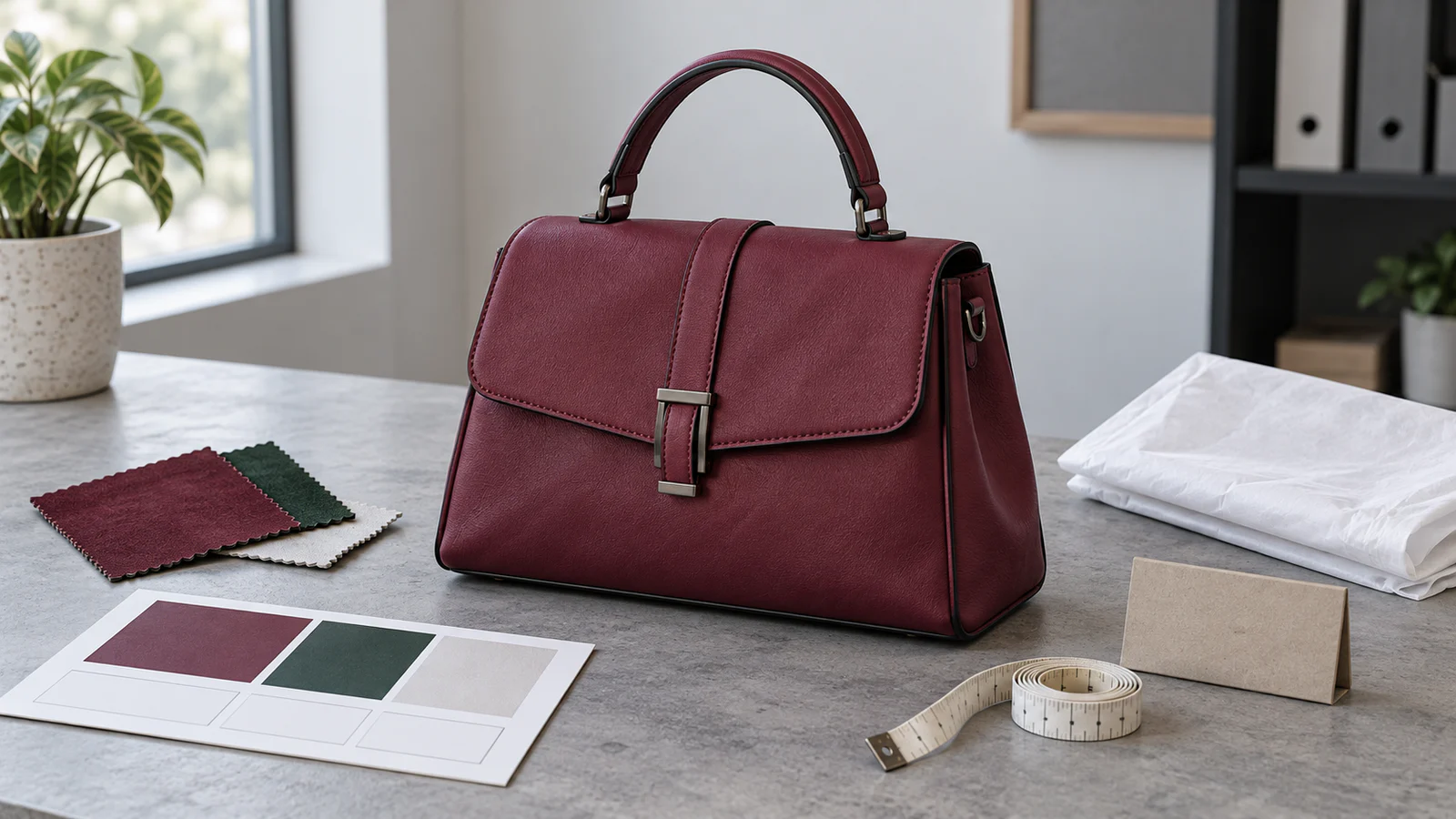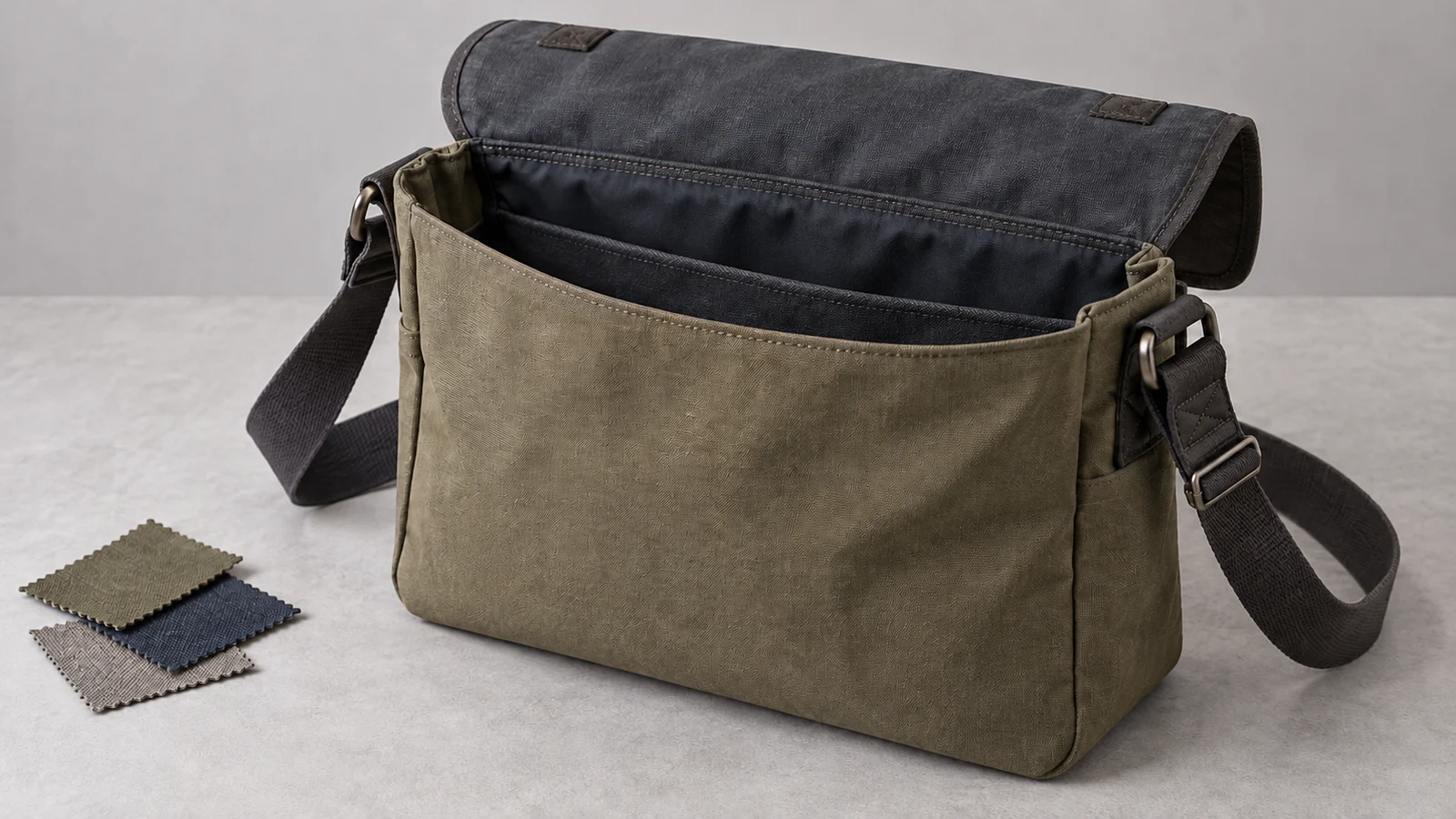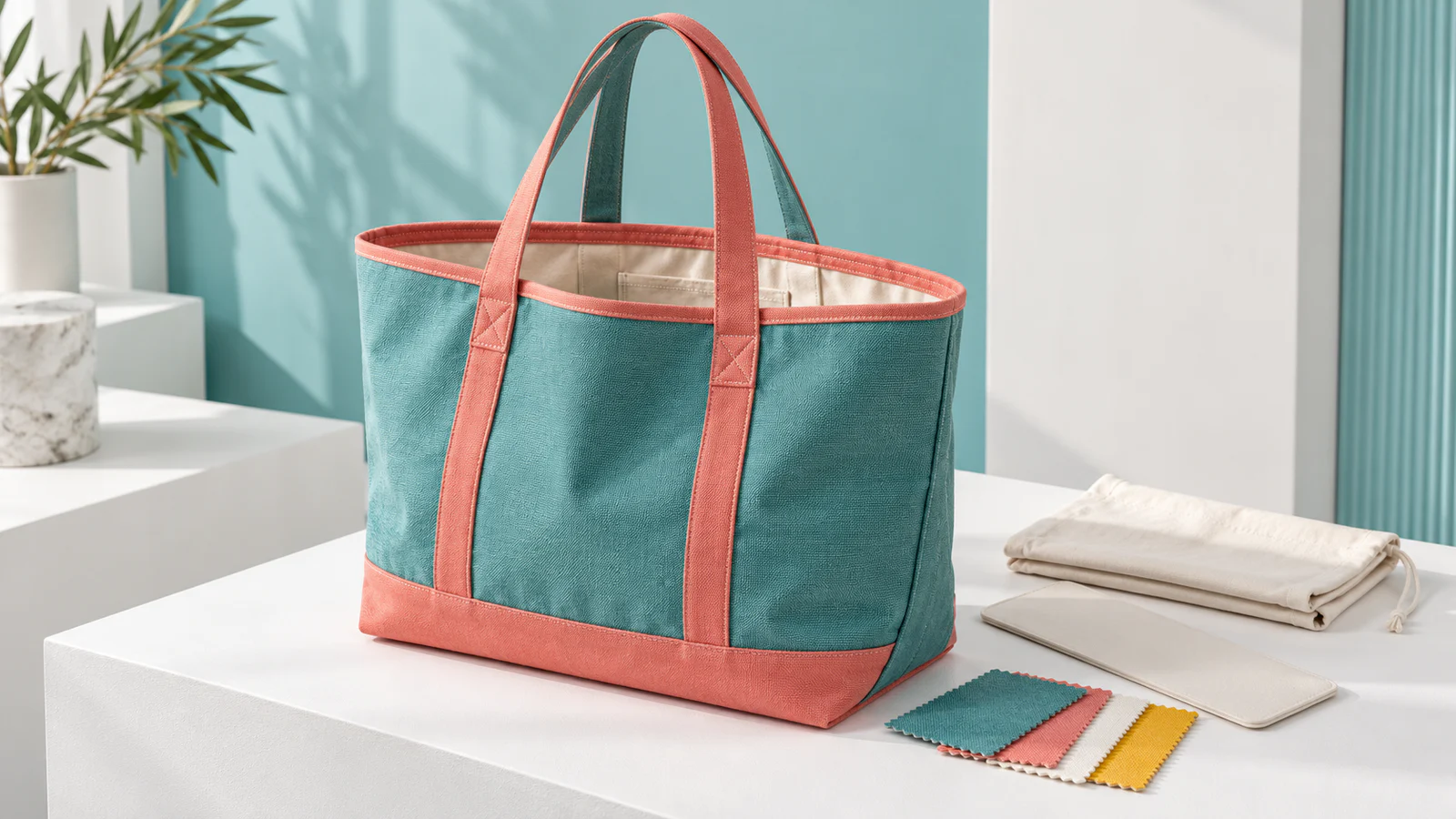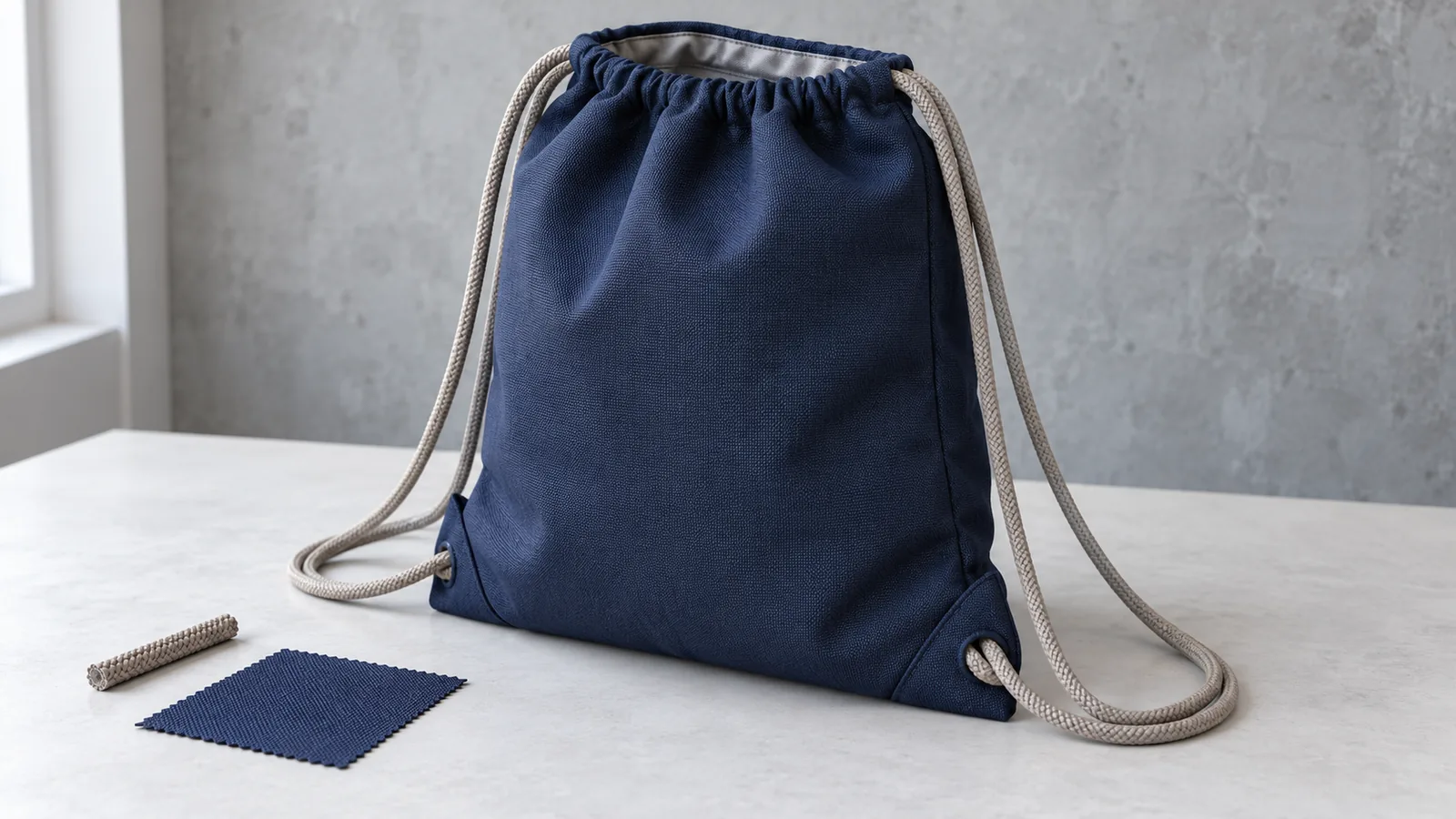
A reference picture can show the general character of a drawstring backpack, but it does not tell a factory how the opening should gather, where the cords should exit, how the shoulder route connects to the lower corners, or how the lining should behave when the bag closes. Those details determine whether two quotations describe the same product and whether a first sample can be reviewed objectively.
For B2B buyers, useful drawstring backpack wholesale specifications connect the closure, carrying system, body and interior as one product. The brief should state dimensions, material direction, cord path, exit treatment, lower connection, pocket plan, branding and packing assumptions. Quantity can be an estimate, a range or TBC at the first review; the factory still needs to confirm feasibility, price, MOQ, sample cost and timing for the actual project.
This guide differs from the existing general drawstring bag article, which discusses the broader silhouette and retail positioning. Here, the subject is backpack-specific construction: the channel, exits, shoulder cords, lower corners and back-carry behavior.
Start With the Opening, Not Just the Bag Outline
The opening is the control point for the whole design. A buyer should show the bag laid flat, fully open and naturally closed. Record the body width and height, the usable mouth width, channel depth, top margin and the intended gathered appearance. If the opening must accommodate a particular boxed item, insert or internal organizer, provide that object's dimensions separately; do not assume the exterior width proves usable access.
Clarify whether the channel is formed by a folded upper edge, an added casing or another proposed construction. A reference photo may not reveal the inside seam or how the lining meets the channel. Ask the supplier to explain its proposed build on the sample specification rather than inferring a method from appearance.
The cord path also needs a directional drawing. State the number and location of exits, whether the two sides should gather evenly, where the cord ends travel and whether the same cord serves as both closure and shoulder strap. Identify the required appearance when open, closed and carried. Avoid specifying a pulling-force or cycle target unless a test method and acceptance requirement have been agreed.
For adjacent backpack shapes, buyers can review the Backpacks collection. A product listing can help communicate a format, but it does not confirm that the shown construction, material or component is available for this project.
Map the Cord Channel and Exit Points
Small differences at the exits can change the opening shape and create visible stress around the upper corners. Mark each exit on a front and back drawing, including its distance from the side seam or center line. Specify the desired visible component, such as an eyelet-like fitting, stitched opening or other proposed treatment, but leave the supplier to confirm a feasible construction and base material.
Ask how the cord enters and leaves the channel, whether there are internal joins, and how the lining is kept clear of the moving path. During sample review, operate the opening several times only as an observable function check. Look for snagging, twisting, uneven gathering, lining capture and obvious distortion. That review is not a durability test and should not be reported as one.
The following component map gives the buyer and supplier a shared discussion record. Values remain project-specific.
| Specification zone | Buyer should define | Factory should confirm | Sample review |
|---|---|---|---|
| Upper channel | Channel position, top margin, target open/closed appearance and material direction. | Proposed casing construction, seam relationship and compatibility with the selected material. | Even gathering, unobstructed movement and the approved upper-edge appearance. |
| Cord exits | Number, front/back location, spacing and visible finish direction. | Opening treatment, component proposal and reinforcement approach. | Alignment, clean edges, no obvious snagging and matching left/right placement. |
| Shoulder route | Single or separate cord path, target usable adjustment and end arrangement. | Routing, adjuster or knot proposal, lower connection and loose-end control. | Symmetry, movement through the route and agreed carry configuration. |
| Lower corners | Anchor position, corner shape and required exterior appearance. | Proposed patch, tab, eyelet-like component or seam integration. | Matching positions, flat assembly and no visible interference with the body seam. |
| Interior | Lining extent, pocket count/location and whether the channel must be concealed. | Lining attachment, turn/assembly access and pocket construction proposal. | Lining stays clear of closure movement; pocket and seam positions match approval. |
| Packing | Folded or filled presentation, cord arrangement, logo protection and unit components. | Practical packing sequence and any shape-support proposal. | No avoidable cord tangling, hard creasing or component-to-surface contact. |
Specify the Shoulder Route and Lower-Corner Connection
In a drawstring backpack, the closure and carrying system may share components. That makes strap specification different from a conventional backpack with independent webbing straps. Provide a rear view showing the complete route from the upper opening to the lower left and right connections. State whether the cord length is fixed, adjustable or still open for proposal.
Measure the sample in a repeatable state. Record the cord or strap length between named points, not simply “long” or “short.” If an adjuster, slider, knot, end cap or stopper is requested, identify its position and appearance. The handbag hardware guide can help organize component discussions, while the project supplier must confirm the actual component, finish and compatibility.
Lower connections deserve their own close-up. Show the anchor's distance from the base and side seam, its orientation and the surrounding corner geometry. If the buyer wants a patch or tab, include its outline and edge finish. If the supplier proposes a different route, record it as a sample change rather than silently replacing the reference.
Do not write a carrying-load claim into the brief unless there is a defined requirement, test method and approved evidence. For an ordinary first sample, buyers can inspect alignment, comfort direction, cord movement, assembly quality and visible distortion without turning those observations into a certified performance result.
Coordinate Body Material, Lining and Pockets
Canvas and nylon can create very different visual and handling outcomes, but the material name alone is not a complete specification. Use the canvas material guide and nylon material guide to frame questions, then request the actual project swatch, supplier description, color reference and finish information. Do not infer fiber content, coating, water resistance, abrasion performance or colorfastness from a photograph.
The body can be unlined, partially lined or fully lined, depending on the approved design and feasible construction. When lining is required, specify color direction, hand feel, pocket arrangement and how the upper edge should look from inside. The lining material page provides useful planning categories, but every material and color still requires project confirmation.
Pockets alter more than storage. A large patch pocket may influence the way a flexible panel folds; a zipper pocket adds components and seam operations; an internal label can be visible when the mouth opens. Give each pocket's finished dimensions, position from stable reference points, opening direction and intended contents if fit matters. Ask for the supplier's proposed assembly where the reference does not show it.
Branding should be treated as part of the panel plan. State the logo method direction, artwork version, size, position and color. Confirm whether the body area needs backing or whether another placement is more practical. No logo method should be assumed available across every material or construction.
Define the Base and Corner Reinforcement Without Making Performance Claims
The lower corner combines body seams, the base transition and the carrying connection. A neat front view may hide how many layers meet there. Buyers should provide bottom and side views, mark the desired corner radius or fold, and identify whether the bag should lie flat, stand with support or remain intentionally soft.
“Reinforced” is not enough. Ask the supplier to describe the proposed reinforcement zone and show it on the sample record. The solution may involve an added patch, internal support, folded layer, seam allowance arrangement or another construction appropriate to the selected material. This guide does not claim that one method is universally stronger.
On the sample, compare left and right corner height, anchor placement, body-seam alignment and the way the base settles when empty. Inspect for obvious puckering, trapped lining and hardware contact with the surface. If performance testing is required, it must be defined separately with the method, conditioning, sample count and acceptance criteria.
Turn the Reference Into a Controlled First Sample
A first sample should answer agreed questions, not serve as an unrecorded experiment. Send a revision-coded specification with front, back, side, base and open-interior references. Number uncertain items and ask the factory to mark each as confirmed, proposed alternative or unresolved before sampling.
Use this approval sequence:
- Confirm the target silhouette, finished dimensions and measuring condition.
- Confirm the upper channel, exit locations and proposed exit treatment.
- Confirm the complete cord/strap route and lower connections.
- Confirm body material direction, lining extent, pockets and branding.
- Confirm base/corner construction proposal and packing direction.
- Review the sample against the same specification, recording every change by revision.
Photograph the sample open and closed, front and back, with close-ups of each exit and lower anchor. When measurements differ, identify the exact points used rather than debating a single unlabeled number. If a requested feature proves impractical, preserve the original request and document the approved alternative.
Prepare an RFQ That a Factory Can Actually Review
An RFQ can start before every detail is final, but uncertainty should be visible. For a new shape or construction, the handbag product development service describes the review route. Send the following information:
- Product reference and a short statement of what must remain and what may change.
- Finished body width, height and depth, plus the measuring method.
- Open and closed views of the channel and target gathering behavior.
- Cord material direction, route, exits, end treatment and adjustment requirement.
- Lower-corner connection location and the desired exterior appearance.
- Body and trim material direction, color references and swatches if available.
- Lining extent, pocket drawings, label and logo artwork details.
- Packing expectation, destination market and any buyer-supplied labeling requirement.
- Target quantity by style/color, or an estimate, range or TBC.
- Open questions, required sample decisions and the requested quotation basis.
The supplier should then confirm what the quotation includes, what needs sampling and which points remain assumptions. Price, MOQ, sample cost and timing must follow the reviewed project scope, not a generic drawstring backpack category.
Frequently Asked Questions
Can one cord serve as both closure and shoulder strap?
It can be a design direction, but the path, exits, lower anchors, adjustment and open/closed behavior must be defined together. Ask the supplier to confirm the proposed construction for the chosen material rather than assuming a reference image can be copied directly.
Should a drawstring backpack be lined?
There is no universal answer. Decide from the desired interior finish, pocket plan, material behavior, branding and construction. If lining is used, review how it meets the channel and whether it stays clear of the moving cord.
What quantity should I send with an early RFQ?
Send the best current information: a target, estimate, range or TBC, ideally split by color. It supports a useful feasibility discussion without pretending that MOQ, availability, price or timing has already been confirmed.
Is a pull test required for sample approval?
Only when the project defines a relevant test method, conditions and acceptance criteria. An ordinary sample review can document alignment, movement and visible assembly, but it should not be presented as proof of load capacity or durability.
Move From a Picture to a Reviewable Specification
A drawstring backpack becomes easier to quote when the buyer treats the opening, cord route, lower corners and interior as connected systems. Clear views, named measurement points and revision-controlled approvals reduce interpretation while leaving the supplier room to identify feasibility issues.
Share the drawstring-backpack reference, material direction, cord system and quantity. Christori can review the available project information, but the actual construction, MOQ, price, sample cost and timing remain subject to confirmation.