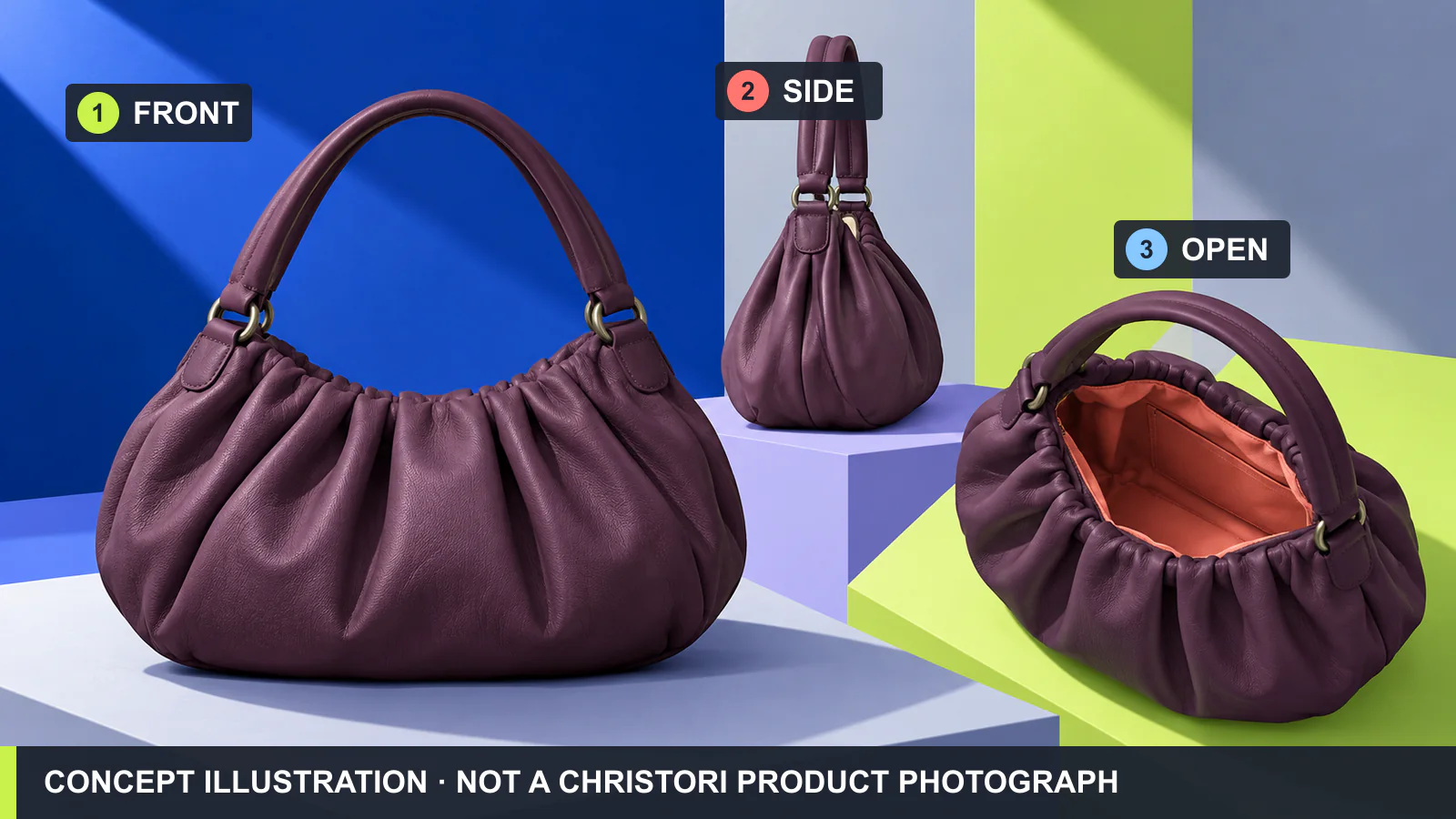
A dumpling bag reference describes a visual direction, not a complete construction. Two photographs with a similarly gathered outline may conceal different openings, pleat arrangements and strap connections. A quotation based only on the front view can therefore include assumptions that the buyer never intended.
Useful dumpling bag wholesale specifications connect the silhouette to access and carrying behavior. For a brand developer or wholesale buyer, the immediate job is to identify what must stay recognizable and what remains open for factory review. Start with annotated views, then carry those same references into a compact RFQ sheet and a first-sample checklist.
Define the Silhouette and Sourcing Route Before Quoting
Identify the reference, not a universal Dumpling standard
Build a reference set showing the front, side, opening and rear/base. Label references taken from different designs; they are not one approved construction.
Mark exterior width, height and depth with measurement endpoints and units. State whether the bag is empty, supported or held when those dimensions are judged. A soft outline can be presented differently in each photograph; the measuring condition should not be left to interpretation.
Describe the preferred softness, gathered outline and intended carry mode. Identify features that are fixed, preferred or open to alternatives. If pleat quantity or depth is not settled, request a proposal rather than converting visible shadows into a production instruction. There is no universal size or pleat count established by this guide.
Ready stock reference or custom development?
For ready-stock handbag options, ask about an identified item, its current availability and the changes permitted on that item. Confirm the actual opening, interior and carrying arrangement. This article does not establish that a particular Dumpling style is currently in stock.
For light customization or an existing-style ODM proposal, identify the base style and list the parts to change. A logo or color request is different from altering the opening or gathering. Ask which changes require a revised sample.
For new OEM work, use handbag product development to discuss the reference, proposed pattern and sample scope. Separate essential features from alternatives before comparing quotations. A tentative quantity is useful context, not a contact gate; availability, pricing, sampling charges and timing need project-specific confirmation.
Specify Pleats, Panels and Usable Opening Together
Pleat placement and fullness
On the front and side views, mark where gathering begins and ends. Indicate whether you expect balanced sides or an intentionally uneven arrangement. Point to the fullness you want near the opening and at the lower body; “more gathered” is too ambiguous without a location.
For a pleated dumpling handbag wholesale request, keep the visual target separate from the supplier's proposed construction. Ask the supplier to label panel boundaries and the proposed gathered zones. Review that map before interpreting a sample as a match.
Opening and closure clearance
The dumpling bag opening specification should describe both the closure direction and the usable access space. A zipper, magnetic closure or drawstring may be a starting option; mark its intended position on the same drawing as the pleats.
Define where to measure the clear opening and how the closure is positioned during measurement. Exterior body width is not the same as the space available for inserting an item. If a phone, pouch or other object matters, supply its actual dimensions and include it in sample review. Do not rely on a generic claim that the bag fits a standard phone.
Ask the reviewer to show whether gathered material moves into the access path when the bag opens. Also note whether the closure is reachable without rearranging a handle or strap. Resolve the sequence on the physical sample, not from a closed-front photograph.
Coordinate Handle, Strap, Base and Lining
Locate the connections before choosing the carry view
Mark handle or strap connections on front, back and side views. State whether the strap is detachable and identify the intended adjustment or fixed-length direction. Keep the attachment location distinct from the visible decorative fitting.
Browse wholesale shoulder bags or the crossbody bag collection for carry-position references, not proof that your proposed body supports both arrangements.
On the sample, observe whether lifting by the proposed strap pulls the opening closed or changes the intended outline. Check whether the handle obstructs retrieval. Describe the visible effect before asking for a hidden reinforcement change. These observations establish neither a load rating nor durability.
Agree the base and interior behavior
Specify how the empty bag should rest on a table and whether standing upright is an actual requirement. If folding for packing is proposed, describe the appearance you expect after unpacking and ask for that condition to be shown.
List the proposed base support, lining and pocket locations as separate decisions. Compare lining material options alongside the opening: the interior should be reviewed for access, loose folds and pocket placement, not chosen solely from a color swatch. Mark support locations for factory discussion without prescribing an unverified internal method.
Genuine leather, PU and other material directions need review on their own proposed sample combinations. Record the sample's actual shell, lining and provisional parts. Do not transfer an approval from one material combination to another just because the exterior color is similar.
Turn One Reference into Comparable RFQ Inputs
Send one dated set of views with matching panel labels. This seven-row sheet keeps the quotation questions connected to what the assembled sample must demonstrate. Replace prompts with your own references; “to be confirmed” is preferable to an invented specification.
| Buyer input | Unresolved question | What the first sample must show |
|---|---|---|
| Front, side, open and rear/base references; exterior measurement points. | Which view or measuring condition still needs agreement? | The outline and dimensions under the agreed condition, with matching view labels. |
| Pleat zones, symmetry preference and fullness references. | Which panel boundaries or gathering arrangements are proposals? | Where folds start and finish on the assembled front, sides and back. |
| Closure direction, clear-opening measuring points and intended contents. | Does the closure or gathered material restrict access? | Opening, insertion, closure and removal using the buyer's listed items. |
| Handle/strap connections, carry mode and detachable-part requirements. | Which attachment locations or strap details need review? | The bag held or worn as intended, including the effect on the opening. |
| Base resting position, lining, pockets and proposed support zones. | Which internal details or standing expectations remain unconfirmed? | Table-resting shape, open interior and access around pockets and lining. |
| Material, color and branding direction with marked positions. | Which sample materials, shades or applications are provisional? | Identified materials and branding placement relative to folds and seams. |
| Target quantity by version and intended packing direction. | What is undecided, and what does the quotation exclude? | The agreed packed arrangement and unpacked appearance; commercial questions listed separately. |
Ask each quotation to identify assumptions against these rows. Compare proposed changes to the reference opening or outline before comparing prices, and keep optional changes separate.
Inspect the First Sample in the Same Sequence
Use this dumpling bag sample checklist on the assembled bag. Record the sample version and material substitutions before starting. Mark each point pass, revise or unresolved, with a photograph and the relevant reference label.
1. Compare the outline and gathered zones
Place the sample beside the approved front, side, open and rear/base references. Look at the start and end of folds, left/right balance and lower-body fullness. Photograph the whole view before adding close-ups so the location of a disputed fold remains clear.
2. Operate the opening
Open and close the bag normally, observing where pleats and lining move. Identify anything that blocks the hand path or obscures the closure. Record the action and position where the issue appears. This is an access review, not a durability-cycle test.
3. Check the intended contents
Insert the buyer's listed items, close the bag and remove them again. Note the actual opening used and any obstruction. A photograph with an item already inside does not demonstrate convenient insertion or removal. Keep the conclusion specific to those items and that sample.
4. Observe the selected carry mode
Hold or wear the bag in the agreed way with the agreed review contents. Compare the opening curve and body outline with the resting state. Show the connection area if the gathered top pulls together or a handle blocks access. Do not translate a successful handling observation into a strength claim.
5. Review the base, interior and packed state
Set the bag down, open it and inspect the lining and pocket positions. If a packing arrangement has been proposed, review the unpacked shape as well. Record which changes are acceptable and which need discussion; a packing photograph alone is not proof of shape recovery.
Return one consolidated comment sheet. Name the view, observed difference and requested outcome for revisions; leave missing evidence unresolved.
Frequently Asked Questions
Is a dumpling bag the same as a crescent or hobo bag?
Names can overlap in catalogs, so do not use the label as a construction specification. This guide addresses the gathered outline, opening and connection decisions in your reference. Define those features directly rather than relying on another silhouette name to explain them.
Can a photo alone produce a comparable quote?
It can begin the conversation, but usually leaves other views, measurement conditions, opening access and attachment details open. Add the missing references or identify the questions. Ask suppliers to state their assumptions so you can compare the same proposed version.
Does the material choice change the review?
Review the actual material combination on the sample. The approved look and opening behavior should not be assumed to transfer between shell, lining or support alternatives. Record substitutions and identify which observations need repeating before approval.
Can I ask before fixing quantity?
Yes. Share the reference, material direction and any estimated range, noting what is undecided. Christori can discuss the sourcing or development route with you. Order conditions still need confirmation; an initial review is not a promise of stock, pricing or production timing.
Send a Defined Reference for Review
Share front, side and open-bag references, your target size, material direction and carry mode. We can review the sourcing or development route even if quantity is still being discussed.