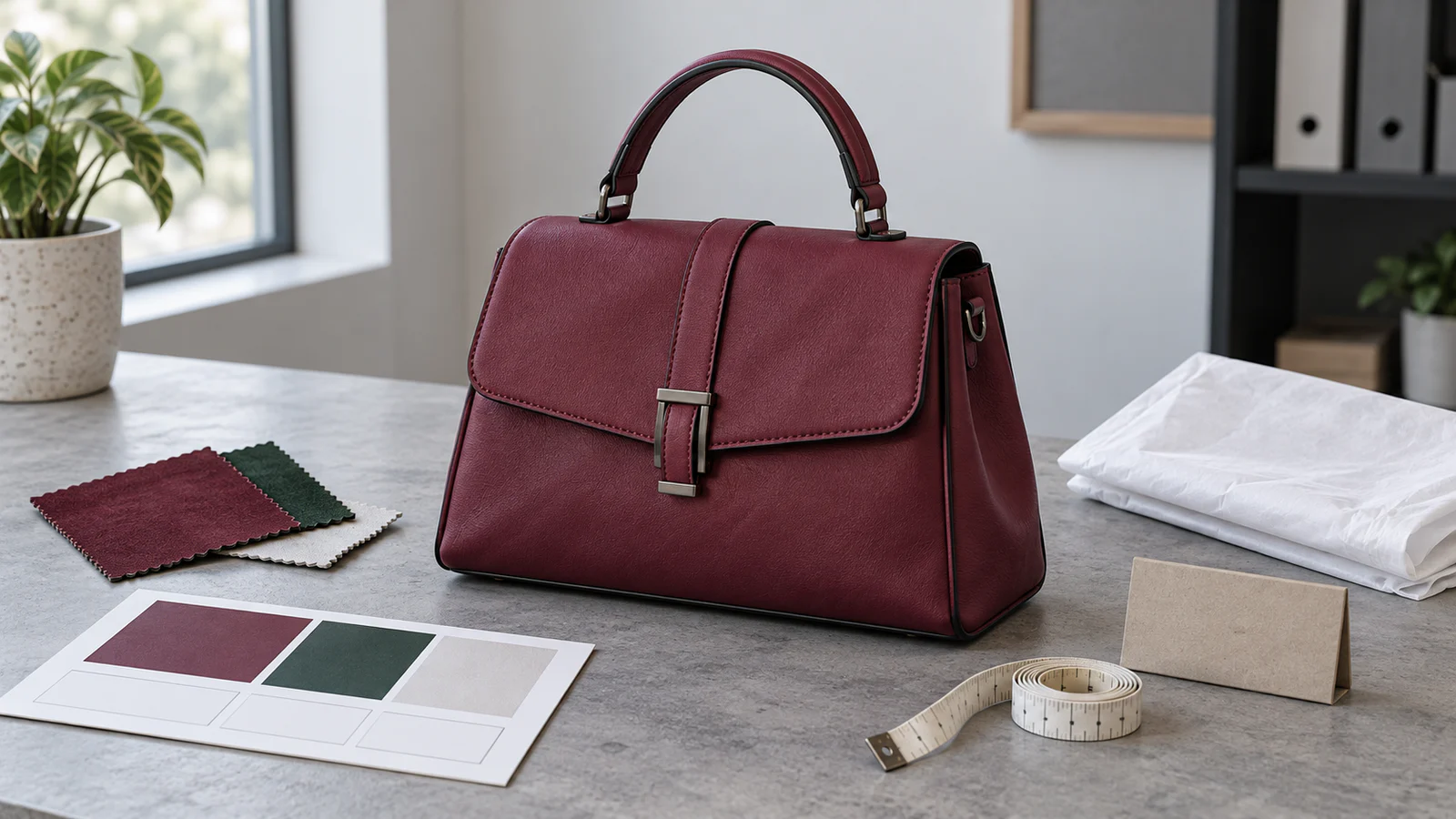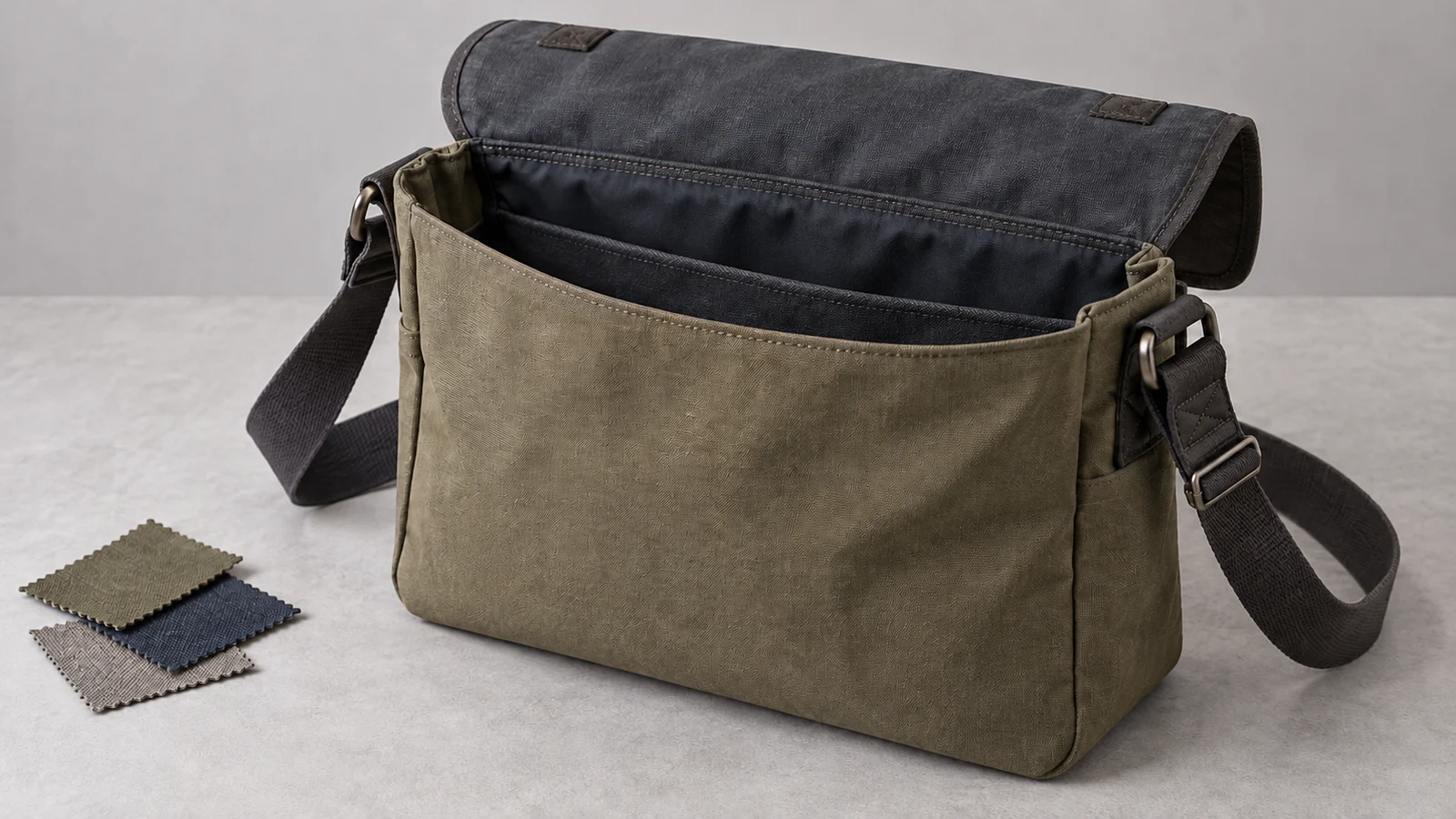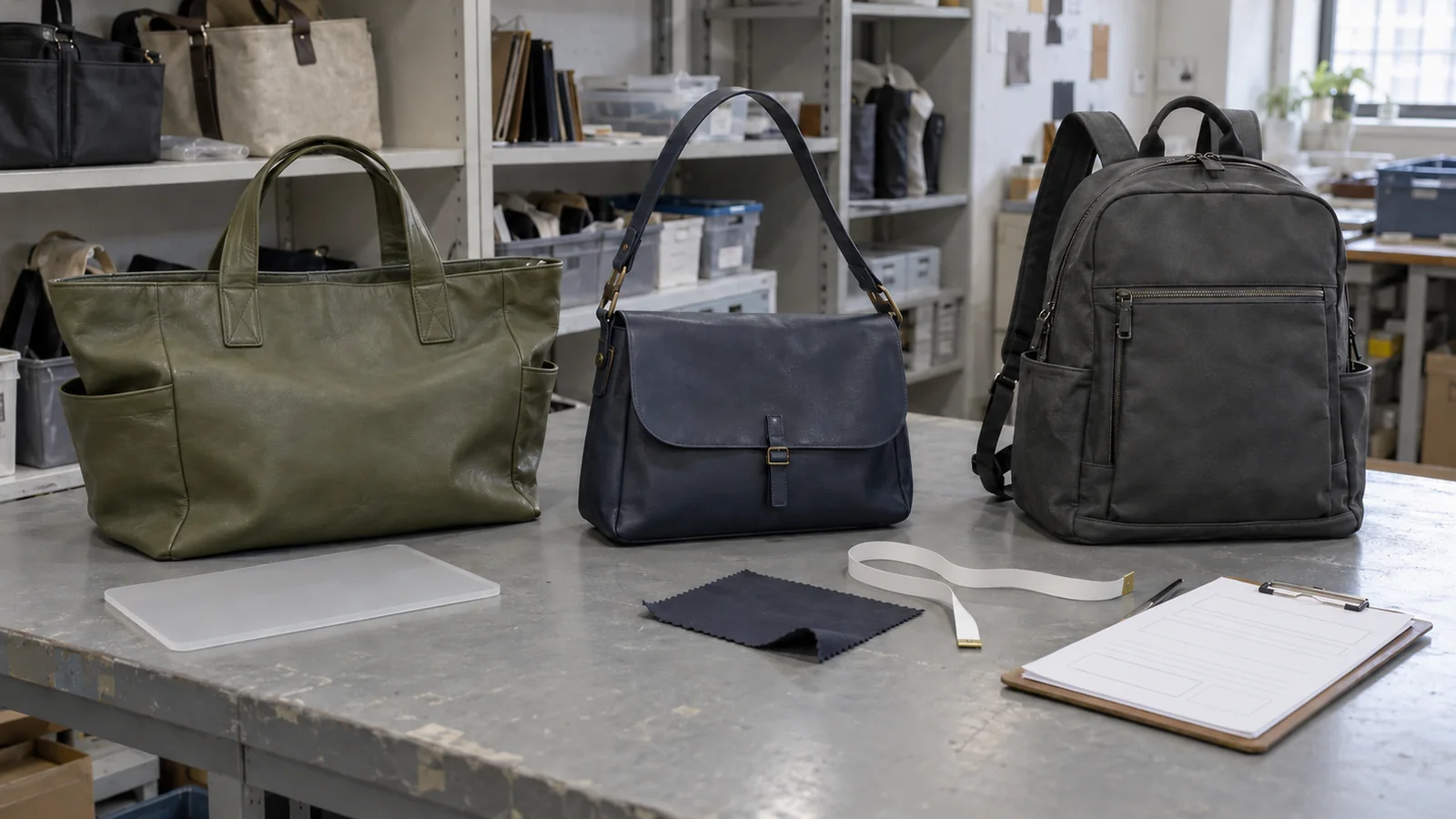
For a wholesale laptop-bag order, "fits a laptop" is not a specification a buyer and factory can reliably approve. A bag may appear wide enough from the outside yet have a narrower opening, a shallow internal sleeve or pockets that occupy the space intended for the device. A screen-size label does not resolve any of those questions.
When sourcing leather laptop bags wholesale, start with the actual device, define its route into the bag and check the complete layout on a physical sample. The aim is to make fit a documented review rather than an assumption carried from a product photograph into a purchase order.
Start With the Device
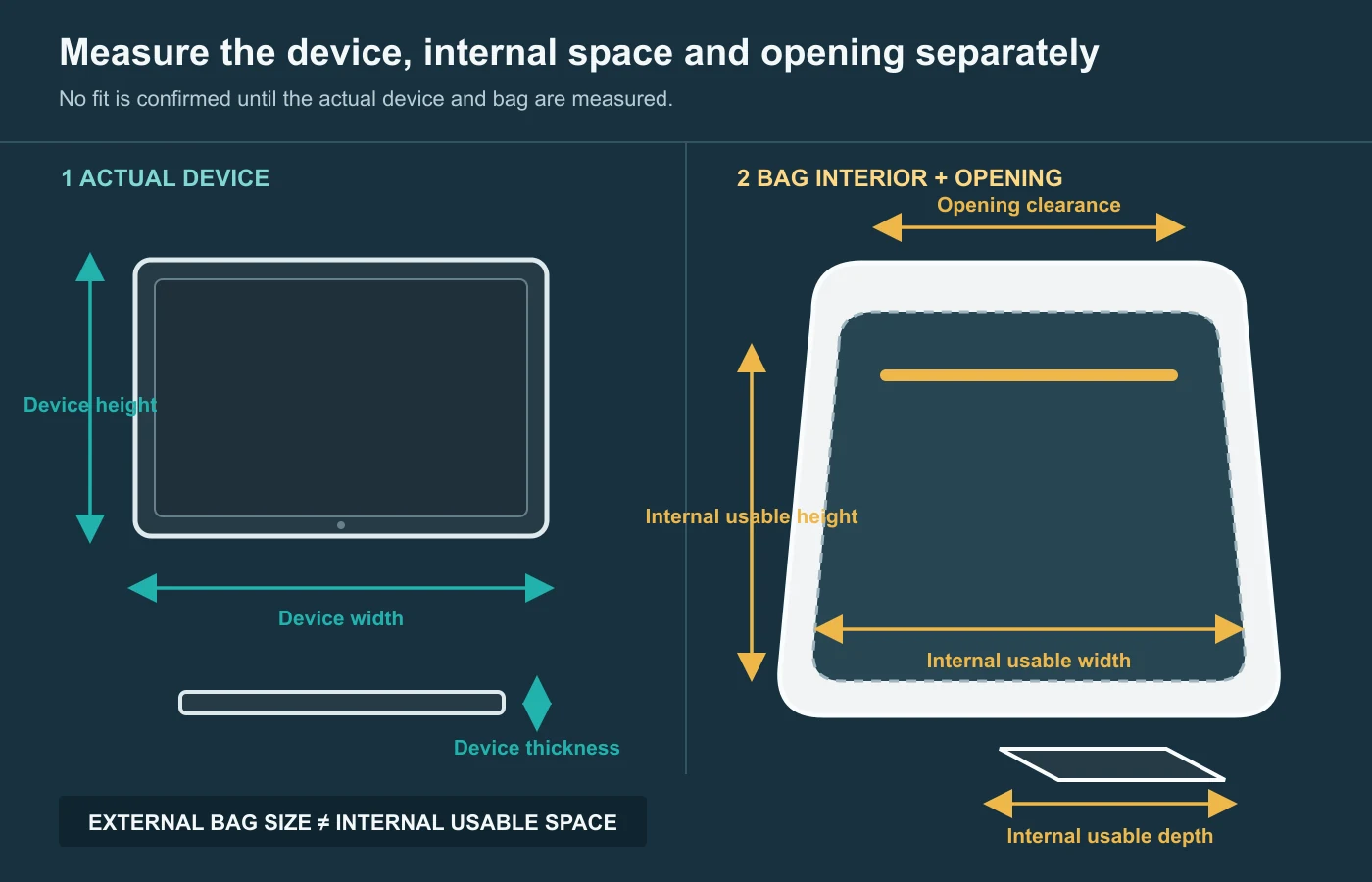
Measure the closed device's actual length, width and thickness. Label the two face dimensions on a sketch in the intended insertion orientation so that "width" and "height" cannot be interpreted differently. Note protruding parts and whether the buyer expects the device to travel inside an additional case or sleeve. If so, record the outside dimensions of that complete item too.
A 13-, 14-, 15.6- or 16-inch screen label is not the device's external footprint. Do not turn one of those labels into a compatibility statement for a bag without verifying the particular device and actual product together. A device outline can explain the requirement, but the drawing alone is not fit approval.
For a range intended to accommodate several devices, list each one separately. Do not assume the model with the longest side also has the greatest thickness or the most difficult insertion path. Identify which combinations need physical review and keep unsupported compatibility claims out of the listing copy.
Internal Space and Opening Measurements
External Size Versus Usable Space
Record the bag's external width, height and depth for the overall silhouette, then measure the internal usable space separately. Lining, seams, dividers, base construction and the closing arrangement can occupy space inside that outline. Do not calculate usable capacity simply by subtracting an estimated amount from an exterior measurement.
Define where each internal measurement starts and ends, with units and the bag's condition stated. A tapered bag may need measurements at more than one level. Use the handbag dimension guide for general sizing context, then add this project's device and compartment requirements rather than treating a category size as confirmation.
Opening Clearance and Corner Access
Measure the clear opening with the closure fully open and the handles or straps in their normal position. Zipper ends, a flap hinge, gusset folds or fixed hardware may restrict the entry. An adequate compartment does not establish that a device can pass through the opening without forcing its corners past those restrictions.
Review insertion and removal with the actual device, including any agreed sleeve. Check whether the bag can close in the intended way with the device positioned inside. Specify the intended clearance for factory review instead of inventing a universal allowance that every construction must use.
Compartment and Sleeve Dimensions
Give a separate device sleeve its own usable width, depth and height. Identify its mouth, fastening arrangement and position relative to the main opening. A divider is not necessarily a fully enclosed sleeve, and a shared main compartment is another layout again. Name the arrangement on the drawing so quotations describe the same interior.
Tote, Shoulder Bag and Backpack Routes
A tote format is a useful starting point when the brief calls for top access and a shared main space. Review whether the handle anchors and top closure leave enough room for the intended insertion path. Do not infer device capacity from the width of the front panel.
With a shoulder-bag format, examine the opening, strap position and where the device sits relative to other contents. A flap or narrower top changes the access review even if the bag has a broad base. Clarify whether the preferred carry method needs an adjustable or removable strap.
For a backpack direction, specify whether the device compartment opens independently or through the main compartment. Discuss access, strap placement and the interior arrangement together. These collection links establish format options, not evidence that any displayed item fits a particular device.
Structure, Base and Device Separation
Describe the desired body behavior before asking for a construction solution: a relaxed work tote and a more defined work bag do not need the same treatment everywhere. Ask the factory to identify the proposed panel layers, interlining and base arrangement for sample review. Do not assume that a structured appearance establishes a protective function.
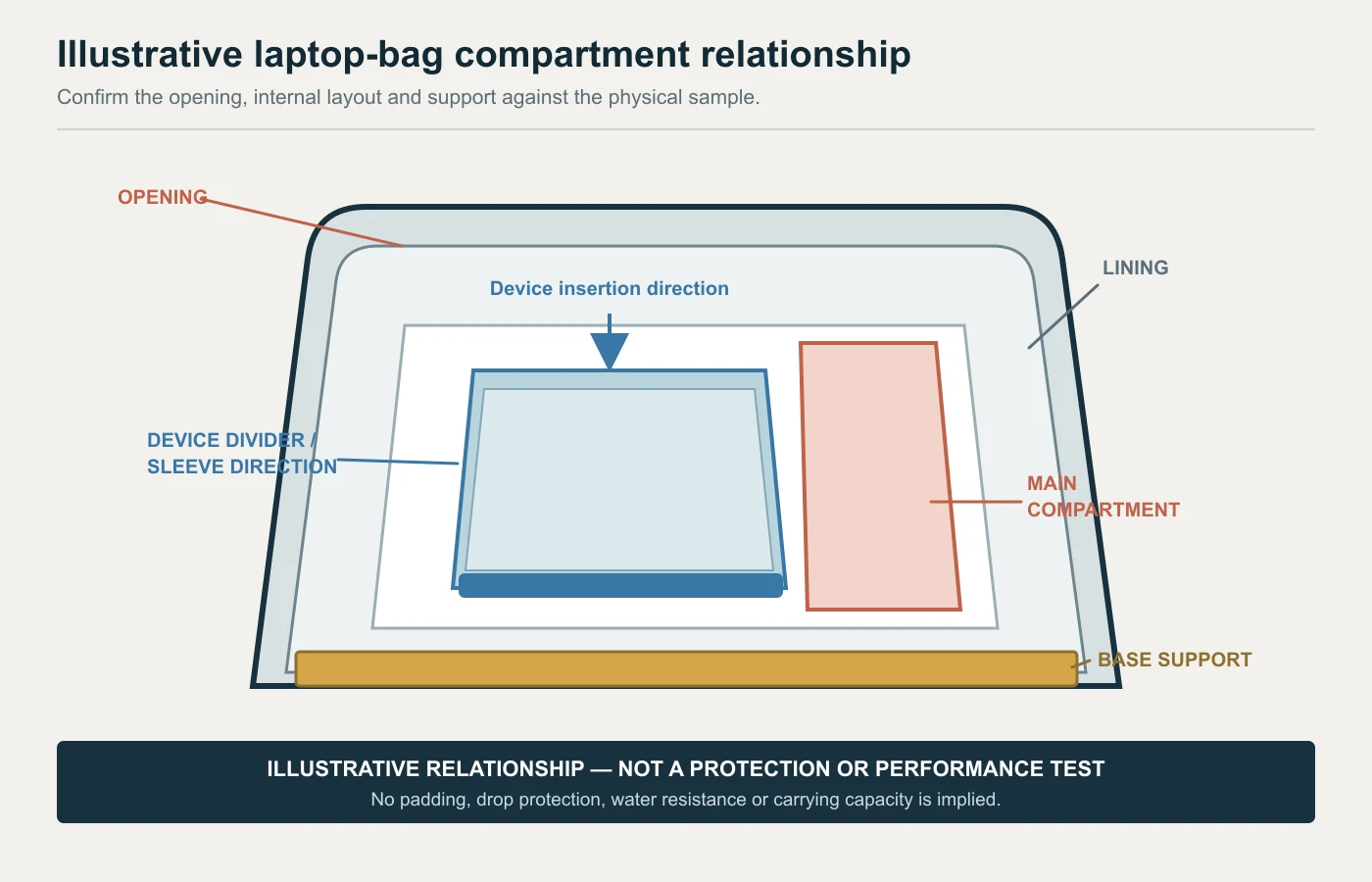
The main compartment, device divider or sleeve, lining and base support are separate relationships in the drawing below. Confirm whether the divider reaches the base, how it joins the side or back panel and where the device rests. Review how those choices affect the usable dimensions and access to the remaining space.
Any requested padding or functional requirement must be specified and confirmed separately. A visible layer, support board or sewn compartment is not proof of cushioning, impact protection or a test result. The illustration explains layout only; it is not a production pattern or a cross-section of an inspected Christori product.
Handles, Straps and Hardware
Specify handle drop, grip shape, strap direction and the intended carry arrangement. Review the anchor locations against the internal device position, opening and pockets. The factory needs to understand how these components connect to the body, not only how they look in a reference image.
For removable straps, identify the proposed hooks, rings and attachment tabs. For adjustable straps, agree the required adjustment range for review rather than relying on a photograph. Use the hardware options page to organize component references, including closure and finish choices.
On the sample, check handle movement, closure access and contact between hardware and adjacent surfaces. Examine the inside behind each attachment as well. These observations help resolve layout and finishing questions; they do not establish a load rating. Any functional testing requirement needs its own agreed method and acceptance criteria.
Genuine Leather and Vegan Leather Decisions
Choose the material against the proposed construction, not against the laptop label. With genuine leather material options, identify the swatch, surface direction and desired feel, then review them on an assembled panel and handle. A material name does not specify the complete structure beneath it.
For vegan leather material options, request the actual composition and backing description. Review the sample's seams, folded areas and edge treatment with that particular material. Neither category establishes waterproofing, protective performance or a universal advantage for a device-carrying bag.
Keep color, finish and branding decisions with the same material reference. Changing the material after interior approval may require another review of the assembled dimensions and shape. Ask what the proposed substitution changes rather than approving it only from a swatch photograph.
Interior Organization
List what should share the bag with the device: a charger, cables, documents or other specified items. Give those items dimensions where they affect the layout. Review them together in the sample; an empty device compartment can be usable while the complete intended packing arrangement is not.
Mark pocket width, depth, opening and position on the interior drawing. Check whether filled pockets intrude into the device space or block removal. Confirm the position of zipper pulls, closures and brand labels relative to the device path. Do not add a divider simply because it looks organized in a flat sketch.
Select lining and interior materials alongside these details. Ask how the lining is attached and finished at sleeve mouths, seams and the base. Inspect the actual sample for bunching or loose material that changes usable access, and record any correction in the next specification revision.
Ready Stock vs Custom Development
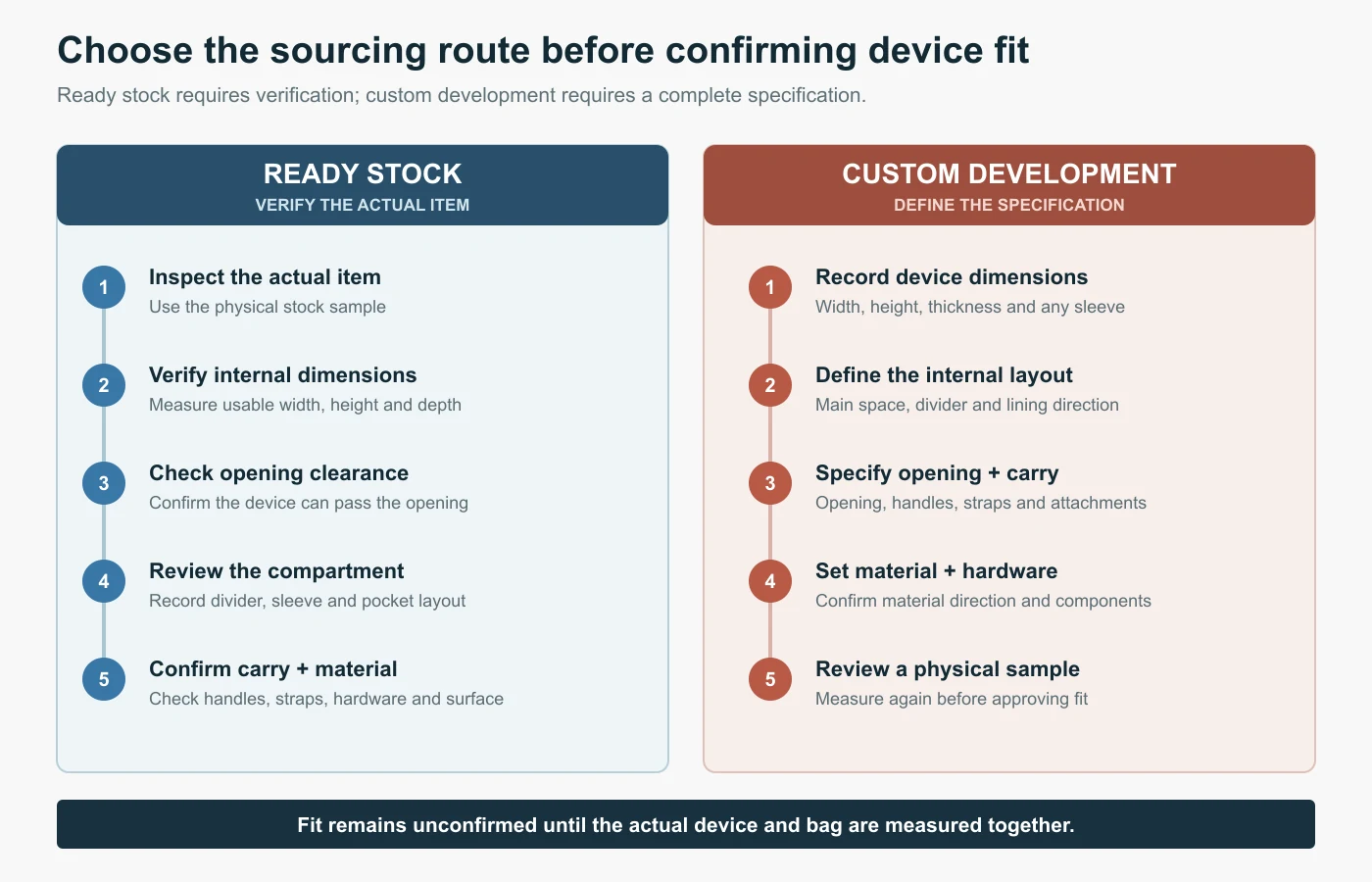
Ready Stock: Verify the Actual Item
Use the ready stock sourcing route to review an actual offered style. Confirm its material, color and available quantity, then obtain internal, opening and compartment measurements for that item. Ask what physical sample or inspection arrangement is available. Keep fit unconfirmed until the actual device and bag have been checked together.
A different interior sleeve or enlarged opening is not an assumed stock option. Separate such requests from the existing-product review so the factory can explain whether they require development.
Custom Development: Define the Specification
Use a handbag product-development review when the project needs new internal dimensions, a different layout or changes to opening and carry geometry. Start with device measurements and intended contents, then agree the material, structure, components and sample-review sequence.
Review the physical sample before publishing fit claims or approving the bulk specification. Share the quantity by style and color; minimum quantities, sample charges, price and timing require project confirmation. A custom planning assumption should not become a blanket rule for available stock.
RFQ and Sample Checklist
Before Requesting a Quote
- Provide the closed device's measured dimensions and any additional case or sleeve used with it.
- State the preferred bag format, external outline and intended device orientation.
- Define internal usable space, device compartment and opening clearance separately.
- Include material and color references, lining, pockets, dividers and base direction.
- Identify handles, straps, hardware, closure, branding and packing requirements.
- Share quantities by style and color, destination and requested schedule for feasibility review.
Use the handbag tech-pack guide to put these inputs into one dated reference. Mark unconfirmed choices as questions, not silently accepted specifications. Ask suppliers to state their quotation assumptions against the same version.
Before Approving the Sample
- Check external, internal, opening and compartment measurements against the agreed points.
- Insert and remove the actual device in the specified orientation, including its sleeve where required.
- Close the bag and review access with the other intended contents present.
- Check handle and strap placement, hardware contact, lining finish and pocket access.
- Review packing so handles, body and internal layout arrive in the intended arrangement.
- Record corrections, review the revised sample and identify exactly which version is approved.
Keep device-fit approval separate from any performance claim. If additional testing is required, agree its scope and evidence separately; a successful fit check does not establish protection or durability.
Frequently Asked Questions
How Can We Confirm Device Fit?
Measure the actual closed device, including any case, and compare it with the actual bag's usable compartment and opening. Then check insertion, placement, closure and removal on the physical sample. Document the specific combination reviewed rather than extending approval to a whole screen-size category.
Are External Bag Dimensions Enough?
No. They describe the outside shape, not the space remaining after lining, seams, dividers and closure construction. Internal usable dimensions, compartment dimensions and opening clearance need separate measurements.
When Is a New Sample Needed?
Agree a new review when changes affect material, internal space, the device sleeve, opening or carry arrangement. A previous sample may no longer represent the proposed bag. For unchanged stock, confirm the inspection or sample options for the actual offered item.
Does Custom MOQ Apply to Ready Stock?
Do not assume so. Available-stock quantities need confirmation by actual style and color, while custom requirements depend on material, construction and order scope. Send your planned quantity for review instead of treating one development reference as a rule for every route.
Discuss Your Laptop-Bag Specification
Send the device dimensions, preferred carry format, material direction and quantity for a sourcing or development review.