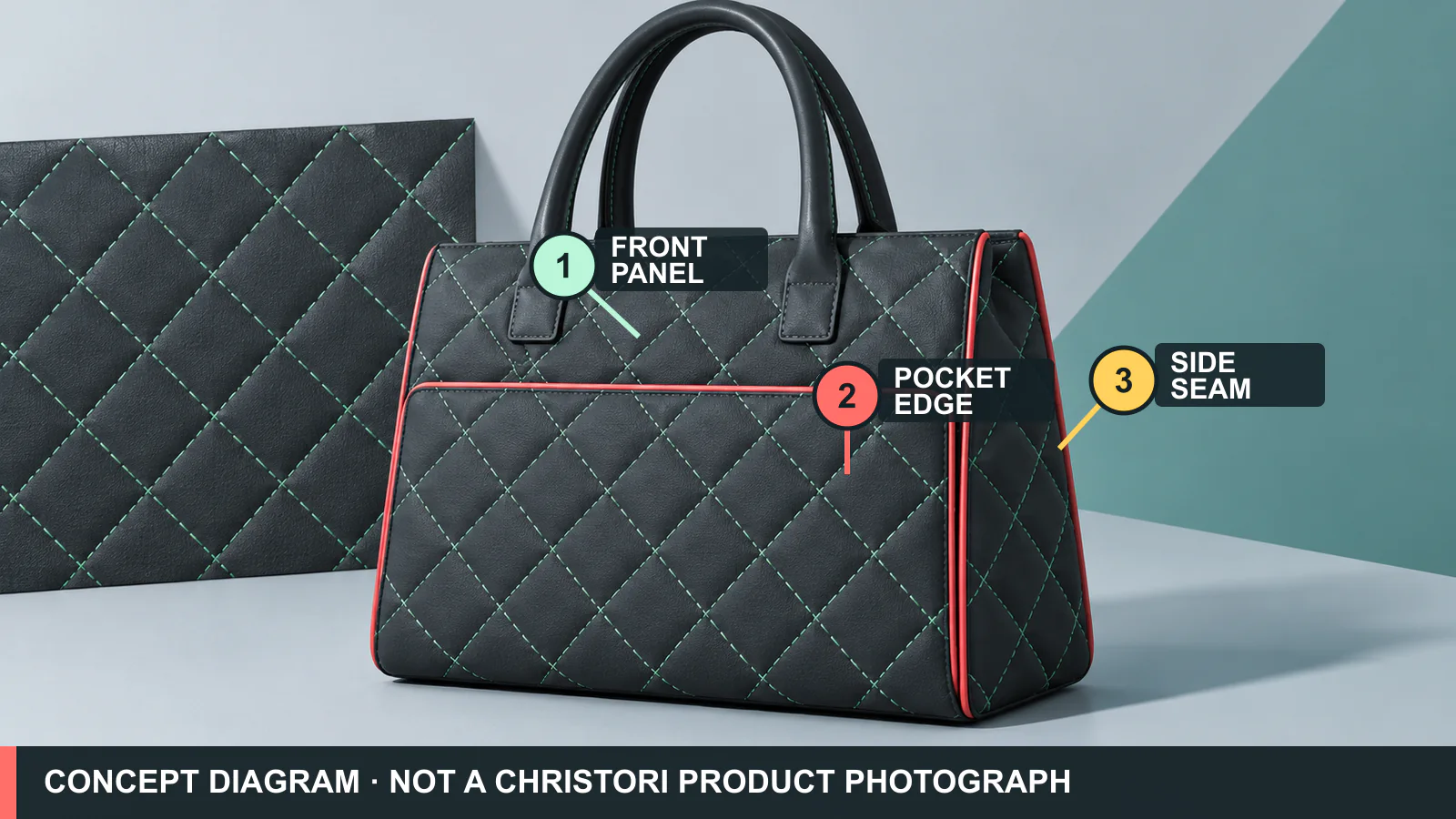
Two references described as quilted can call for different stitch directions, surface relief and panel alignment. For quilted handbags wholesale, construction details need to be visible in the quotation request: which panels carry the pattern, how lines meet a pocket or side seam, and which decisions remain open. A front photograph alone leaves suppliers to fill those gaps differently.
Prepare one annotated quilting map and use it again when reviewing the first assembled sample. The purpose is not to prescribe a factory's machine settings. It is to make your visual priorities explicit, separate them from construction proposals, and record what you have actually approved.
Define the Bag Format and One Quilting Map
Start with the format
Identify the front, back, sides, base and opening on your reference. Mark each area as quilted, plain or undecided. Include an open view so a flap or external pocket does not hide the boundary you want reviewed.
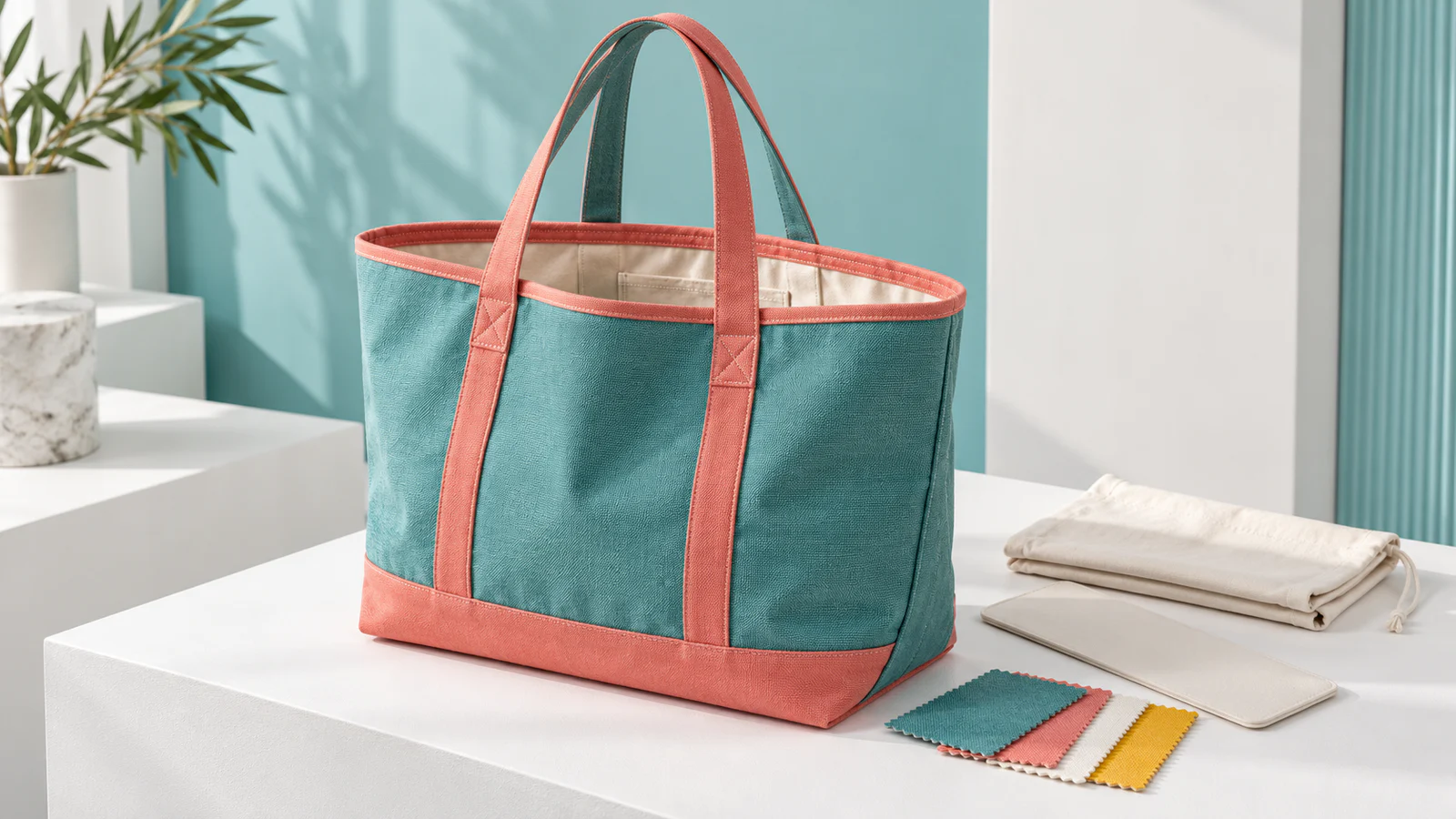
A quilted tote bag has a different set of panel decisions from a compact flap bag. On the tote, specify whether the pattern continues behind handle bases and across an external pocket. The wholesale tote bag collection can help establish the body format; it does not establish your quilting specification.
For a quilted crossbody bag, mark the flap edge, closure center and strap attachment zones. Use the crossbody bag collection for silhouette references, then draw the pattern boundaries on the selected format. Keep the same panel names across photographs, drawings and sample comments.
Mark a repeat and a visual anchor
A quilted handbag stitch layout should identify the pattern direction and the point from which you judge it. Diamond grids and parallel channels are possible visual directions, not interchangeable specifications. Mark a centerline, pocket edge or closure center as the principal visual anchor.
Where you have a target repeat size, state the units and measuring points on the drawing. Distinguish a line-to-line measurement from the diagonal of a diamond. If the size is not settled, write “to be confirmed” and request a proposed layout. Do not turn an estimated measurement from a perspective photograph into an approved dimension.
Choose which view matters most. A centered front motif and continuous lines around every corner may require different layout decisions. Ask for those differences to be shown before treating both as agreed requirements.
Specify Face, Padding and Backing as Open Decisions
List the outer-material direction, any proposed padding, backing and interior lining separately. A surface photograph does not show which layers are present. Ask the quotation to identify its assumptions, including where the sample may use a provisional material.
Describe the appearance you want in observable terms: shallow or pronounced relief, a relatively flat border, and the intended empty-bag outline. Attach references that distinguish these preferences. Avoid asking for “premium padding” without explaining what the buyer should see and feel.
Review the proposed layers together on the project sample. If the surface looks different from the reference, record where and under what viewing condition before requesting a specific hidden construction change. A thicker-looking panel in a photograph is not evidence of its composition or performance.
Keep lining material choices connected to the interior brief, not confused with the backing underneath the quilted face. Ask whether pockets or dividers are attached to that lining and whether their placement changes any visible panel area. Record unresolved layer choices as proposals, not approved production instructions.
Decide Where Lines Continue, Stop or Re-Start
Front to gusset, flap and pocket
Number the important junctions on the quilting map. For each, choose whether lines should align, deliberately stop or await sample review. This gives the reviewer something more useful than “all quilting must be perfect.”
The following is an example decision map to adapt, not a standard construction or a required layout for every bag.
| Marked junction | Buyer decision | View to request |
|---|---|---|
| A: front and external pocket | Choose alignment across the pocket edge or a deliberately separate repeat. | Straight front view with the entire pocket visible. |
| B: front and gusset | Mark the important continuation point; identify where a cut-off is acceptable. | Front-to-side view showing the seam and both neighboring panels. |
| C: flap and body | Decide whether alignment is judged with the flap closed, open, or both. | Matched open and closed photographs without changing the bag orientation. |
At a curved edge, show the intended termination zone rather than drawing a line beyond the finished panel. Ask the supplier to identify any proposed departure on the same numbered map. An accepted cut-off at one corner should not silently authorize different cut-offs elsewhere.
Keep branding and hardware anchors legible
Draw the logo zone, handle bases, strap rings and closure position over the quilting layout. Decide whether a line may pass through a branding area or should stop before it. Review the surrounding repeat as well as the component itself.
Keep component direction and finish references with your handbag hardware options. Here the decision is placement: does the fitting interrupt a visual anchor, obscure a junction, or leave an unbalanced patch of quilting? A photograph of tidy alignment does not establish attachment strength. Any required performance evaluation needs separate agreed evidence.
Keep Ready Stock and Custom Development Separate
With ready-stock handbag options, begin with an identified item. Request its actual front, side, back and open views, then confirm available colors, quantities and permitted changes. Do not assume the quilting grid, padding or pocket position can be revised on an existing finished bag. This guide does not confirm current stock of a particular quilted style.
For existing-style customization, separate an artwork or packaging request from a change to the quilted panel. A new logo location may intersect stitching even when the body outline stays unchanged. Ask which affected areas need sample review.
For handbag product development, supply the panel map and distinguish fixed visual requirements from proposed layer choices. Ask the quotation to identify exclusions and unresolved details. Otherwise, two quotations may refer to different alignment targets while appearing to describe the same bag.
Share a target quantity or mark it undecided. Material, construction and customization scope need project review; a quantity estimate is useful input, not a reason to withhold the reference. Pricing, sampling charges and timing remain subject to confirmed project information.
Use a Quilted RFQ and First-Sample Review Sheet
Use the same row identifiers before quotation and after sampling. Request the first assembled bag, not only a flat quilted swatch: a swatch cannot show how the chosen pattern meets all the finished boundaries.
| Buyer marks before quote | What to check on the first assembled sample | Record as pass, revise or unresolved |
|---|---|---|
| 1. Bag format and named front, back, side and open views. | Match the assembled panels and quilted/plain zones to the map. | Identify the view, sample version and any missing area. |
| 2. Face material, padding/backing proposals and lining direction. | Confirm actual sample materials and visible relief; note substitutions. | Separate accepted appearance from unconfirmed layer composition. |
| 3. Pattern direction, visual anchor and buyer-defined measuring points. | Compare the repeat against the approved drawing from the designated view. | Photograph the anchor and label any measured difference. |
| 4. Front-to-pocket, flap and gusset junction priorities. | Check each numbered continuation or accepted cut-off on the assembled bag. | Record each junction separately, including accepted exceptions. |
| 5. Stitch-line termination at edges and corners. | Observe where lines end, re-start or disappear into the finished boundary. | Circle the affected location and describe the requested change. |
| 6. Logo, handle base, strap ring and closure zones. | Compare placement and line interference with the marked layout. | Identify the component and whether the surrounding layout is accepted. |
| 7. Intended empty-bag appearance and normal opening positions. | Observe relief and panel alignment before and after ordinary opening and closing. | Attach matched views; record visible changes without claiming a test result. |
| 8. Color references, estimated quantity and remaining questions. | Identify sample colors, provisional parts and questions still unanswered. | Keep unresolved items open; do not mark the whole specification approved. |
For quilted bag panel alignment, compare photographs taken from the same orientation. Include one complete view for context and a close-up for each disputed junction. A close-up without a panel identifier can lead to a revision on the wrong side.
In quilted handbag sample QC, use pass for an agreed point that matches, revise for a stated difference requiring change, and unresolved where the reference or evidence is incomplete. These are review statuses, not test grades. Do not invent a numeric tolerance to make an uncertain observation look objective.
Return one dated set of comments. Preserve the approved map, sample identity and accepted exceptions together. If a later revision changes the pocket or closure position, recheck the nearby quilting decisions rather than carrying forward a photograph that no longer represents that area.
Frequently Asked Questions
Does every quilted handbag need the same padding?
No single padding choice should be inferred from the word quilted. Ask what is proposed for this project, describe the intended relief, and review the actual sample combination. Keep composition questions open until confirmed; an attractive surface is not proof of a particular filling.
Should quilting line up across every seam?
Only where the approved layout calls for it. Mark priority junctions and intentional interruptions separately. If the proposed construction cannot follow the reference at a particular boundary, request a marked alternative and review it before approving the sample.
Can a product photo alone support a comparable quote?
It can start the discussion, but usually leaves the concealed layers, other panel views and alignment priorities unspecified. Add a numbered quilting map, material direction and unresolved questions. Ask suppliers to state their assumptions so quotations can be compared on the same basis.
Can we enquire before confirming quantity?
Yes. Share the format, reference, possible quantity range and decisions still open. Christori can review the sourcing or development direction with you. Availability and commercial terms require subsequent confirmation; an early discussion is not an inventory or price commitment.
Send Your Quilting Map for Review
Share your bag format, quilting reference, panel map, material direction and open questions for a sourcing or development review. Quantity can be discussed.