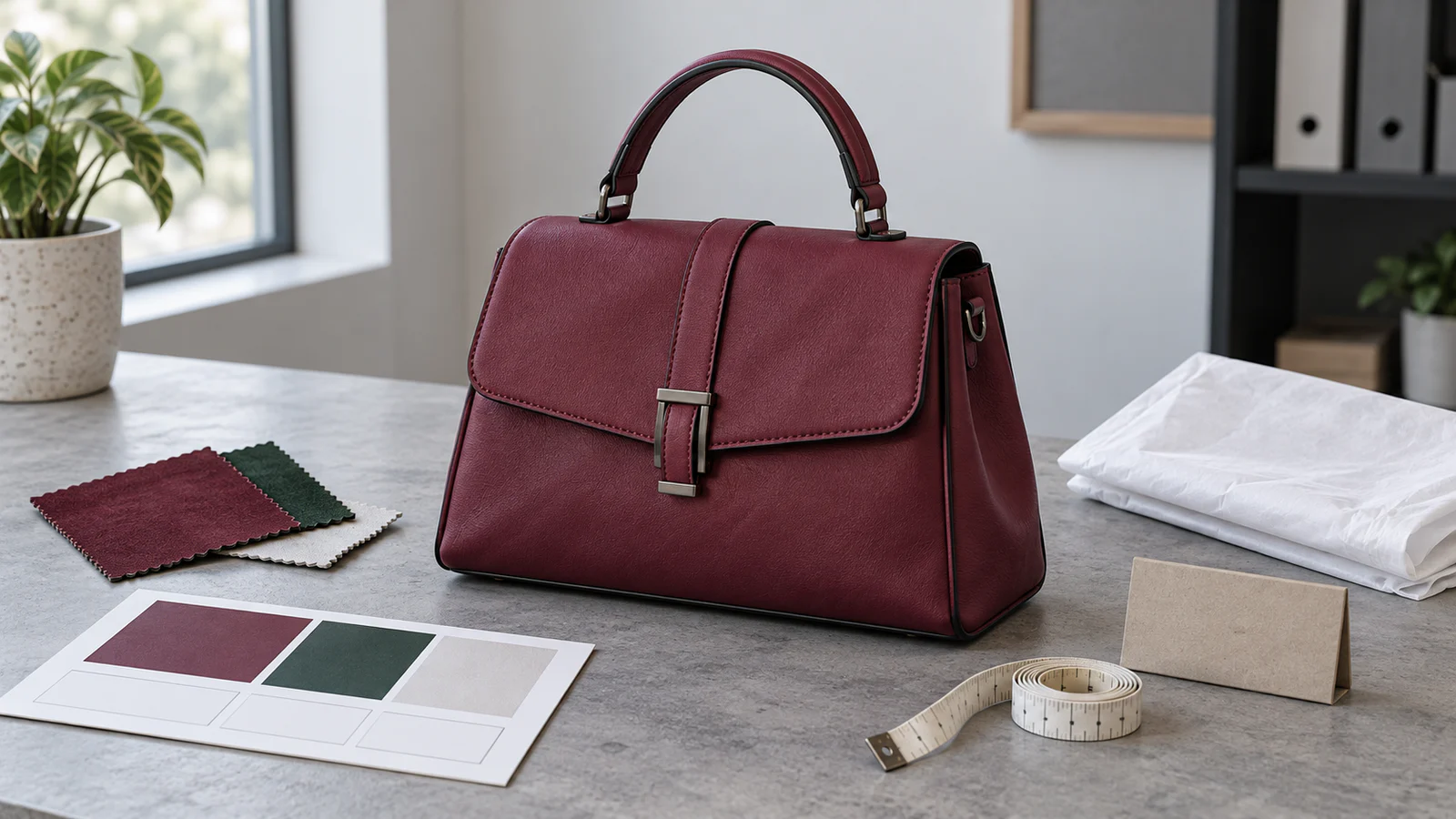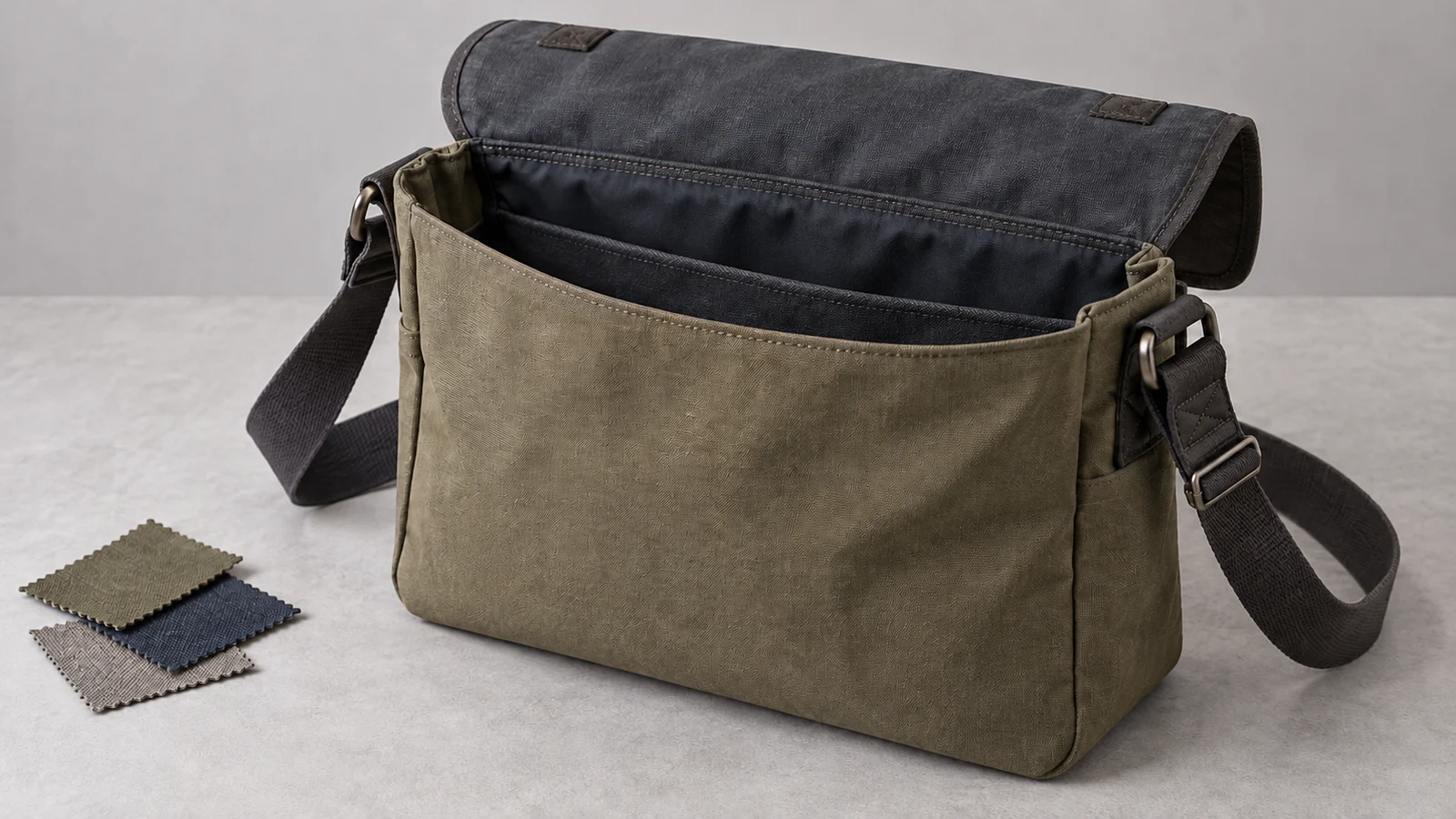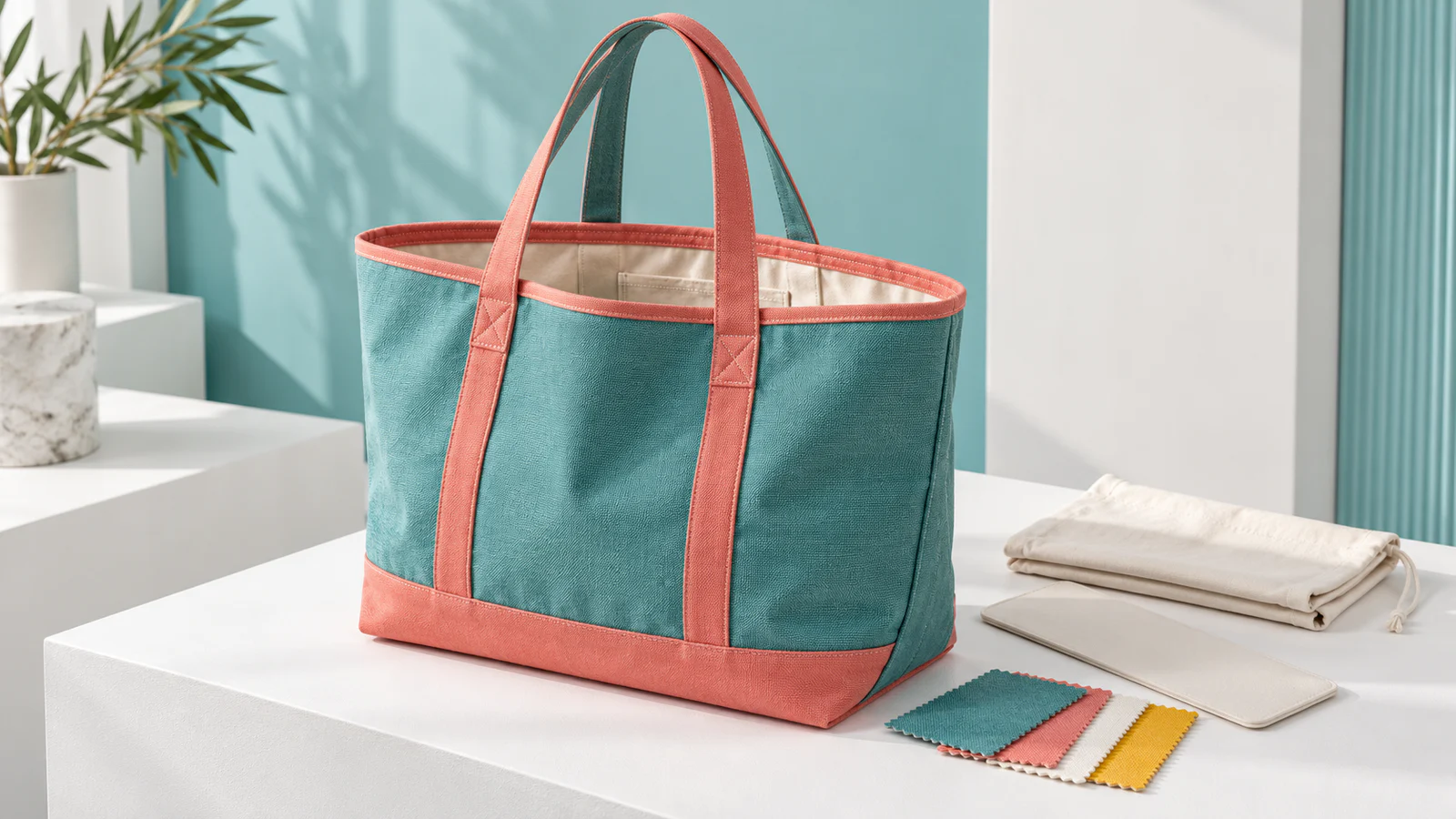
A reference image can show the silhouette you want, but it cannot tell a factory how the handle feels, what supports the side panels or whether the opening admits the intended contents. Two suppliers can quote the same photograph while assuming different construction. The prices then describe different bags.
Useful top handle bag specifications connect measurements with construction and an approval method. For a wholesale or private-label project, define what must stay fixed, what can follow an existing style and what needs sample review. This guide follows those decisions from assortment planning to the packed product, without treating an illustration as a production instruction.
Commercial Roles in a Handbag Assortment
A structured work bag may need an organized interior and an opening that clears bulky contents. A compact day bag can prioritize a smaller footprint, but its handle and closure must still leave usable access. Satchel, Boston and bowling shapes introduce different side profiles and opening arrangements; the category name alone does not settle their construction.
For a boutique capsule, decide whether this style should share materials and hardware with other bags or introduce a distinct shape. A sourcing manager can then separate essential features from optional changes. Start with the top handle bag collection for silhouette direction, then request details for the selected style rather than transferring specifications from another listing.
Measurements Buyers Should Specify
Agree on units, measurement points and whether the bag is empty, filled, open or closed. A number without that context is easy to interpret differently. Mark reference points on a drawing and ask the factory to confirm achievable tolerances during sample review.
Handle Drop, Width and Grip
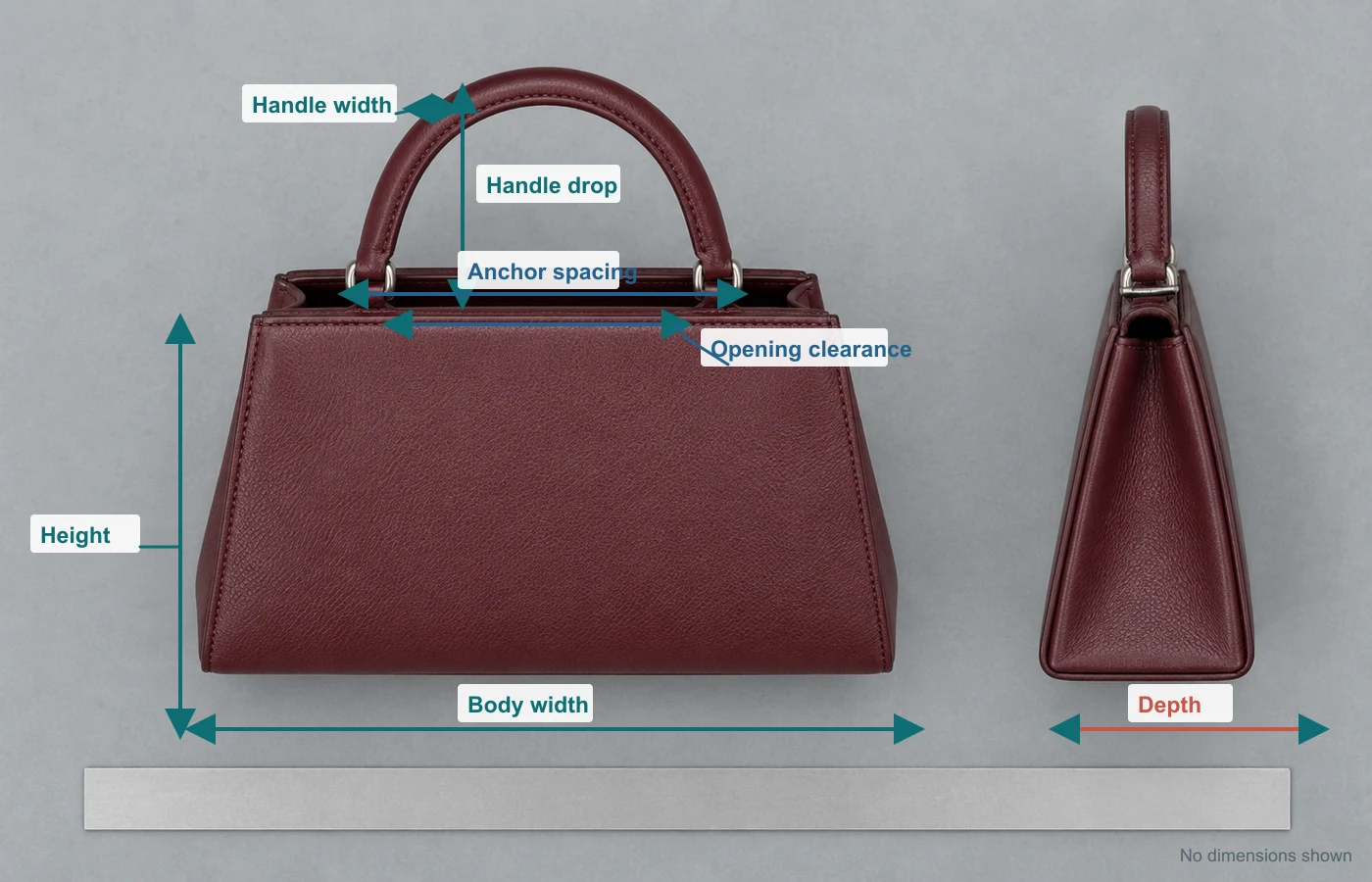
Record handle drop from the agreed upper body or attachment reference to the inside top of the handle. Do not substitute total handle length. Specify handle width at the grip, thickness and cross-section: a flat handle and a rolled handle can share a drop yet feel very different.
Check the intended carry mode on the sample. Increasing drop affects the silhouette and packing arrangement, while adding padding changes bulk around the grip. If two handles are used, inspect their alignment when lifted together and where they settle when released.
Anchor Spacing and Opening Clearance
Define anchor spacing between agreed attachment centers, plus their position relative to the side seams and top edge. Check whether handles pivot away from the opening or stand across it. Rings, tabs and brackets occupy space that is not obvious in a front photograph.
Opening clearance means the usable access after accounting for the closure, gusset folds and handles. Review it with representative contents, not just a ruler across the outer top edge. A wide body does not necessarily provide a wide entry.
Body Width, Height and Depth
State where each dimension is measured. A tapered bag needs separate top and base widths; distinguish body height from total height including handles. Specify depth at the base and opening where relevant. If a particular item must fit, provide its dimensions separately and verify internal fit on the sample.
Handle Construction and Attachment
A rolled handle creates a rounded grip; confirm its internal shaping and edge treatment. A flat handle makes width and edge finishing more visible. Padding adds volume, while a rigid handle makes its shape and attachment geometry especially important. None of these descriptions establishes carrying capacity.
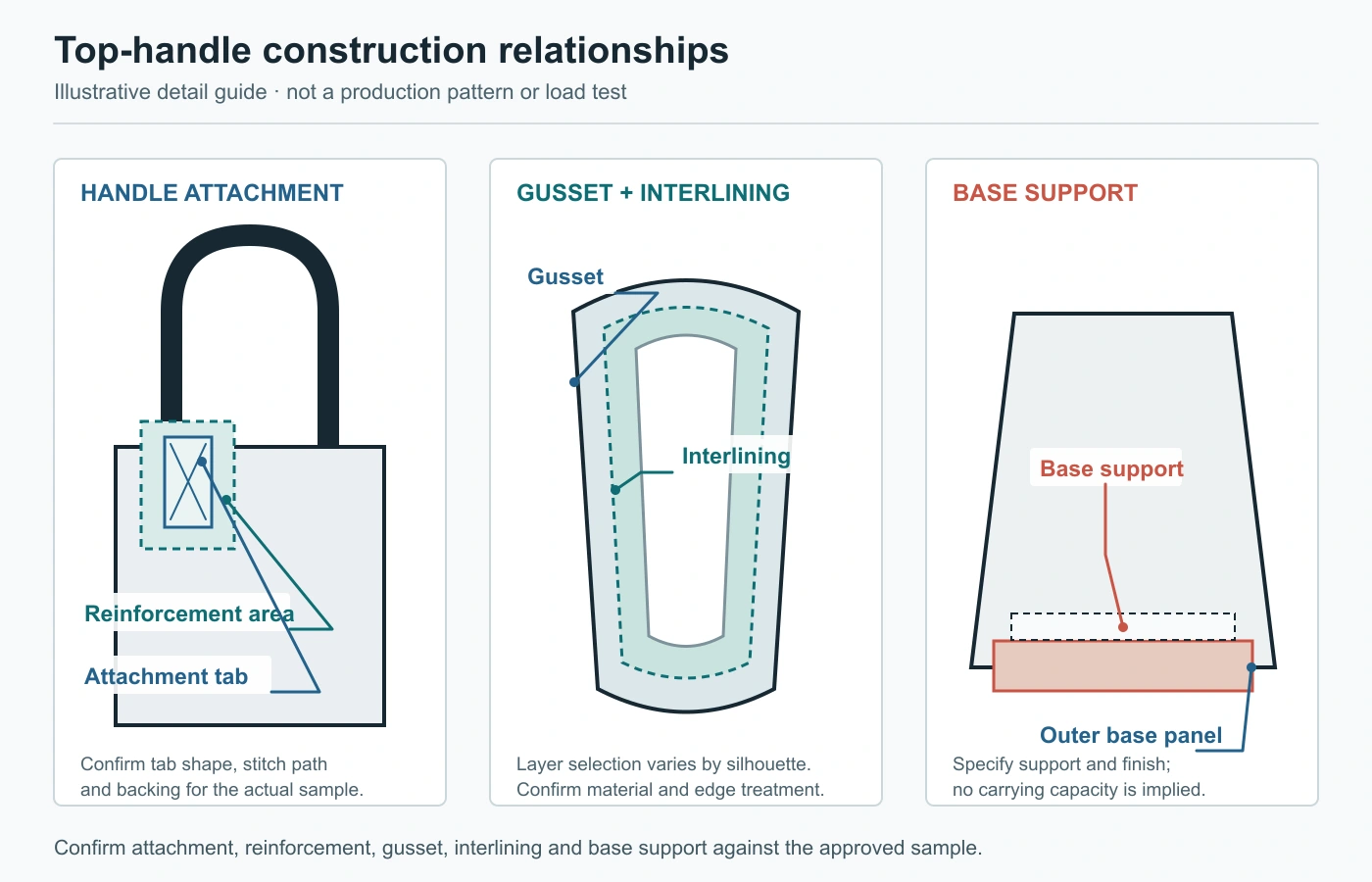
Stitched tabs connect the handle to a defined area of the body. Rings or brackets introduce moving interfaces and hardware contact points. An integrated panel carries the attachment into a larger section of the bag. Ask how the proposed connection works with the body material and local reinforcement, not simply whether the handle looks similar.
During sampling, examine stitch paths, tab symmetry, edge finish and the inside area behind each anchor. Move the handles through their normal range to check contact with the closure and side panels. Record any requested functional testing separately; visual inspection is not a load test or durability result.
Body Structure, Gussets and Bottom Support
Specify the intended result first: relaxed, semi-structured or rigid. Then discuss how the proposed outer material, interlining and panel construction produce that shape. Adding stiffness everywhere is not a substitute for defining where the bag should fold and where it should remain supported.
The gusset shapes the side and affects opening movement. Interlining sits within the construction to influence the panel's behavior; it is different from the visible lining. Bottom support sits above or within the base construction, separate from the outer base panel. These relationships should be reviewed together because a firm base does not automatically prevent side-panel collapse.
The diagram below illustrates those relationships, not a pattern to copy. Confirm the actual layers, joins and attachment backing on the proposed sample. If a baseboard or feet are requested, define placement and finish, then check how they interact with the lining and packed shape. Do not assume every style includes them.
Hardware and Closures
Choose the closure around access and structure. A zipper requires decisions on opening length, end treatment and pull access around the handles. A snap needs aligned mounting positions. A lock or frame-style opening introduces components whose dimensions must work with the panel shape and hand clearance.
Specify the component reference and finish together. A finish name alone does not define the shape, size or matching appearance of rings, feet and closure parts. Use the handbag hardware choices page to frame the discussion, then approve the relevant components for this project. On the sample, check closure alignment, exposed edges and whether moving parts rub adjacent surfaces. Request documentation for any market-specific requirement rather than inferring compliance from appearance.
Material, Lining and Interior Layout
Evaluate the outer material in the intended construction. With genuine leather material options, identify the reference swatch, surface direction and desired hand feel. For vegan leather material options, request the actual material description and backing information instead of treating the category name as a complete specification. Neither label alone settles stiffness, edge treatment or suitability for a particular handle.
Specify lining color, feel and attachment, then sketch pocket and divider positions. A center divider may organize contents but also restrict access through a narrow opening. A pocket directly behind a handle anchor can complicate the interior arrangement. Review lining and interior materials alongside the proposed layout, not after the outer sample is approved.
Locate the brand label or logo on the drawing. Confirm its size, method and clearance from seams, pockets and reinforcement. Ask for sample review before assuming that a branding method used on one material will transfer unchanged to another.
Packing Protection
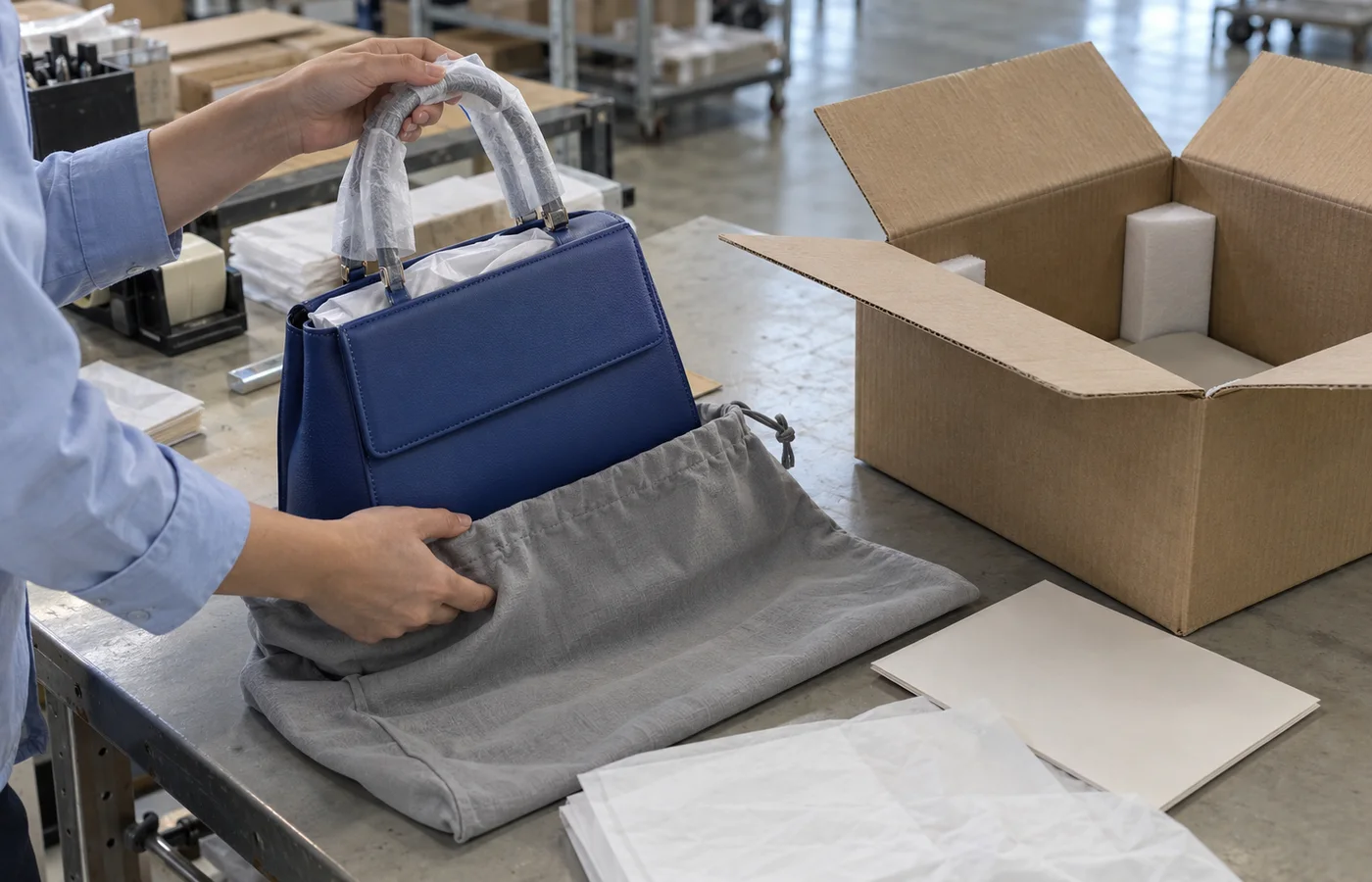
A satisfactory sample can still arrive with an altered silhouette if its packing ignores the handles and body structure. Define whether handles stand upright, pivot down or require separation from the body. Avoid treating a smaller packed size as the only objective; review the unpacked result as well.
Project-specific protection may include body stuffing, handle sleeves, surface separators and a correctly sized dust bag. Agree where each item sits and whether hardware could press against another surface. Confirm carton orientation and separation between bags, particularly where a rigid handle creates an uneven profile. The illustrated materials are possibilities, not a universal packing standard.
Review a packed sample or clear packing sequence before bulk approval. Ask how the bag is held in place, how accessories are separated and what the receiver must remove. Record the agreed packing method in the same revision as the product specification so later changes are not lost between teams.
Choose the Sourcing Route
Select the route before comparing quotations. Ready Stock starts with an existing available product; light customization starts with an existing style and confirmed changes; OEM development starts with a specification that may require a new pattern and sample work.
Ready Stock / Wholesale
Confirm the actual style, available colors and quantities. Inspect its measurements and packing; do not assume changes are possible.
Existing-Style Customization
Agree which logo, material, color or component changes are feasible, then review the affected details on a sample.
OEM Development
Define geometry, handle connection, body construction and interior. Resolve feasibility and sample revisions before approving the complete specification.
Use the ready stock sourcing route when the offered product meets your essential requirements. A request to change anchor positions or rebuild the opening may move beyond light customization even when the exterior looks familiar. Discuss these changes through a custom handbag development review before treating an existing-style quote as applicable.
MOQ depends on material, construction and customization scope. Share your target quantity for project review. Break that quantity down by style and color, and identify which choices remain flexible. Price, sample charges and timing require confirmation against the actual project details.
RFQ and Sample Approval Checklist
Send one dated specification rather than scattered references with conflicting details. Mark missing inputs as open questions. The factory can then distinguish a quotation assumption from an approved requirement.
- Route and reference: selected existing style or new design; front, side, base and interior views with requested changes marked.
- Measurements: body dimensions, usable opening, handle drop, grip width and thickness, anchor spacing and measurement points.
- Materials and structure: swatches, color direction, intended firmness, gussets, interlining and base-support requirements.
- Components and interior: closure, hardware references, lining, pockets, dividers and any detachable strap.
- Branding and packing: artwork, placement, proposed method, handle protection, stuffing and retail packing requirements.
- Commercial scope: quantity by style and color, destination, required delivery date for feasibility review and unresolved alternatives.
Before bulk production, reconcile the approved sample with the written specification. Check dimensions, handle movement, opening access, stitching, material and color references, components, interior and packing. Keep dated photos and a revision list; an approval message should identify the exact sample and any remaining exceptions. Do not leave a revised handle or closure to be interpreted from an earlier photograph.
Frequently Asked Questions
What Is the Ideal Handle Drop?
There is no universal measurement. Define the carry mode, grip clearance and silhouette, then assess them together on a sample. Use agreed measurement points so buyer and factory are discussing the same drop.
Can a Detachable Shoulder Strap Be Added?
Ask whether the selected construction can accommodate separate anchors, reinforcement and suitable hardware. Check strap placement, balance and clearance around the handles. Adding a strap is a development question, not simply an accessory request.
Is a New Sample Always Necessary?
For unchanged stock, confirm what inspection or sample review is available for the actual offered product. For changes to materials, handles, structure or closures, agree which details need physical approval. Photos cannot resolve every question about grip, access or firmness.
Does the Same MOQ Apply to Every Route?
Do not transfer a stock quantity assumption to custom production. Material sourcing, construction and customization scope affect the project review. Provide your intended color split and ask which alternatives are feasible before finalizing the assortment.
Discuss Your Specification with Christori
Send your reference, handle measurements, material direction and target quantity for a product development review.