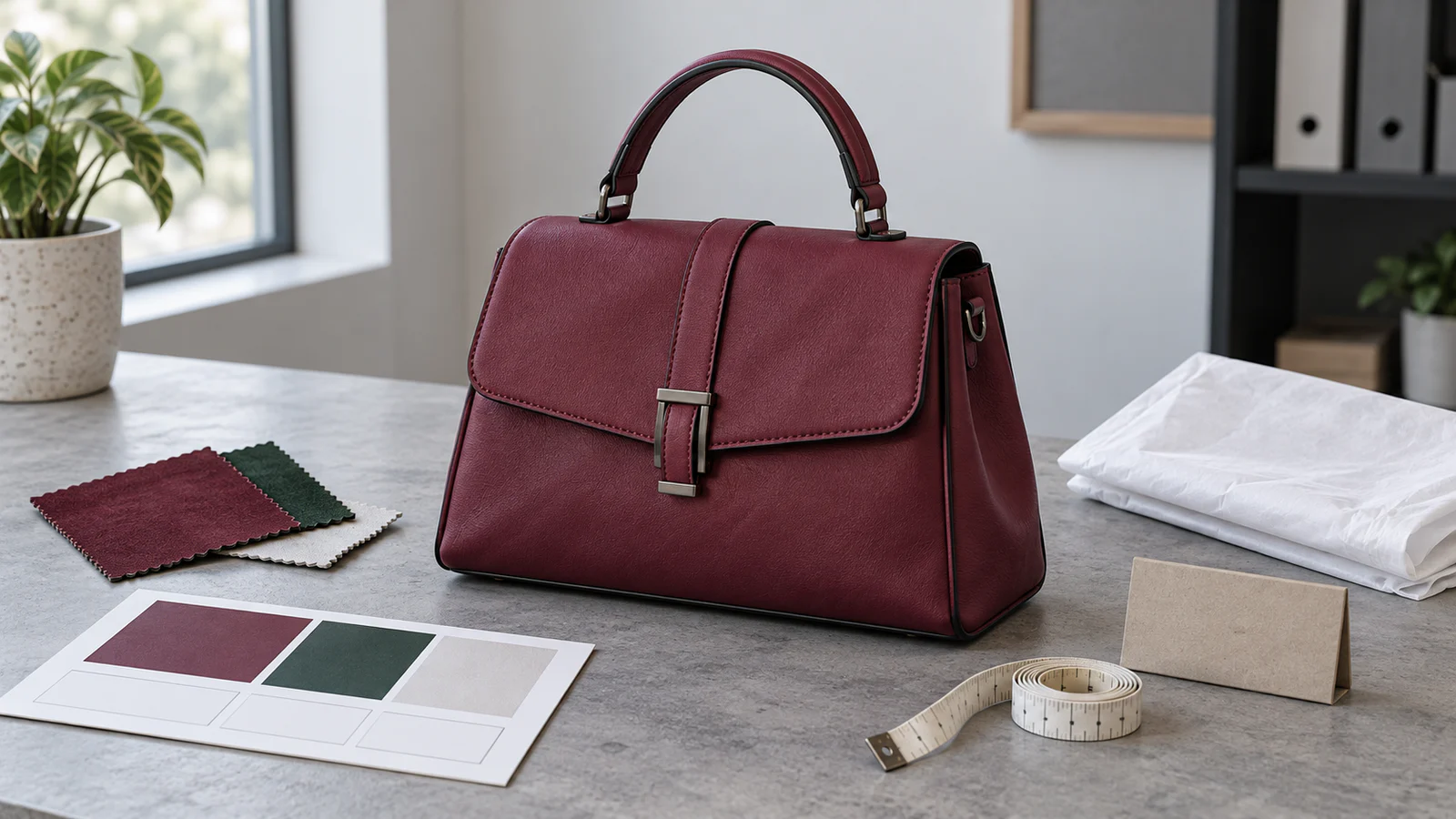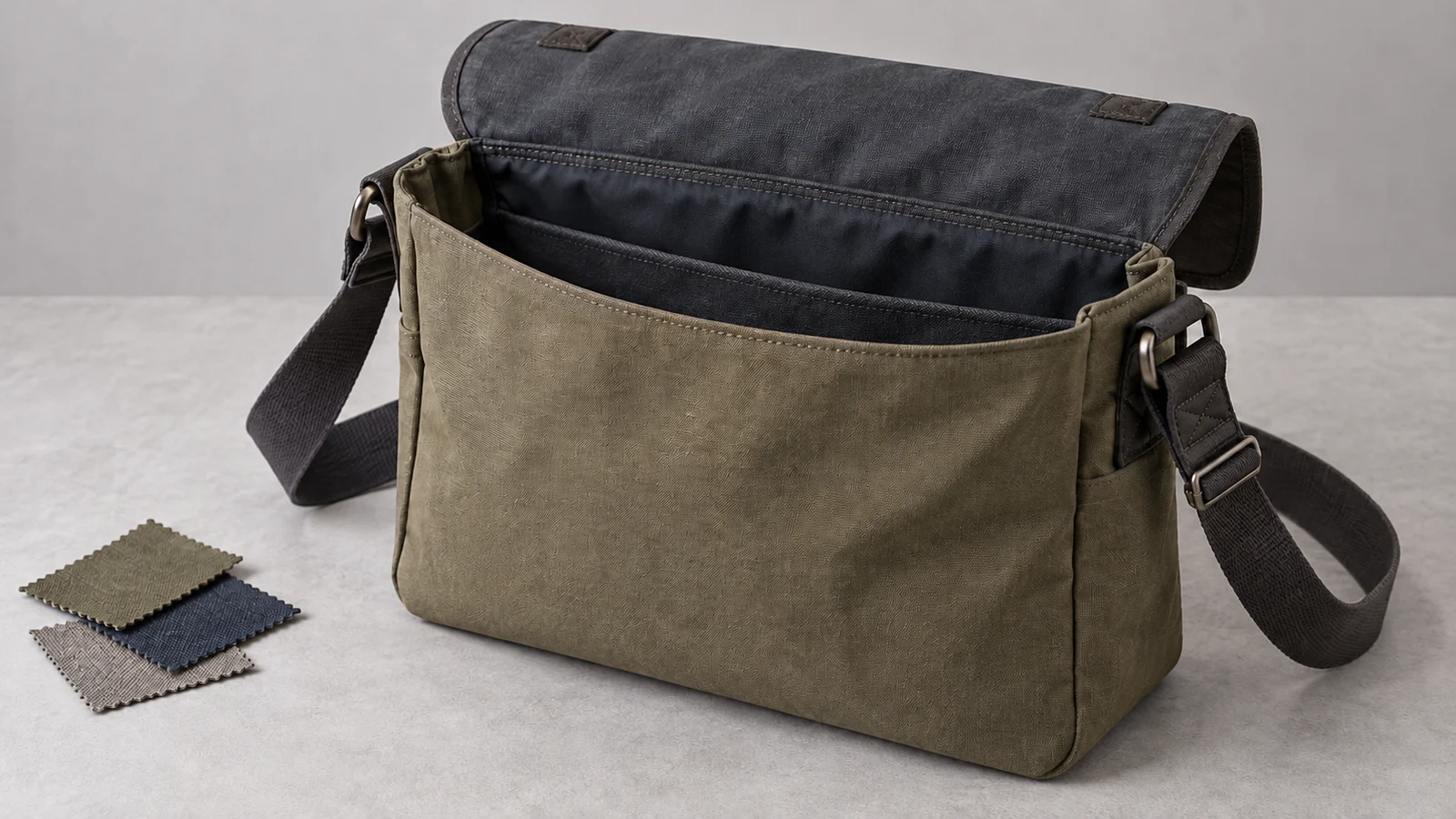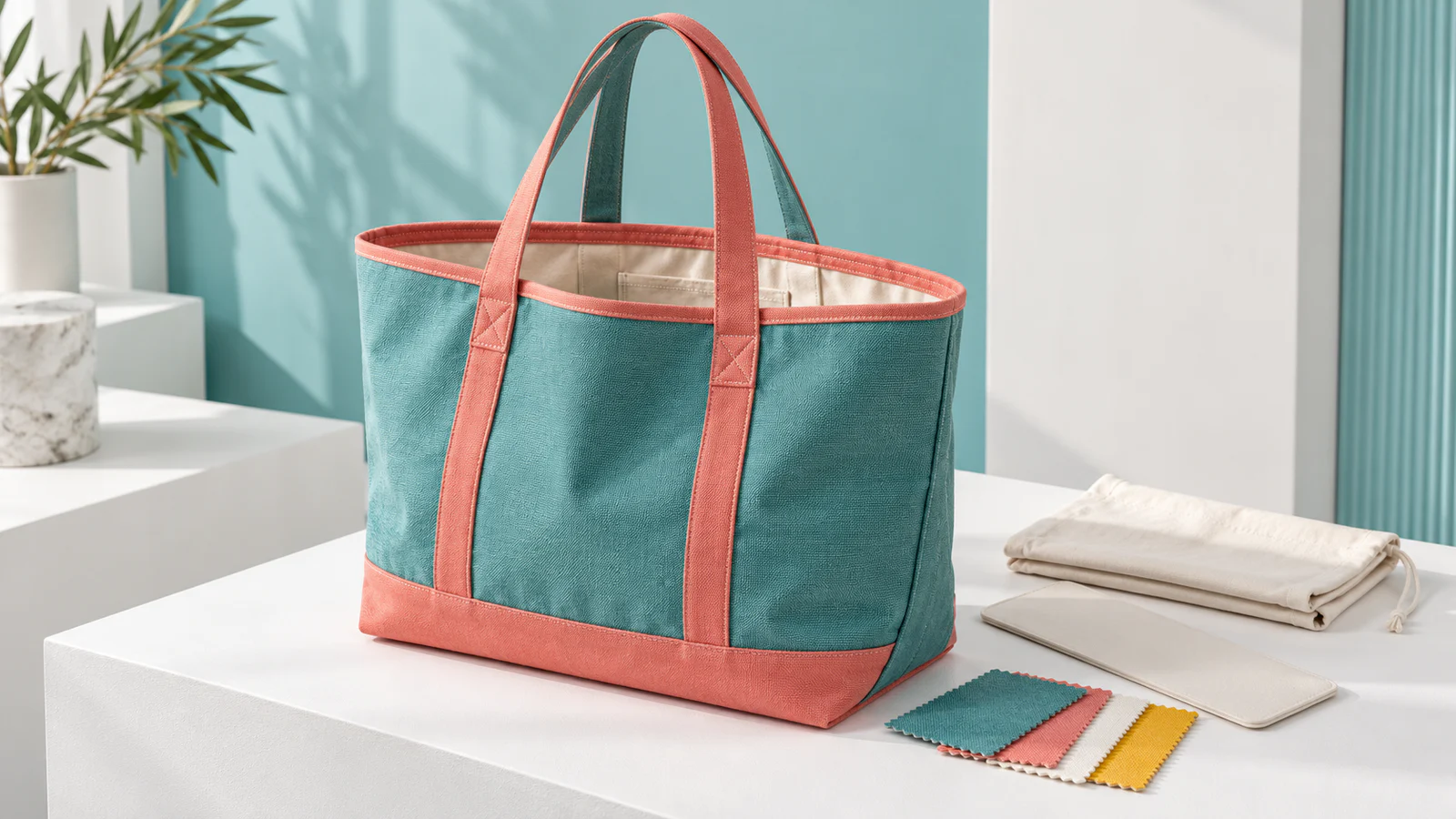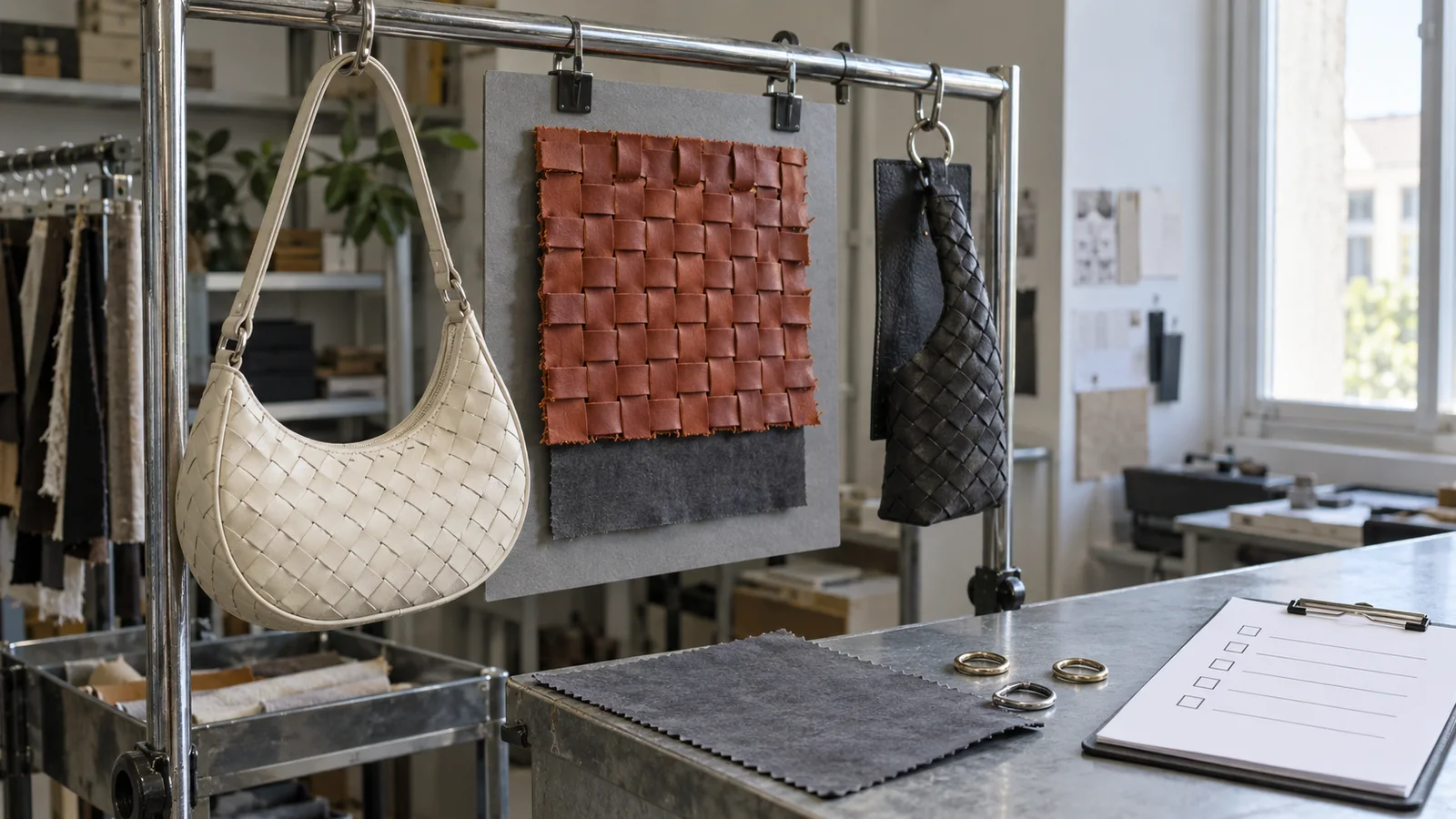
A photograph of a woven bag may communicate the surface effect clearly while leaving most quotation inputs unresolved. Is the weave the body panel, a layer over another panel, or a treatment used only on the handle? What closes the edges, controls the shape and separates the contents from the woven surface? Those choices describe different products, even when the front views look similar.
For buyers sourcing woven leather bags wholesale, specifications need to connect the visible weave with the hidden construction. Start by identifying the construction direction, then confirm materials, attachments and sample checkpoints. This makes a quotation easier to compare without assuming that a photograph proves material grade, production method or performance.
Woven Formats in a Commercial Range
Choose the bag format before finalizing its woven treatment. In a tote range, examine the relationship between the broad front panel, base and handle anchors. For a bucket or top-handle shape, consider how the weave meets a curved opening or a more defined frame. The same surface reference may need a different edge solution on each silhouette.
When reviewing shoulder-bag shapes, include the side profile and strap connection, not just the front. A compact style from the crossbody collection introduces a different interior layout and attachment position. Use these collections to discuss shape direction; do not assume that every listed style uses the construction shown in this guide.
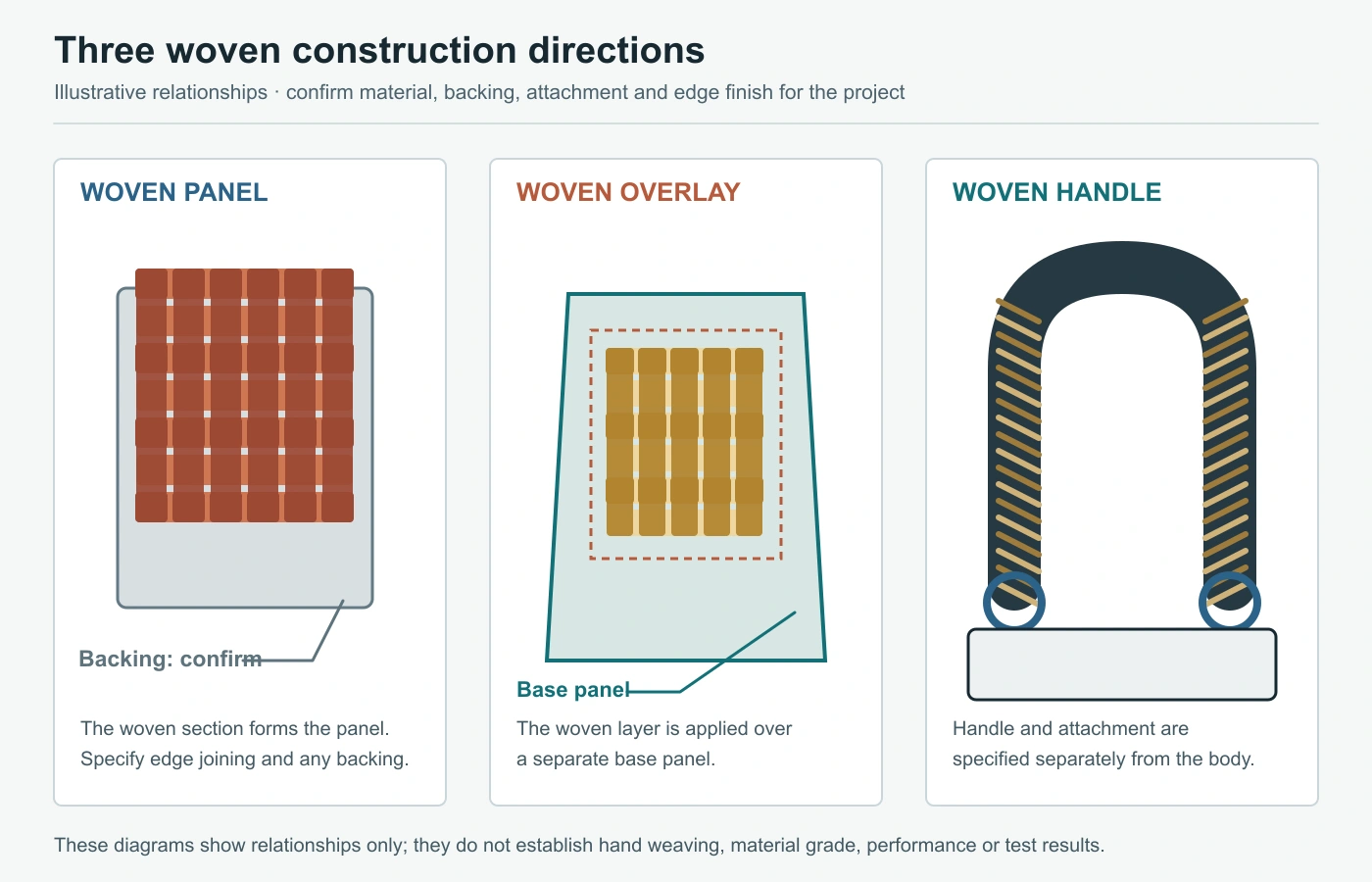
Define the Woven Construction
Woven Panel
Here the woven section forms the panel itself. Ask whether it is open, backed or combined with other layers, and how its perimeter joins the surrounding construction. A panel that looks neat when flat still needs review at the base, corners and opening once assembled.
Woven Overlay
An overlay sits over a separate base panel. Specify where it begins and ends, how it is retained and how its edge is finished. Confirm whether seams pass through both layers and whether the overlay continues around corners. Do not price an overlay as though it were the same construction as a woven body panel.
Woven Handle
A woven handle is a separate carry component to specify, even when the bag body is plain. Confirm its shape, grip, connection and any internal construction proposed by the factory. A woven appearance alone says nothing about carrying capacity or whether the body and handle use the same material.
Strip Width, Spacing and Joining
Mark the desired strip width and spacing on the reference, or ask the factory to propose them for sample review. Clarify where spacing is assessed: a flat section, curve or assembled corner can present the pattern differently. No dimension should become an order requirement simply because someone estimated it from a photograph.
Ask where strips end and how edges are joined or enclosed. Examine the transition into solid trims and seams. For color consistency, agree which swatch and assembled sample will be the references, including intentional variation. A general request for a uniform look is less useful than identifying the areas that must match and how differences will be reviewed.
Open or Backed Weave
Open weave leaves visible spaces between elements. Discuss whether those spaces should remain visible from inside and whether a separate liner is needed for the intended contents. With backed weave, identify the backing material and how it meets the woven section. Backing is a construction input, not automatic evidence of strength or a particular quality level.
Genuine Leather or PU / Vegan Leather
Review genuine leather options through an actual swatch and the proposed strip treatment. Identify the surface, reverse side and desired feel, then review how the selected material appears at folds and cut edges. Request the material description needed for your product records rather than assigning a grade from the image.
For PU and vegan leather options, ask for the actual composition and backing description. The category name is not a complete material specification. Review the intended weave in that material, including its edge treatment and interaction with the support layers. Do not transfer approval from a plain swatch to an assembled woven section without examining the latter.
Neither category is universally the right choice. Compare both against the proposed shape, finish direction, branding and order scope. If your market requires particular documentation, identify it before material selection; appearance does not establish certification or compliance.
Backing, Lining and Shape Control
Keep backing, interlining and lining separate in the specification. Backing supports or closes the woven area as part of its construction. Interlining may be proposed to influence the panel's shape. Lining is the interior surface visible to the user. Naming one does not establish that the other layers are included.
Discuss lining and interior materials together with pockets, dividers and the base. A pocket or label can affect the reverse of a woven panel, so mark its position rather than leaving the interior until the exterior is approved. Ask how seam allowances and strip ends will be covered.
Define the intended silhouette as relaxed, semi-structured or more rigid. Review it empty and with representative contents. Request changes by location: an opening that folds inward needs a different discussion from a base that does not sit as intended. Record the proposed solution in the revised sample specification, not as a general instruction to add more stiffness.
Handles and Attachment Points
Decide whether the carry component is woven, solid or a combination. Then identify the connection to the bag: tabs, rings, an integrated section or another proposed arrangement. Review the material and reinforcement around the anchor separately from the decorative woven surface.
Select hardware references with the attachment geometry in mind. Check ring clearance, moving-part contact and whether a tab twists when the handle is used normally. These are sample-review observations, not a substitute for agreed functional testing. Any required test method and acceptance criteria need separate confirmation.
Look inside behind each anchor and compare the two sides. A clean exterior photo may hide an unresolved interior finish or asymmetric attachment. Keep the approved connection detail with the same revision as the body construction.
Sample QC Checklist
Use the approved reference and a consistent viewing arrangement. The close-ups below illustrate inspection questions; they are not photographs of completed Christori inspections. Ask the supplier to show the actual sample, with front, reverse and assembled views where relevant.
- Alignment: follow the rows across the panel and through adjoining sections. Note unintended changes in direction rather than judging one isolated patch.
- Gaps: compare openings in flat areas and near curves. Identify whether a difference is intended and agree how the sample will be assessed.
- Edge joining: inspect strip ends, joins, trims and corners. Check that the proposed finishing method is represented throughout the sample.
- Symmetry: compare both sides, handle positions, panel boundaries and the center reference. Use agreed measurement points, not perspective in a photograph.
- Color and surface: compare panels and trims with the approved references. Record any intentional variation and unresolved mismatch.
- Shape: examine the bag empty, with representative contents and after unpacking. Photograph areas that crease, pull or sit differently from the intended shape.
- Hardware and access: check closure alignment, component placement, pocket access and contact between hardware and woven surfaces.
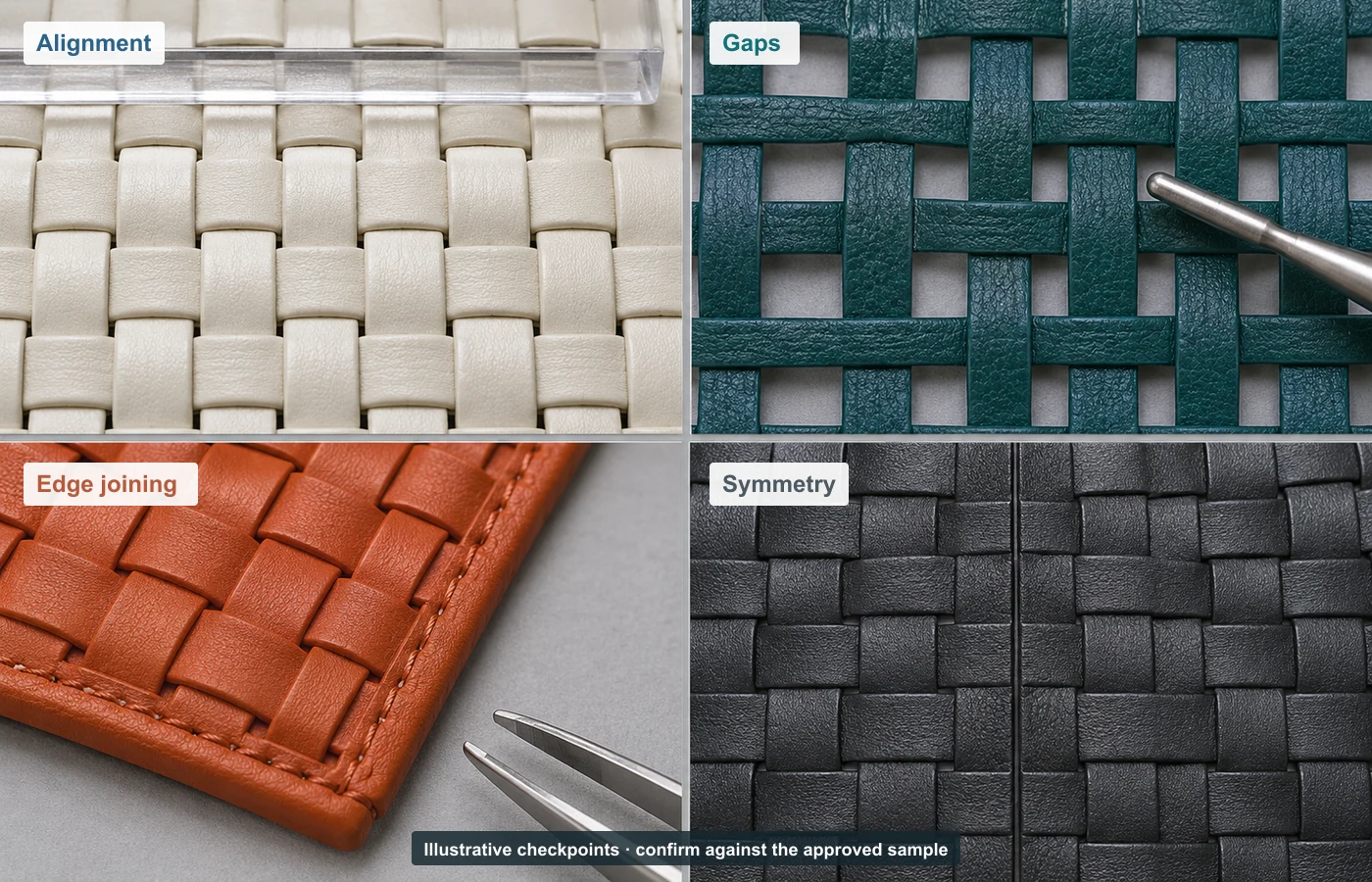
Use the quality-control process overview as background for discussing review stages, then agree this project's checkpoints and acceptance criteria explicitly. Annotate sample photos with the issue, requested action and revision date. Before bulk approval, reconcile those notes with the final sample; a visual checklist alone does not establish durability or other performance results.
Packing Woven Bags
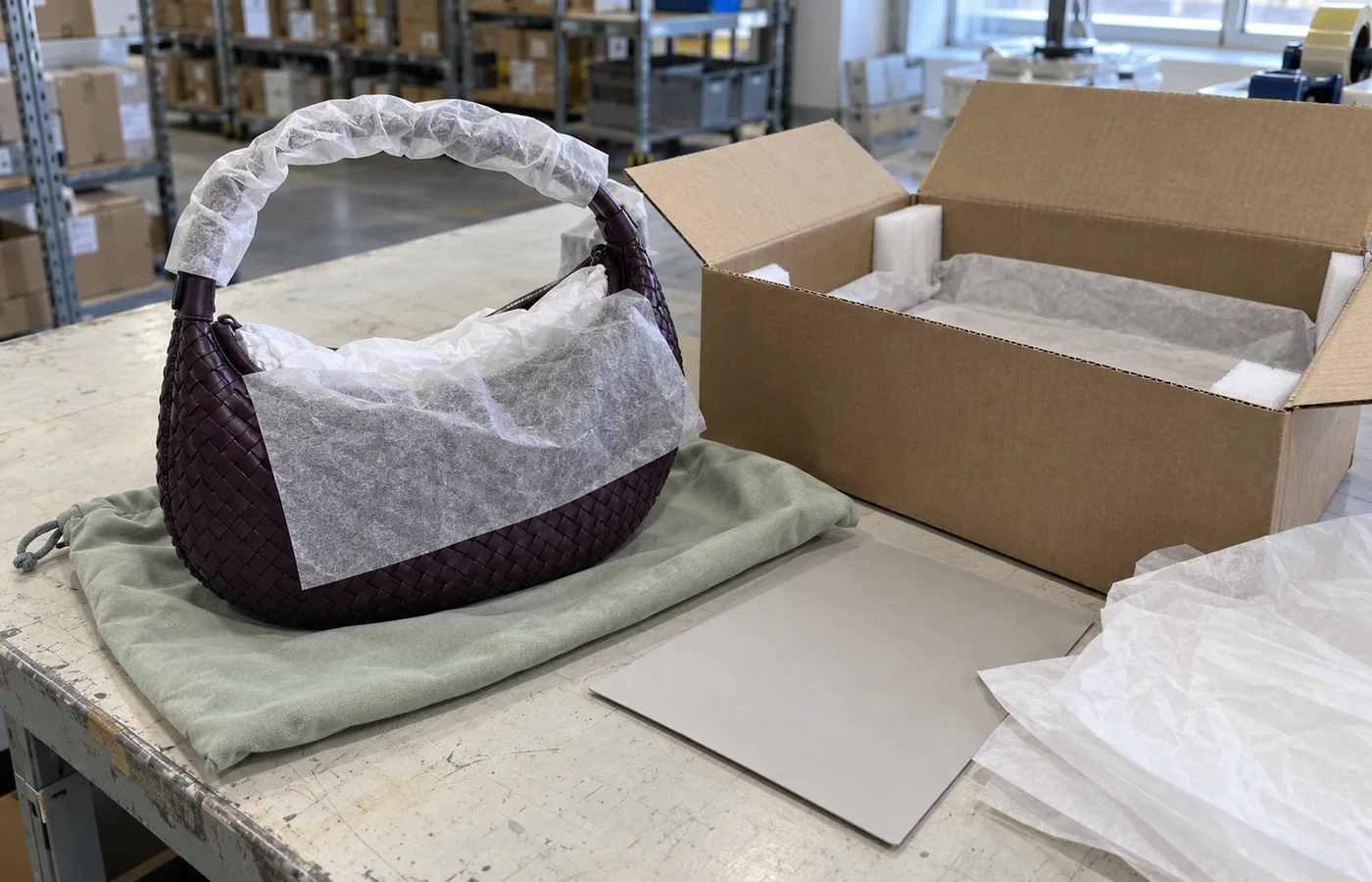
Plan packing around the raised surface and the shape you intend to retain. Ask where tissue or separators may be needed between the woven surface, hardware and adjacent items. Review the proposed contact materials with the actual finish rather than assuming any available packing material is suitable.
Body stuffing, handle sleeves, a dust bag and carton cushioning may be considered for the project. Define their placement and the bag's orientation. Avoid forcing a handle into a position that was never reviewed, or using stuffing that distorts the opening simply to fill empty space.
Inspect an unpacked sample as well as the packed arrangement. Confirm how accessories are separated and whether the receiving team can remove the protection without catching exposed details. Approve the packing method alongside the product revision. The illustrated scene is not a fixed packing standard or evidence of shipping performance.
Choose Your Sourcing Route
Ready Stock
For ready stock sourcing, verify the actual offered style, material, colors and available quantity. Request current details and inspection options for that product. Do not assume that the weave, backing or handle can be changed while retaining the same sourcing arrangement. Any requested modification needs a separate feasibility discussion.
Custom Development
Use a product-development review when the request changes weave construction, material, backing, attachments or shape. Identify which elements are fixed and which the factory can propose. Agree the sample-review scope before treating an early quotation as final.
Share quantities by style and color. Minimum quantities depend on the material, construction and customization scope under review; a custom-production planning reference is not a stock-order rule. Ask which alternatives may fit the project. Prices, sample charges and timing require confirmation against the agreed details.
What to Include in the RFQ
Send one dated brief with clear references and unresolved questions. For a woven style, the hidden layers and joins matter as much as the exterior view.
- Bag format, intended contents and body dimensions, including opening and base measurements.
- Front, side, base and interior references; mark panel, overlay and handle areas separately.
- Material and color direction, swatch references, strip and spacing preferences for confirmation.
- Backing, lining, shape-support, edge-joining and pocket requirements.
- Handle geometry, attachment references, closure, hardware and logo placement.
- Quantity by style and color, destination, requested schedule for review and packing requirements.
Separate essential requirements from alternatives. This lets the factory explain whether a change affects only a visible detail or requires a different construction and sample. Keep quotation assumptions alongside the reference version so later comparisons remain meaningful.
Frequently Asked Questions
Is Every Woven Bag Made by Hand?
No production method can be established from the surface appearance alone. Ask the supplier to describe the process used for the selected style and request supporting information before making a production-method claim in your own product copy.
Can the Weave Be Changed on Ready Stock?
Treat offered stock as an existing product to verify. A different strip arrangement, backing or woven section should be reviewed as a modification or development request, not assumed to be available within the stock order.
Which Photos Help a Factory Review the Design?
Provide front, side, base, opening and interior views, plus close-ups of woven edges and handle connections. Add measurements and mark requested changes. A close-up without a full-bag reference can leave the location and scale unclear.
How Should a Buyer Approve the Sample?
Compare the actual sample with the dated specification, record unresolved issues and review the corrected version. Confirm materials, construction, visible checkpoints and packing together. Identify the exact approved sample; do not let an earlier photograph stand in for a revised construction.
Discuss Your Woven Bag Project
Share the woven style, material direction, dimensions and quantity for a feasibility and quote review.