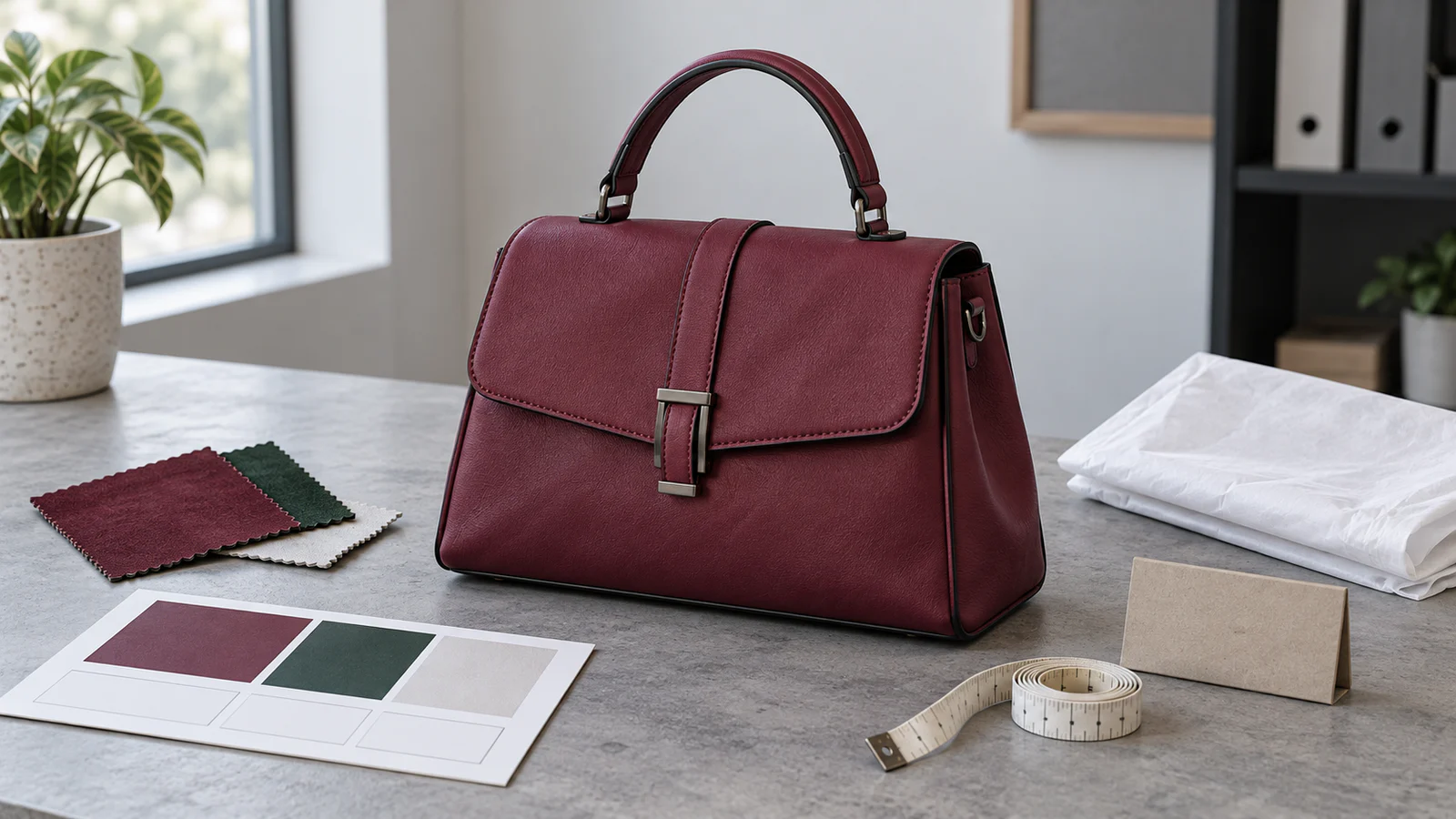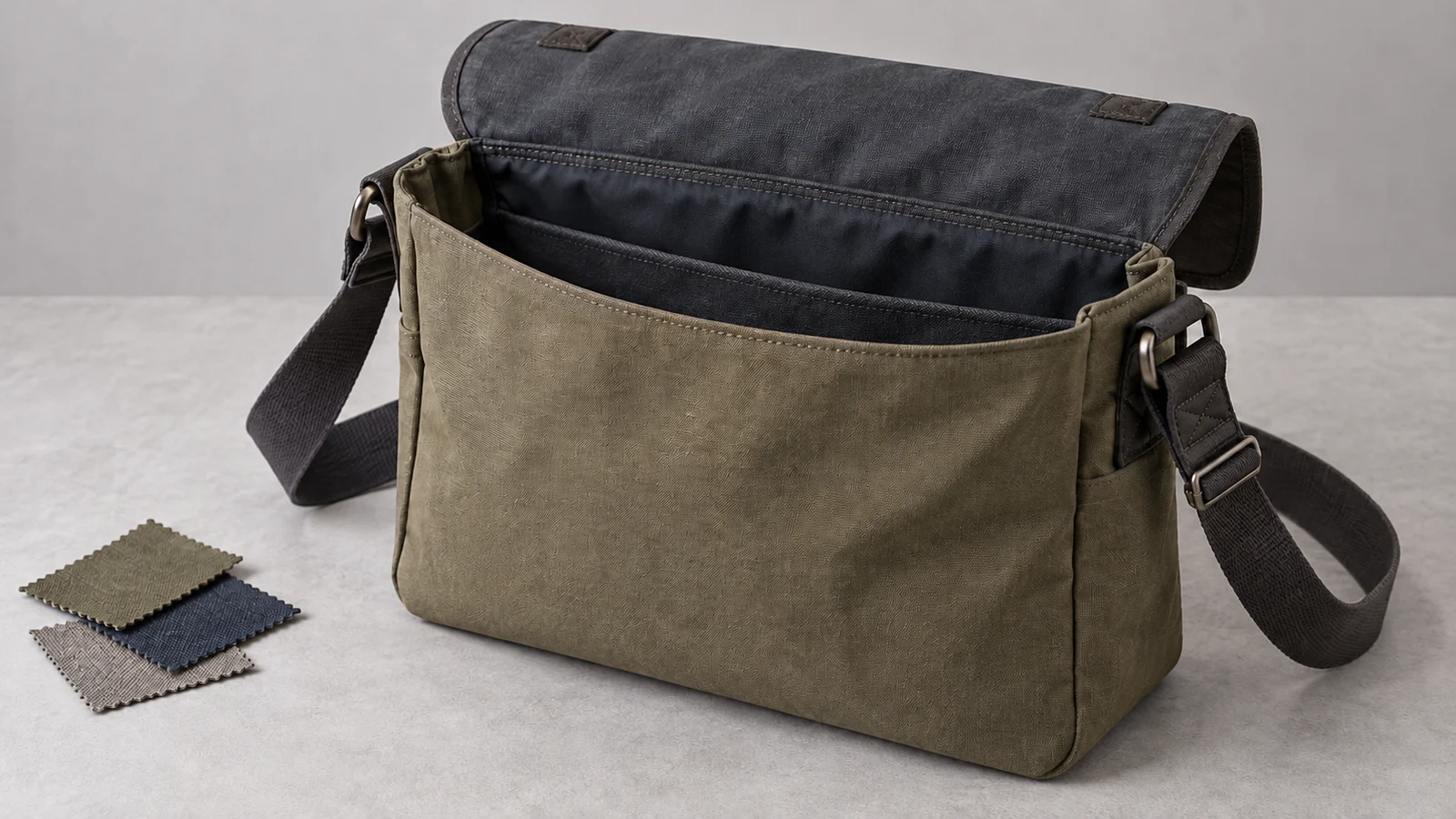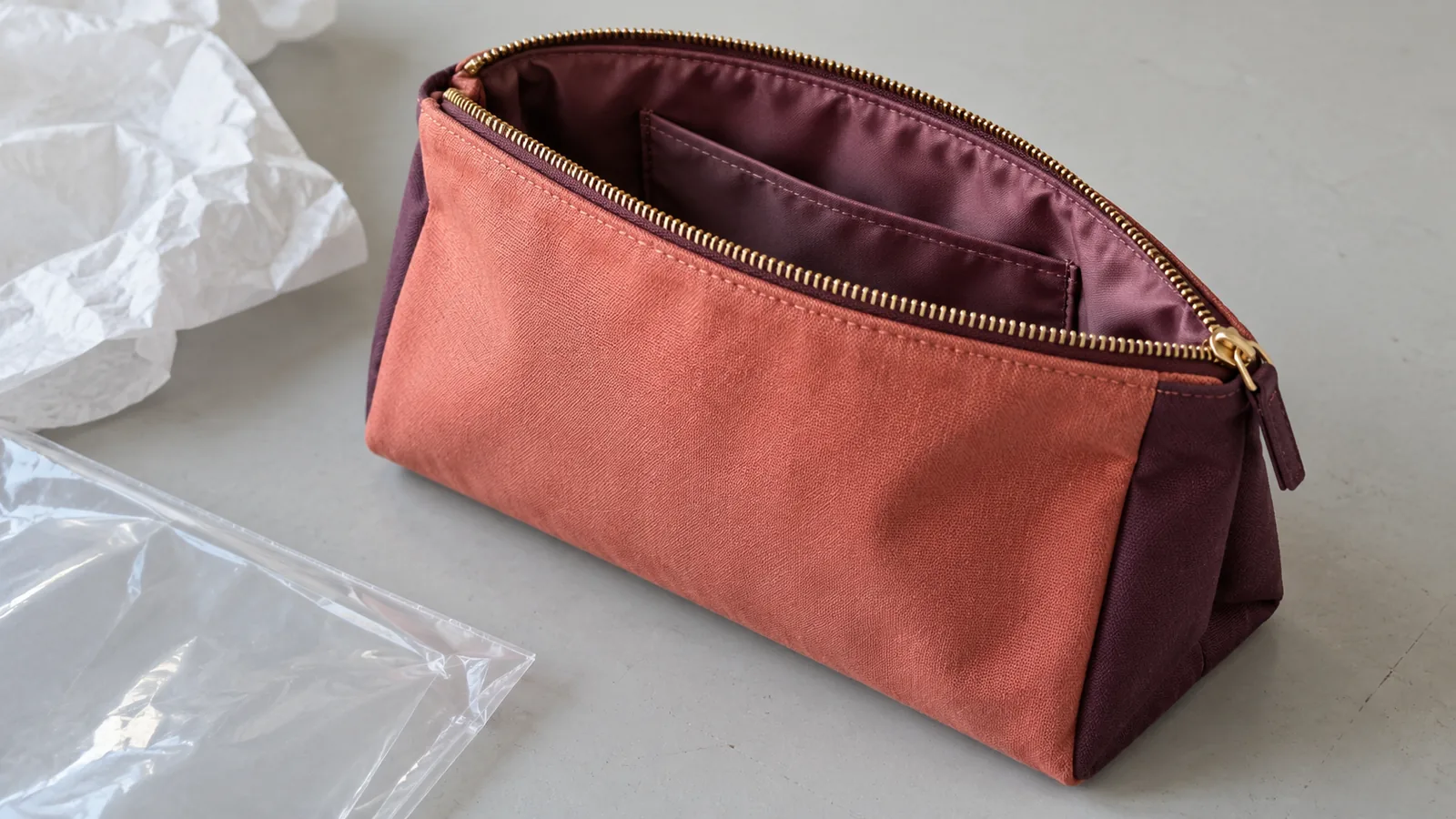
The difficult part of sourcing a small cosmetic bag is rarely choosing a rectangular silhouette. The commercial questions are whether the opening gives practical access, whether the gusset creates usable depth without distorting the zipper, how the lining and pocket edges are finished, and how branding and packing affect the final unit. A reference photo may suggest these details, but it does not specify them.
Effective cosmetic bags wholesale specifications connect the outer dimensions to the opening, internal construction and packing plan. Buyers should provide target measurements, zipper route, gusset type, material and lining direction, pocket layout, logo details and quantity by version. For makeup pouches wholesale specifications, the same discipline applies even when the product looks simple. Unknown quantities can be shown as an estimate, range or to be confirmed, while material claims and commercial terms remain subject to project confirmation.
Start With the Intended Pouch Format
“Cosmetic bag,” “cosmetic pouch” and “makeup pouch” are often used for overlapping products. A buyer should define the physical format rather than ask a supplier to interpret the name. Common directions include a flat zip pouch, a bottom-gusset pouch, a boxy case, a wide-mouth organizer or a soft drawstring format. This guide focuses on small sewn pouches and bags, not rigid vanity cases or luggage.
State how the item will sit in the assortment: a branded accessory, a gift-with-purchase component, a sellable organizer, a set of nested sizes or part of a coordinated bag collection. That context helps establish branding and packing expectations without turning the brief into a consumer use guide.
The existing wallets and small leather goods specification guide owns card, bill, coin and document organization. A cosmetic pouch instead needs access around a wider cavity, lining and edge decisions appropriate to its construction, and a packing plan for soft small formats. Do not transfer wallet pocket dimensions or closure assumptions into this brief.
Match the Opening and Gusset to Access
Begin by sketching the closed top line and the mouth when fully open. Provide zipper start and end points, whether the track is straight or follows a curve, puller direction and any side tabs used to hold the pouch during operation. If dual sliders or a different closure are proposed, identify them as a project option, not a default feature.
Then define the gusset. A bottom fold, separate side-and-base panel, boxed corner or flat construction can produce different volume, seam placement and empty appearance. Do not specify a gusset depth without showing where it is measured. Record whether the depth is expected at the base only, through the side wall or across a separate panel.
Exterior width and height do not prove the usable opening or interior space. Ask the sample review to check access, seam allowances, lining movement and whether the intended pocket placement blocks the mouth. If the buyer uses container dimensions as a planning reference, treat them as inputs for a physical fit review, not a capacity guarantee.
This matrix helps translate format language into quote and sample decisions.
| Format direction | RFQ details to provide | Observable sample checks | Claim boundary |
|---|---|---|---|
| Flat zip pouch | Top width, body height, zipper length, corner shape and whether an unfilled profile is acceptable. | Mouth access, corner symmetry, zipper ends, lining fit and logo position. | External dimensions do not prove internal capacity. |
| Bottom-gusset pouch | Gusset depth and measuring point, fold or panel direction, expected standing appearance. | Base alignment, side profile, zipper behavior and empty shape. | A gusset does not guarantee that the pouch stands upright. |
| Boxy cosmetic bag | Top, base and side-panel geometry, opening route, seam/edge direction and support expectations. | Panel matching, opening clearance, corner shape and packed presentation. | A box shape is not evidence of rigidity or protection. |
| Wide-mouth organizer | Required open view, zipper path, side containment and interior access zones. | How the mouth opens, lining tension, pocket access and closure alignment. | A wide opening does not confirm leak containment or cleanability. |
| Nested size set | Individual dimensions, size identification, logo treatment and nesting/packing order. | Correct size sequence, surface contact, deformation and pack completeness. | Nesting feasibility cannot be inferred from proportional artwork. |
Specify Lining Without Unsupported Performance Claims
Provide the lining material direction, color reference, hand-feel preference if relevant, and the visible construction at the zipper, seams, pocket and base. The handbag lining and interior customization page can help buyers organize the discussion, but the actual material composition, coating and performance need supplier documentation or appropriate evidence.
Avoid using “waterproof,” “leakproof,” “wipe-clean,” “stain-resistant” or “easy-clean” as casual synonyms for a smooth lining. A material may look coated without supporting any of those claims. If a performance statement is commercially necessary, define the exact claim, destination-market need and evidence expected before approving copy or packaging.
For ordinary sample review, focus on what can be observed: lining fit, puckering, loose areas, seam coverage, binding or turned edges, pocket alignment, visible marks and zipper-edge integration. If cleaning instructions will appear on the product or packaging, they also require a verified material and care basis.
Detail Zippers, Edge Treatments and Small Components
Zipper decisions include track appearance, opening length, slider count, puller direction, tape color, end treatment and relationship to side tabs. The handbag hardware guide is a useful vocabulary reference, but a finish family or zipper type must still be tied to an approved sample or component reference.
Ask how the upper edge will be built and how the lining meets it. Binding, piping, folded edges and seam allowances create different visible results and can affect the mouth. Do not request a hidden construction method based on a finished-product photograph; describe the desired visible edge and let the supplier propose a feasible route.
Small components deserve a controlled list. Include zipper pullers, tabs, labels, rings, hooks or detachable straps only when they belong to the design. Record material and finish direction, position and quantity per unit. A decorative ring should not be interpreted as a load-bearing attachment unless that function is specified and reviewed.
Plan Pockets, Labels and Brand Placement
A cosmetic pouch usually has limited interior surface area, so every pocket competes with access and lining movement. Use a simple numbered interior drawing. State pocket width, height, location and opening direction, and note whether it should lie flat or have added volume. If elastic or mesh is proposed, treat the actual material and retention behavior as sample decisions rather than assumptions.
Branding can sit on the exterior, lining, woven or printed label, zipper puller, patch, plaque, hangtag or unit packaging. Choose the role of each brand element before requesting all of them. For private-label planning, the private label handbag service explains the broader route, while the project brief should provide current artwork, size, color, placement and method direction.
Check branding on the filled and unfilled pouch. A centered logo on a flat pattern may shift visually after the gusset opens. Labels can also interfere with pocket access or create visible stitching on the exterior. Approve placement from the physical sample or an agreed representation tied to the final construction.
Decide Between Individual, Nested and Set Packing
Packing is part of the product specification for small pouches because it controls size identification, surface contact and set completeness. Decide whether each unit is packed individually, several sizes are nested, or multiple pieces form one retail set. List every included component and show the packing sequence.
For nested pouches, confirm that hardware, pullers and labels do not press into another surface. Review whether folding or compression changes the gusset or creates unwanted marks. If tissue, inserts, sleeves, labels or retail boxes are proposed, ask the supplier to state the actual material and quotation inclusion. The custom handbag packaging service can frame these options without promising a fixed packing system.
Record the outer identification required for style, color, size or barcode data. Buyers should supply final codes and legal or retail text rather than asking the supplier to invent them. Carton assortment, dimensions, weight and shipping timing remain project-specific and should be confirmed at the appropriate stage.
Choose a Sourcing Route That Matches the Changes
For Ready Stock handbags, start with the exact current pouch and confirm available colors, quantities, dimensions, lining, branding options and packing. Do not assume that a current item can accept a new gusset, opening or pocket layout.
Existing-style customization may cover selected logo, color, lining, component or packing changes when feasible. List each requested change and ask whether it affects quantity, sample approval or other commercial details. Keep the confirmed base item separate from the proposed changes.
If the buyer is defining new geometry, opening, panels, gusset or interior construction, use a product development review. Quantity can be an estimate, range or to be confirmed during early review. MOQ depends on the material, construction and customization scope. Price, sample fee and timing must be based on the actual proposal, not a general category assumption.
Use an RFQ-to-Sample Checklist
Before requesting a quotation, assemble the following in one versioned file:
- Product format and intended wholesale role, without unsupported capacity or performance claims.
- Front, back, side, base, closed and open references.
- Width, height, gusset depth and exact measuring points for every size.
- Zipper route, start/end positions, puller direction, tabs and opening expectation.
- Exterior and lining directions, color references and visible edge treatment.
- Pocket sketch, labels, small components and branding artwork with placement.
- Individual, nested or set-packing sequence and required identification.
- Target quantity by size/color, or an estimate, range or to be confirmed.
- Destination market and any claim, label or documentation requirement for review.
At sample stage, compare the pouch against the same brief. Check dimensions, profile, opening access, zipper operation, gusset alignment, lining fit, seam and edge appearance, pockets, branding and the complete packing sequence. Photograph the pouch empty, open and packed. Record whether each point is approved, requires revision, needs supplier clarification or has not been evaluated.
Do not turn this visual and functional review into a test conclusion. Material composition, colorfastness, liquid resistance, coating performance, durability and regulatory suitability require their own evidence when relevant.
Frequently Asked Questions
Is a smooth lining automatically wipe-clean or waterproof?
No. Appearance alone does not support either claim. Ask for the actual lining specification and define what evidence is needed before using performance wording in sales materials or packaging.
What dimensions should I send for a gusseted makeup pouch?
Provide width, height and gusset depth with marked measuring points. Include side and base views, because the same depth number can describe different folds or panel constructions.
Can several pouch sizes be packed inside one another?
Possibly, but nesting should be reviewed with actual dimensions, hardware, labels and surface materials. Confirm the packing order and inspect for distortion or contact marks before approval.
Can I request a quote while the order quantity is undecided?
Yes. Give the best estimate, a range or to be confirmed by size and color. The supplier can identify missing decisions, while MOQ, price and timing remain subject to the final scope.
Send the Pouch Specification for Review
Share the pouch dimensions, opening and gusset drawings, lining direction, pocket plan, branding files, packing sequence and quantity estimate. Christori can review the specification and identify what must be confirmed before a quotation or sample plan is finalized.