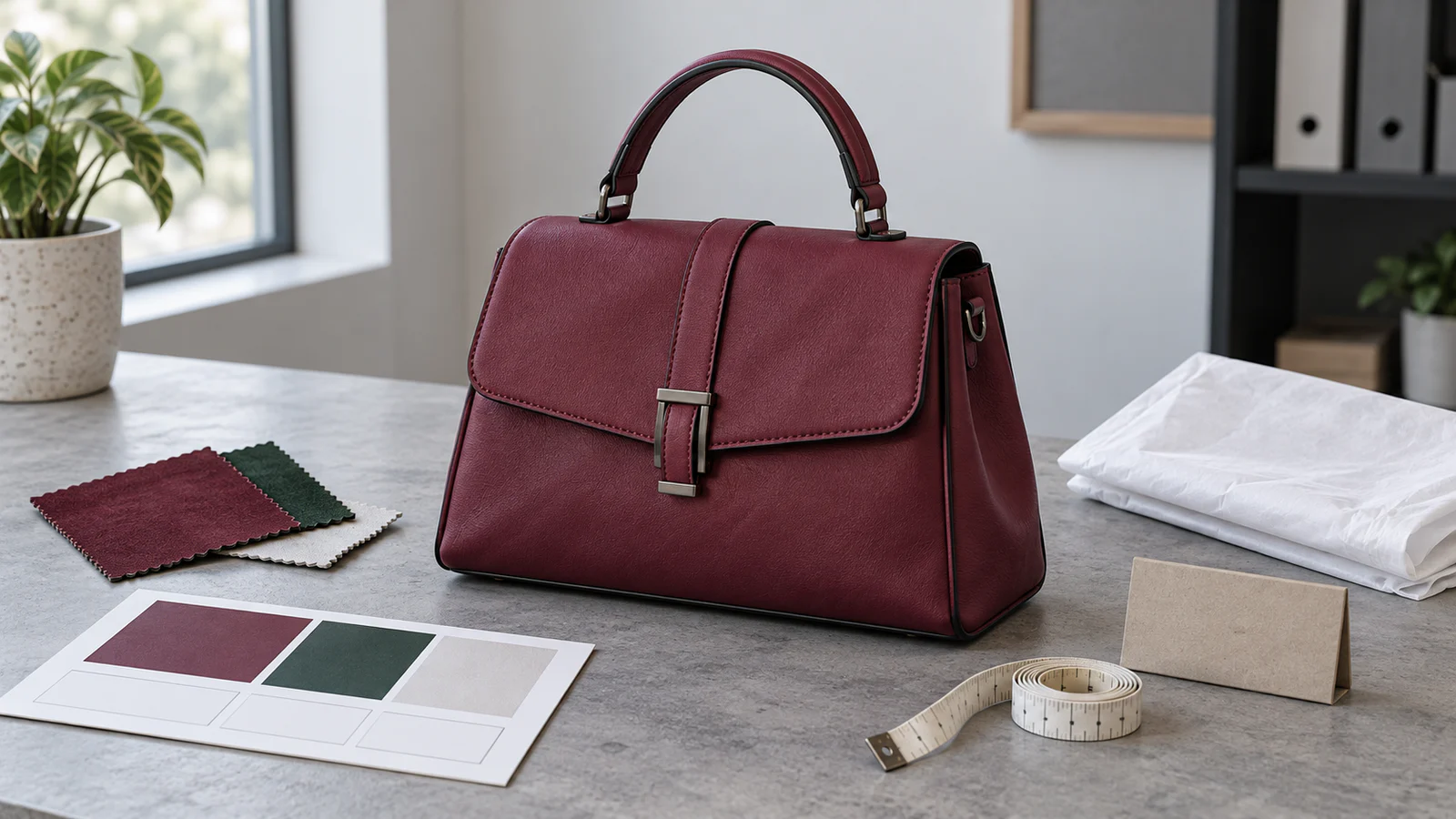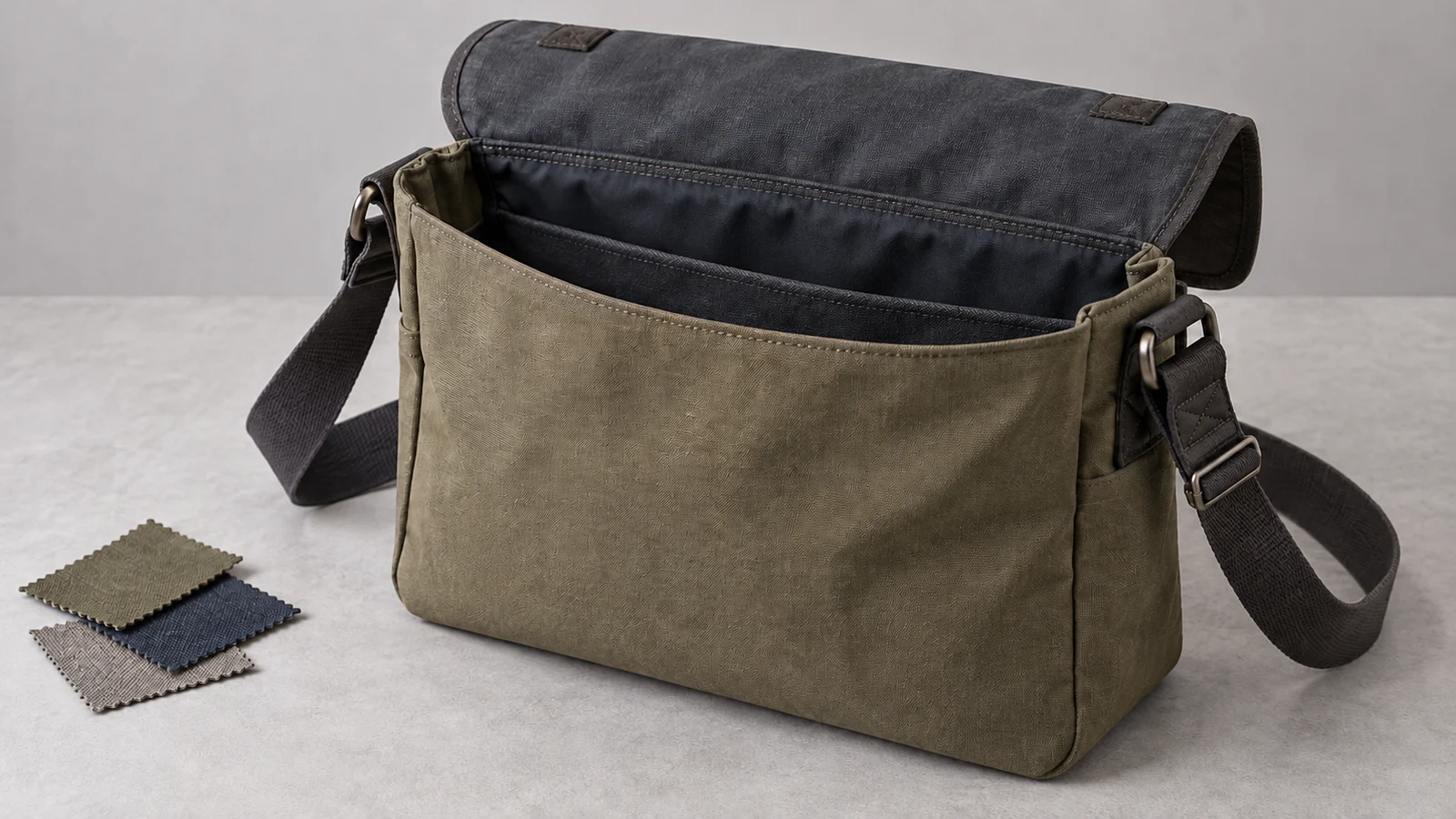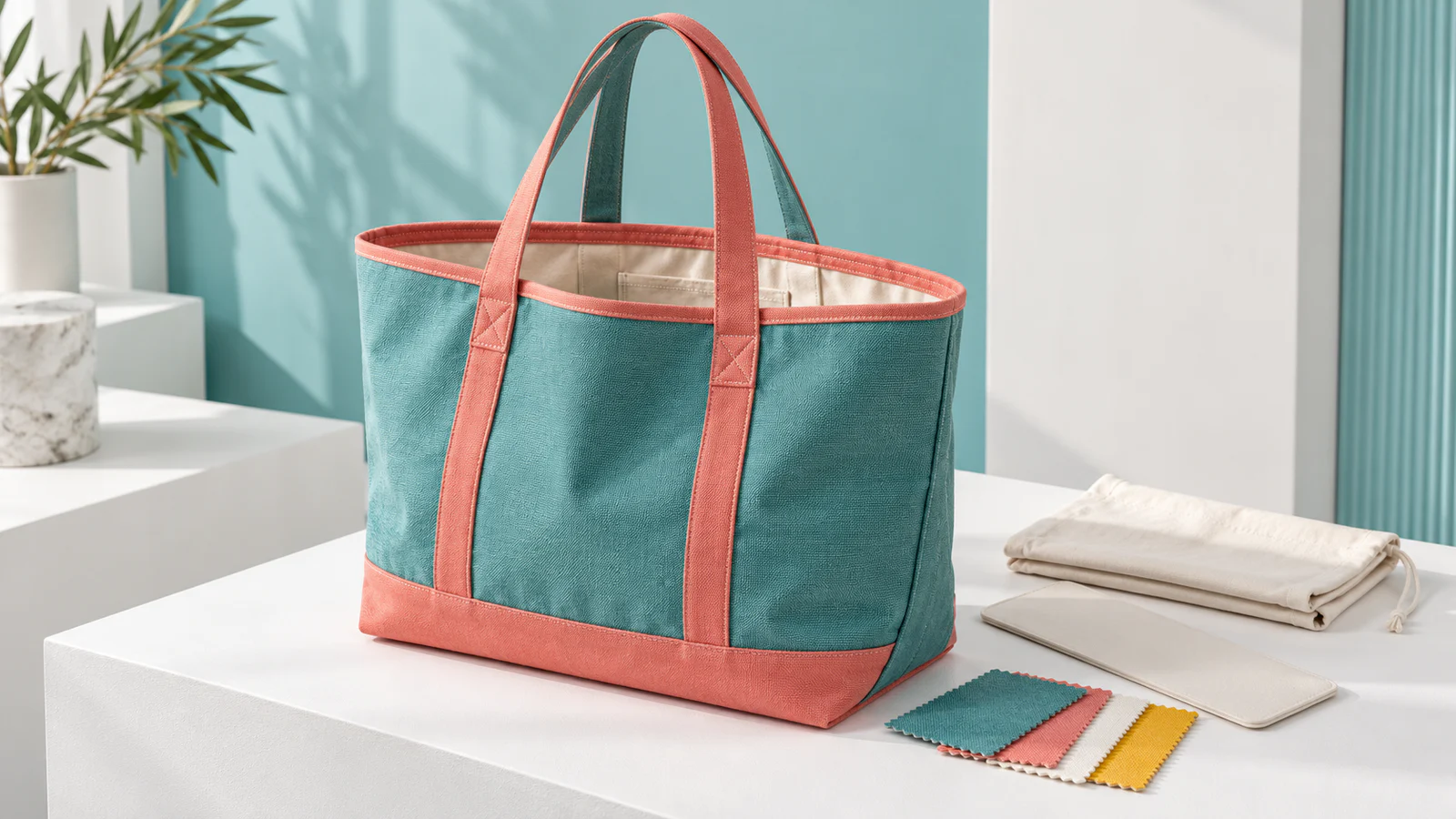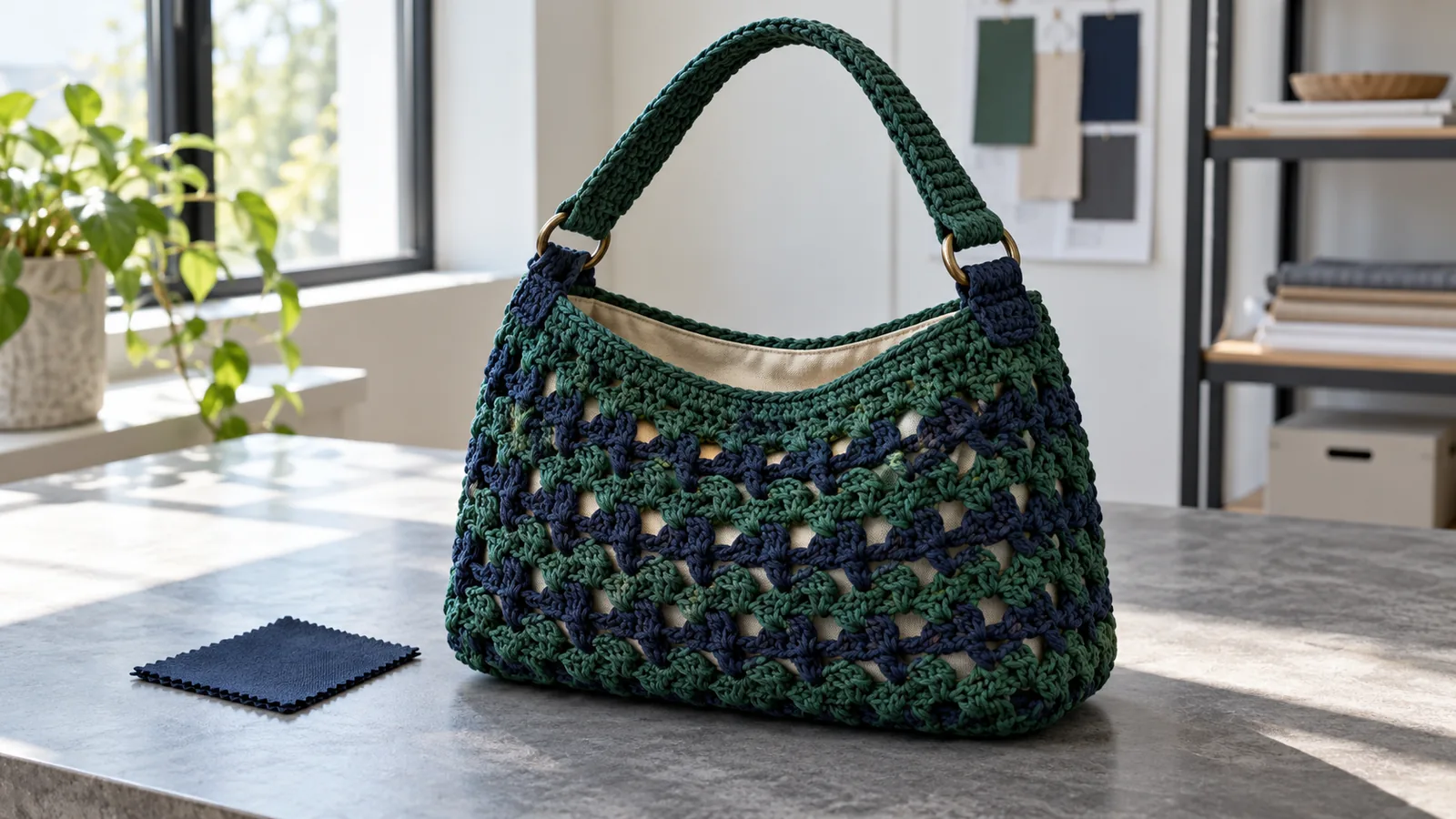
A useful crochet bag inquiry needs more than a front-view reference. The buyer should define the intended silhouette, finished dimensions, visible surface direction, coverage or openness, lining relationship, opening, handle connection and the points that will be judged on a sample. Those inputs let a supplier evaluate one identifiable scope instead of guessing what the word “crochet” means in that project.
This guide to crochet bags wholesale specifications is for brand owners, wholesalers, boutique buyers and product developers preparing a quotation or sample request. It does not assume a yarn composition, stitch name, hand-made process or machine method. Those are project facts to be proposed by the supplier and approved from evidence. A photograph can show an appearance target, but it cannot prove how the surface was made or what it contains.
Start With a Construction Brief, Not a Style Name
“Crochet bag,” “crochet purse” and “crochet tote bag” can describe very different commercial products. One may have an open, flexible outer surface over a full lining. Another may use smaller openings and hold more of its shape. A third may combine a crochet-look panel with non-crochet side, base or handle components. The name does not settle the pattern scale, coverage, stretch direction, edge finish or support.
Prepare a reference pack with front, back, side, base, open-top and interior views. Mark which features are essential and which are only visual inspiration. If references come from different products, identify the feature taken from each one; otherwise the supplier may combine incompatible details without realizing it.
State the intended bag format and sales channel. A flexible market tote, a compact shoulder shape and a lined handheld purse create different questions around access, privacy, weight distribution and packaging. The tote bag collection and shoulder bag collection can help a buyer describe adjacent silhouettes, but they do not confirm crochet construction or availability.
This is also where the article differs from the woven leather construction and QC guide. Woven leather review focuses on leather strips, panel consistency and leather edge transitions. A crochet-look surface has its own questions about open coverage, flexibility, lining visibility and how handles or closures connect without assuming it is woven leather.
Convert the Visual Reference Into Measurable Inputs
Begin with finished body width, height and depth, then define exactly where each measurement is taken. A soft body may change when laid flat, filled or suspended from the handles. Tell the supplier which condition should be used for the specification and sample review. Include opening width, base dimensions and any taper from top to bottom.
Do not treat the exterior outline as proof of usable internal space. A lining, seam allowance, facing, closure or internal support can reduce the opening and the interior. If the bag must hold a defined retail insert or product set, provide the item's dimensions and request a fit review rather than making a capacity claim from the exterior size.
For the surface, mark:
- the intended visual scale and direction, using a photograph with a ruler or a dimensioned detail;
- areas that should appear more open or more covered;
- whether front, back and side panels should align visually;
- the desired relationship between the surface and the lining color;
- where solid edge, base or trim components begin and end;
- which variations are acceptable and which would require a sample revision.
Avoid invented numerical tolerances. If a repeated motif or opening must align at a pocket, center line or side seam, identify the visual checkpoint and ask the supplier what can be controlled consistently. Record the agreed sample reference after review.
Define Lining, Opening and Privacy as One System
The handbag lining material guide is a useful starting point, but a crochet-look bag needs more than a lining name. The buyer must decide whether the lining is full, partial, removable in concept, or absent in selected zones. That decision affects what is visible through the outer surface, how the opening behaves and where pockets or labels can be attached.
Specify the lining color from a physical or approved reference rather than “matching” or “contrast” alone. Through an open surface, a small color shift can change the overall appearance. Ask the supplier to show the outer surface and lining together during sample review.
Define the top opening separately. Options may include an open top, zipper, drawcord, snap, tie or an internal pouch arrangement, but feasibility depends on the actual construction. Provide the desired access width and show where the closure should sit relative to the outer edge. Confirm whether the opening should remain relaxed, gather, fold or hold a defined line when empty.
Pockets, labels and logo components need an attachment zone. Mark whether they belong on the lining, a solid facing, a separate patch or another proposed support. Do not assume a logo can be fixed directly to an open surface. Ask the supplier to explain the proposed attachment and include it in the sample.
Specify Handles and Their Load Path Without Making Load Claims
Handle material, width, drop and connection method influence both appearance and how forces enter a flexible body. Provide the handle drop measured from the top edge to the inside center of the handle, the handle width, the spacing between anchor points and the intended carry position. If a shoulder strap is required, include its finished length range, width, adjuster and attachment locations.
The brief should show whether handles are integrated into the outer surface, attached to a solid trim, looped through hardware or connected to a reinforced internal zone. The supplier should propose the construction based on the project. A reference photograph alone does not prove the hidden connection.
Review the transition from handle to body from both outside and inside. Look for whether paired anchors sit at the same height, whether the lining pulls around the connection, whether the opening narrows unexpectedly and whether the bag hangs in the intended orientation. These are observable sample points, not a load rating or durability conclusion.
If metal rings, hooks or adjusters are involved, document the shape, size direction, finish and movement needed. The handbag hardware guide helps organize component language. Final base metal, finish, compatibility and performance still require project confirmation.
Use a Reference-to-Specification Worksheet
The table below turns visual intent into decisions a supplier can answer. Keep unresolved items visible instead of allowing assumptions to disappear into the quotation.
| Decision area | Buyer should provide | Supplier should confirm | Sample evidence |
|---|---|---|---|
| Silhouette and size | Dimensioned views, measurement condition and intended carry format. | How the proposed construction is expected to sit when empty and in review condition. | Measured sample plus front, side and base views. |
| Surface appearance | Scale, direction, openness, coverage zones and priority visual reference. | Proposed material and construction description, with assumptions identified. | Close-ups beside the approved reference or swatch. |
| Edges and panel joins | Where solid trim, seams, binding or transitions should appear. | Feasible edge and joining proposal for the selected structure. | Outside and inside photographs of every transition type. |
| Lining and opening | Coverage, color, visibility, pocket plan, access width and closure direction. | Lining attachment and closure integration. | Open-top view showing usable access and lining behavior. |
| Handles and straps | Drop, width, spacing, carry mode and hardware direction. | Anchor construction and any support proposed behind it. | Matched anchor views inside and outside, plus hanging view. |
| Branding and packing | Artwork, placement, presentation and shape-protection expectation. | Feasible attachment and packing proposal for this sample. | Branded area and packed/unpacked review photographs. |
Quantity may be an estimate, a range or to be confirmed during the first review. MOQ, sample cost, quotation, material availability and timing depend on the approved construction and current project details; they should not be inferred from this worksheet.
Review the Sample for Relationships, Not Just Isolated Parts
The first sample should answer whether the complete system works together. Place it on a neutral surface and photograph the front, back, both sides, base, opening and interior. Then review it empty, gently shaped as intended for presentation, and hanging from the handle or strap. Use the same review conditions for later revisions.
Check visual scale and coverage across major panels. Compare left and right handle positions, edge transitions and the relationship between the outer surface and lining. Look through the open areas under normal review lighting: does the lining show where expected, and are pockets, labels or internal supports visible in unintended zones?
Operate the closure and access the pockets. Observe whether the lining catches, twists or pulls the outer surface. Check whether an internal pocket changes the exterior appearance. Inspect the handle anchors from inside and outside, but do not convert a visual review into a strength claim.
Record each issue with a photograph, location, requested correction and revision number. “Make the crochet better” is not actionable. “Reduce visible lining at the upper side panel to match approved reference B” gives both parties a reviewable target. Maintain one approval sheet so corrected points are not lost when another detail changes.
Prepare a Focused RFQ and Sample Checklist
Before asking for a quotation through handbag product development, send:
- Bag format, finished dimensions and measurement method.
- Front, back, side, base, opening and interior references.
- Surface scale, direction, coverage and acceptable visual variation.
- Requested material direction, clearly marked as preferred, proposed or to be confirmed.
- Lining coverage, color, pockets, label and opening/closure requirements.
- Handle or strap dimensions, spacing, hardware and carry direction.
- Logo artwork, method direction, size and placement.
- Unit presentation and shape-protection expectations for packing.
- Target quantity by style and color, or an estimate/range/TBC.
- Destination market and any buyer-supplied compliance or labeling requirements for review.
Ask the supplier to return a written assumptions list. It should identify proposed materials and construction, exclusions, unresolved choices, sample approval steps and which details may affect the commercial offer. A comparable quotation depends on both parties reviewing the same scope.
Frequently Asked Questions
Can a supplier identify the fiber or production method from my reference photo?
Not reliably. Use the image to communicate appearance, then ask for the proposed composition and production description in writing. Approve the actual project material from suitable evidence rather than treating the photo as proof.
Should a wholesale crochet bag always have a lining?
No universal answer applies. Decide based on privacy, opening, pocket and appearance goals. If a lining is requested, specify its coverage, color, attachment and visibility through the outer surface.
How should I describe acceptable surface variation?
Mark the most important visual checkpoints, provide an approved reference at useful scale and compare sample panels under the same conditions. Do not invent a tolerance that the construction has not been reviewed against.
Can I request pricing before every detail is final?
Yes, if unresolved items are labeled. Provide quantity as an estimate, range or TBC and ask which assumptions affect feasibility or price. Treat the result as a project-stage quotation, not final confirmation of material, MOQ or timing.
Send a Crochet-Look Bag Brief for Feasibility Review
Send the crochet reference, target silhouette, dimensions, lining and handle direction, plus the quantity plan. Christori can review the brief through the appropriate development route and identify which material, construction and sample details still require confirmation; this is not a statement that a specific crochet style is currently stocked or produced.