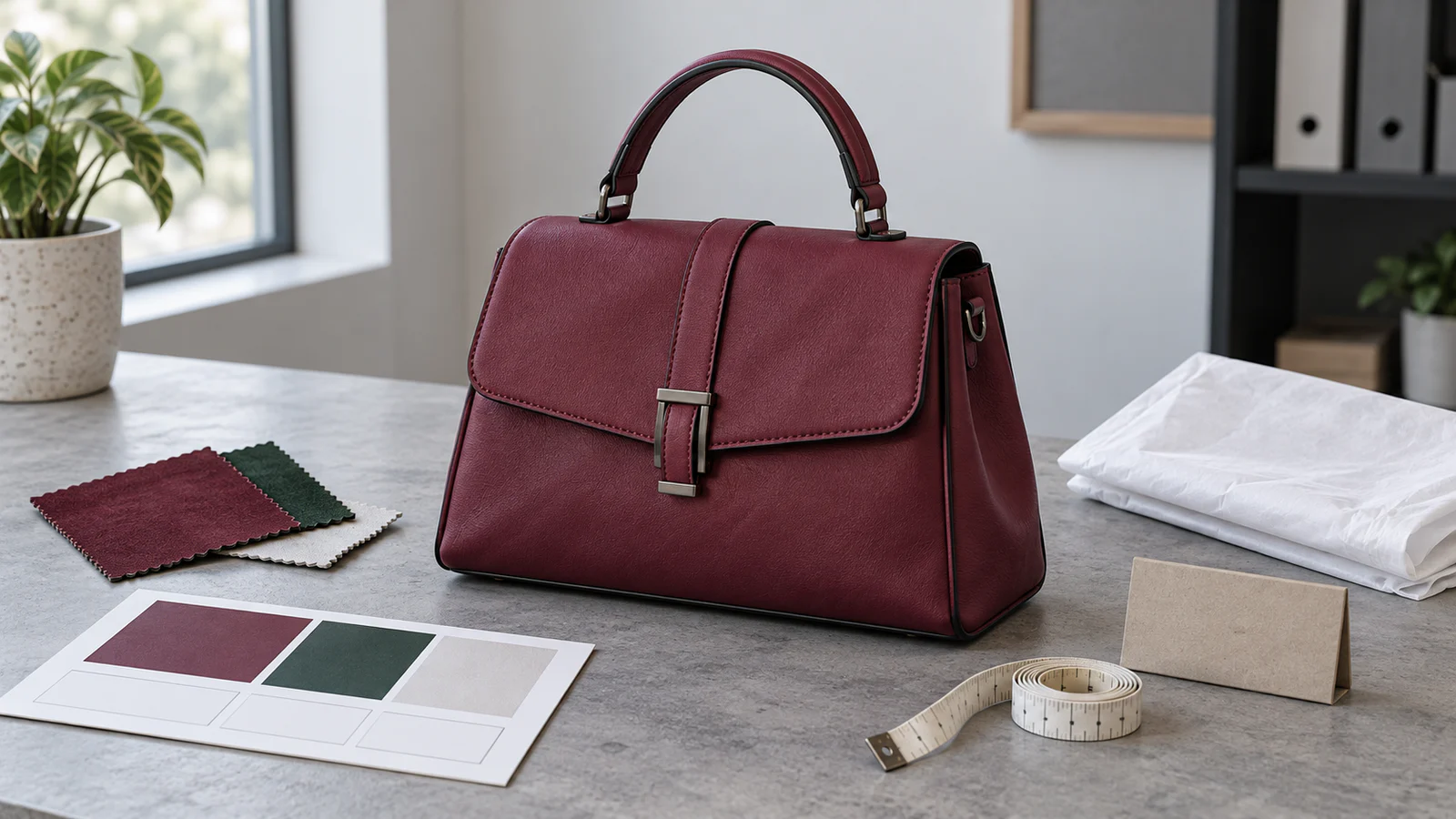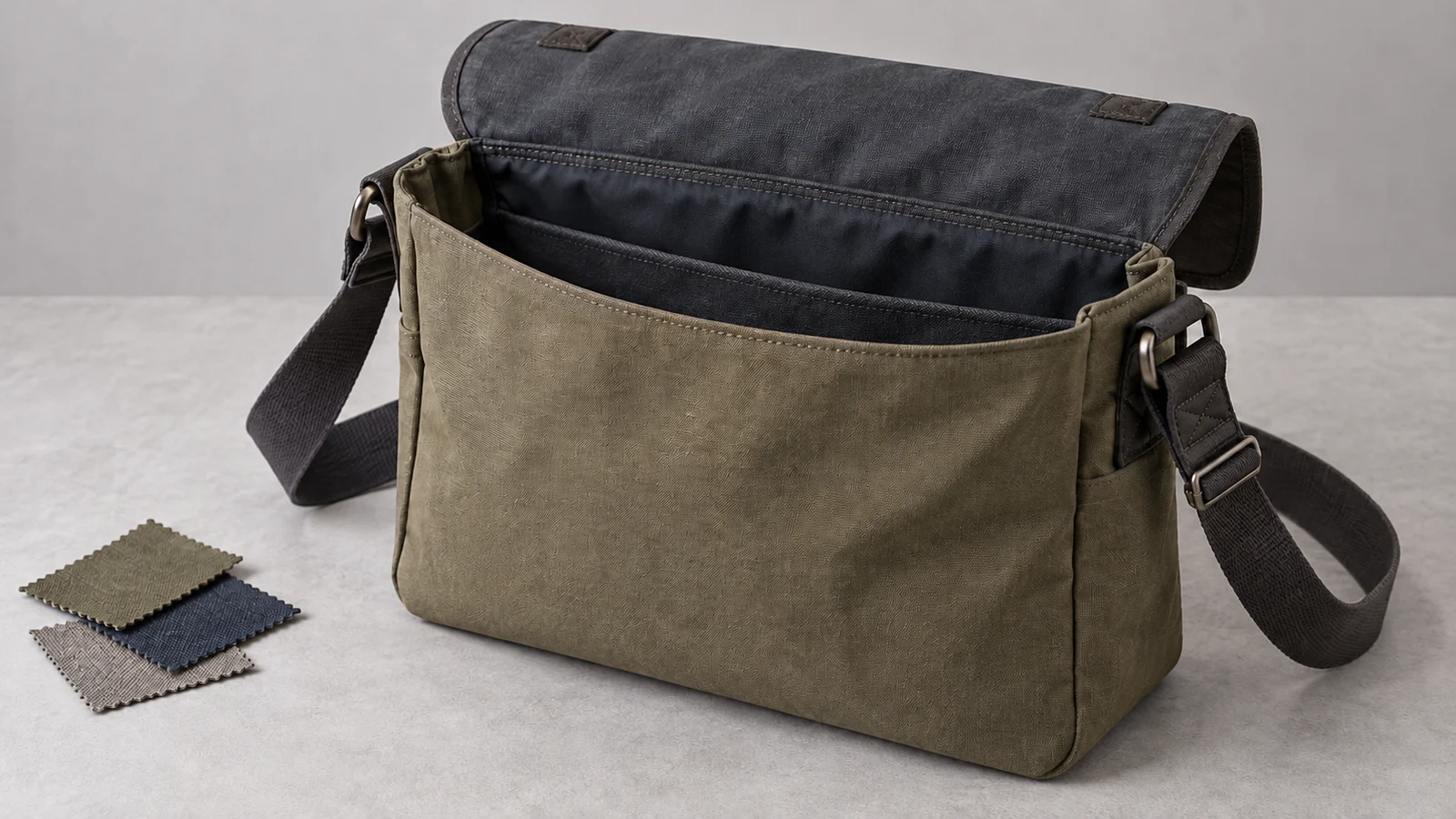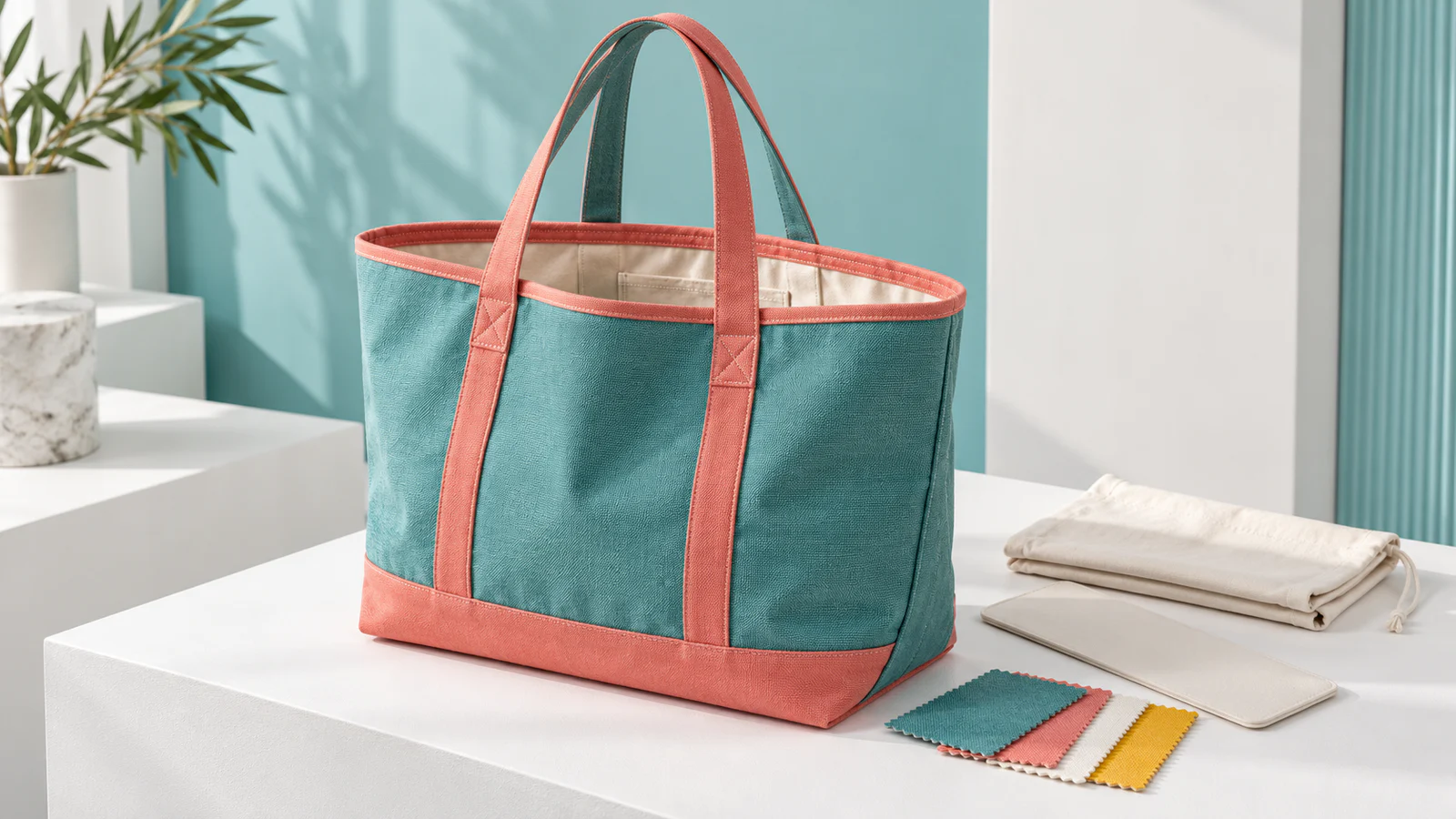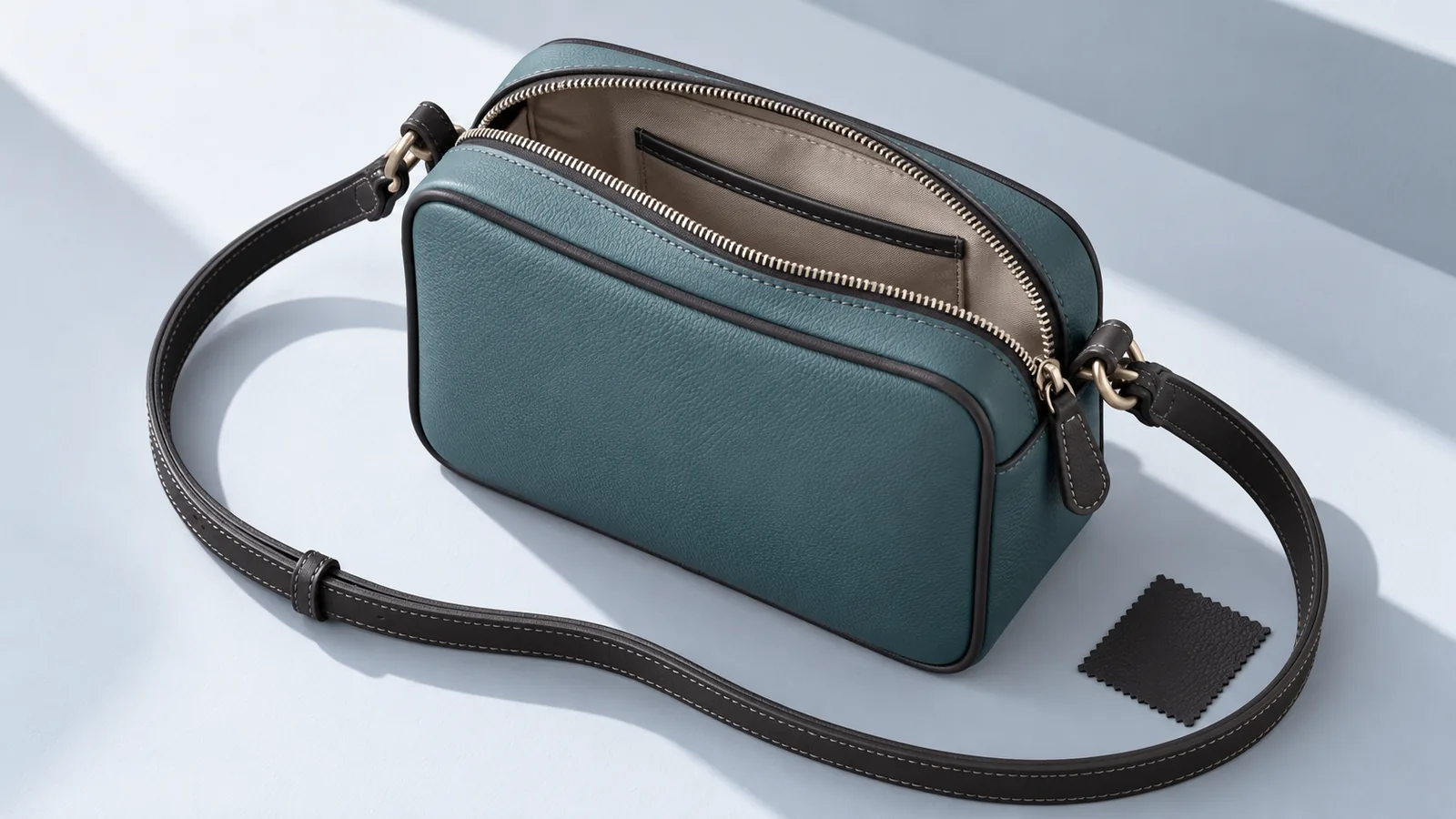
A fashion camera bag is a compact handbag format with a box-like body and a clear opening system. It is not automatically a case for photographic equipment. For wholesale sourcing, that distinction belongs at the start of the brief: buyers should specify a fashion purse by its dimensions, opening, panels, strap system and interior, without asking the supplier to infer impact protection, padding performance or device fit from the name.
Useful fashion camera bags wholesale specifications turn a front-view reference into a complete body-and-opening definition. The buyer needs to explain what the bag must look like when empty, how far the zipper should open, how the side panels control access, where the strap loads enter the body and what the lining and pockets should do. Once those relationships are visible, suppliers can review the same product rather than quote different interpretations of one photograph.
Define the Fashion Format Before Discussing Details
The word “camera” describes a familiar compact silhouette in fashion buying, but search results and supplier catalogs can mix purses with equipment cases. State that the project is a fashion handbag and identify the selling format: compact crossbody, small shoulder bag, handheld mini bag or a style with more than one carry option. Do not request or imply camera, lens or electronics protection unless a separately documented equipment project genuinely requires it.
Place the intended assortment role beside the reference. Is this a core compact bag, an entry-price accessory, a color-led seasonal item or a more structured style with elevated hardware? That context helps a supplier understand why the body proportion, opening and components matter, but it is not a substitute for measurable specifications.
The crossbody bag collection is a useful adjacent format reference. It does not confirm that a particular fashion camera bag is available or that its construction can be changed. This guide also differs from the crossbody sizing guide, which compares general dimensions and market use. Here, the central decision is how a compact box body, zipper path and side panels work as one opening system.
Build the Box Shape From More Than Three Exterior Numbers
Overall width, height and depth are only the beginning. Buyers should show where each dimension is measured and whether piping, edge paint, protruding hardware or soft side panels are included. A nominal depth can look very different when the side panel narrows near the top or when the base is wider than the opening.
Record these relationships on a front, side and top sketch:
- body width, height and base depth, with measurement points;
- top-line width and the position where the zipper begins and ends;
- side-panel profile, including any taper, curve or folded gusset;
- corner radius or piping direction that defines the box shape;
- base panel, feet if requested, and the desired empty-bag posture;
- visible front or back pocket dimensions and alignment.
A rigid-looking image does not establish the internal support. Describe the visual goal as soft, semi-structured or structured, then ask how the proposed outer material, lining and internal support create that result. If a supplier proposes a construction, evaluate the physical sample rather than converting its explanation into an unsupported performance claim.
Do not approve proportions from a front view alone. A narrow top line can limit access even when the body is wide. A deep side panel can increase apparent volume while making a short zipper opening harder to use. The sample needs to be reviewed from above, from both ends and while the zipper is operated.
Specify the Zipper Path and Usable Opening
For this format, zipper length is not the same as usable access. The pull may travel around the upper corners, but end tabs, side-panel tension, lining and the bag's depth can still restrict how far the mouth opens. Define the desired access with a top or three-quarter reference and explain what should remain inside when the bag is open.
Choose whether the zipper should run only across the top, extend down both sides, or follow an asymmetrical route. Record zipper type, tape color direction, puller style, teeth or coil appearance, end treatment and any cover or lip around the zipper. Link component decisions to the handbag hardware guide rather than treating “gold zipper” or “silver zipper” as a complete specification.
Ask the sample reviewer to observe:
- whether the pull travels through corners without the body collapsing unpredictably;
- whether the two sides of the opening remain visually balanced when closed;
- whether the lining or pocket edge enters the zipper path;
- whether the opening exposes the interior as intended;
- whether end tabs, piping and side seams align at both ends;
- whether the bag holds the approved silhouette after repeated normal opening during sample review.
These are observable approval points, not a durability test. Do not turn a smooth first-sample zipper into a promised cycle life, and do not label the body protective because it has support or padding.
Connect Side Panels, Strap Anchors and Carry Direction
The side panel carries more than visual depth. It receives the zipper ends, often holds the strap anchors and controls how the opening spreads. Before sampling, show the anchor type and location on both sides. State whether the attachment is a D-ring tab, loop, integrated panel tab or another proposed solution, and confirm whether the strap is detachable or fixed.
Provide finished strap length or an adjustment range, strap width, adjuster direction, hook orientation and the intended carry positions. If measurements are still open, mark them estimated, provide a range or write TBC. The crossbody strap and hardware checklist covers the full strap BOM in more detail; this article focuses on how the anchors interact with a small box body and its opening.
Check whether an anchor sits too close to the zipper end, pulls a side panel out of shape, twists the bag when carried or obstructs the puller's path. If a short shoulder strap and a long crossbody strap are both requested, define each as a separate component. Do not assume one anchor position will present the bag well in every carry mode.
Plan the Interior Around Access, Not Around a Pocket Count
A compact bag can lose usable access when a deep pocket, thick divider or bulky seam allowance competes with the zipper mouth. Start with what the buyer wants organized, then translate that into pocket dimensions and positions. Do not claim that an item fits unless the relevant internal dimensions and physical sample have been checked.
The lining and interior material guide provides useful material directions, but lining selection should be reviewed together with pocket construction and the opening. Specify lining color, hand-feel direction, pocket type, pocket opening, position from the top edge, label location and whether any divider is fixed or flexible.
Use this specification table to keep related decisions together:
| System | Buyer defines | Sample evidence to review | Do not infer |
|---|---|---|---|
| Box body | Measurement points, profile, corner direction and empty-bag posture. | Front, side, top and base views against the approved specification. | Internal capacity from exterior dimensions alone. |
| Zipper opening | Path, end points, component appearance and intended access. | Open/closed views, pull travel, lining clearance and symmetry. | Protection, cycle life or unrestricted access. |
| Side panels | Depth profile, seam/piping direction and relationship to the opening. | Both ends compared for shape, alignment and opening behavior. | Shape retention without an agreed construction and sample. |
| Strap system | Anchor type/location, strap width, length range and hardware direction. | Carry presentation, anchor alignment and clearance from the zipper. | Universal fit or load performance. |
| Interior | Lining, pocket dimensions, label and divider relationship. | Visible access, pocket placement and interference with seams or zipper. | Item fit from a generic pocket label. |
Choose Ready Stock or Development With the Right Expectations
For Ready Stock handbags, identify the exact style and ask for current item details, colors, quantities, branding options and packing. Inspect the actual dimensions, opening and interior. A category photo or earlier availability does not confirm the current item, and the existing body may not permit structural changes.
Existing-style customization can cover feasible changes such as logo, color, material direction, lining, selected hardware or packaging. Ask which details can change without revising the underlying pattern. Moving the zipper, changing the side-panel geometry or relocating anchors may require a different review route.
For OEM or a new design, use handbag product development and provide a complete specification basis. The supplier needs enough information to review pattern geometry, construction and sample revisions. Quantity can be an estimate, range or TBC during an early inquiry. Actual MOQ, price, sample cost and timing depend on the confirmed material, construction, customization and order scope.
Review the First Sample as a Connected System
Do not split the review into an attractive exterior and an ignored interior. Photograph the sample closed, open and from every panel. Compare it with the dated specification, then operate the zipper and strap in the intended sequence. Record observations as accepted, revision required or unresolved.
An efficient review order is:
- Confirm overall identity, dimensions and box proportions.
- Compare top line, side-panel shape and base relationship.
- Open and close the zipper while observing end points and lining clearance.
- Check both strap anchors, hooks, adjuster direction and carry presentation.
- Inspect lining, pockets, labels and internal seam presentation.
- Confirm logo, hardware appearance, color references and packing direction.
- Issue one consolidated revision list with marked photographs.
Avoid approving isolated details before the body is right. A revised pocket cannot solve a restricted opening, and a new strap cannot correct anchors that distort the side panel.
Send a Comparable RFQ Package
A useful RFQ lets the supplier identify missing information before preparing a project-specific quotation. Include:
- fashion handbag statement and intended assortment role;
- front, side, top, base and open-interior references;
- body dimensions with measurement points and any TBC values;
- zipper route, component direction and required opening behavior;
- side-panel, piping, seam and structural direction;
- strap and anchor specification, including separate carry options;
- outer material, lining, pockets, logo and hardware references;
- target quantity by style/color, or estimate/range/TBC;
- unit and retail packing requirements plus destination market;
- requested review stage and the decisions still open.
Do not ask for a single “best price” against a picture. Suppliers may make different assumptions about the zipper, support, lining and hardware, so the resulting quotations may not describe the same bag.
Frequently Asked Questions
Is a fashion camera bag designed to protect a camera?
Not by default. This guide covers a fashion handbag silhouette. Do not claim impact protection, padding performance or equipment fit without a separate specification and appropriate evidence.
How should I specify the opening if I only have a front-view reference?
Add a top or three-quarter sketch showing the zipper route, end points and desired open position. Mark unresolved details TBC and request a feasibility proposal before treating the opening as approved.
Can I customize a Ready Stock camera-bag style?
Ask about the exact current item and exact change. Logo, color, lining, hardware or packing may be reviewable, while a new opening, side panel or anchor position can require a different style or development route.
What matters most in the first sample?
Confirm the relationship among box proportion, usable opening, side panels, strap anchors and interior access. A sample can match the front image and still fail the intended product brief if those relationships are unresolved.
Prepare the Fashion Camera Bag for Factory Review
Send the fashion camera-bag reference, target dimensions, opening and strap system, interior brief, material direction and quantity context. Christori can review the sourcing route and identify which specifications still need confirmation; every product detail and commercial term remains subject to the actual project review.