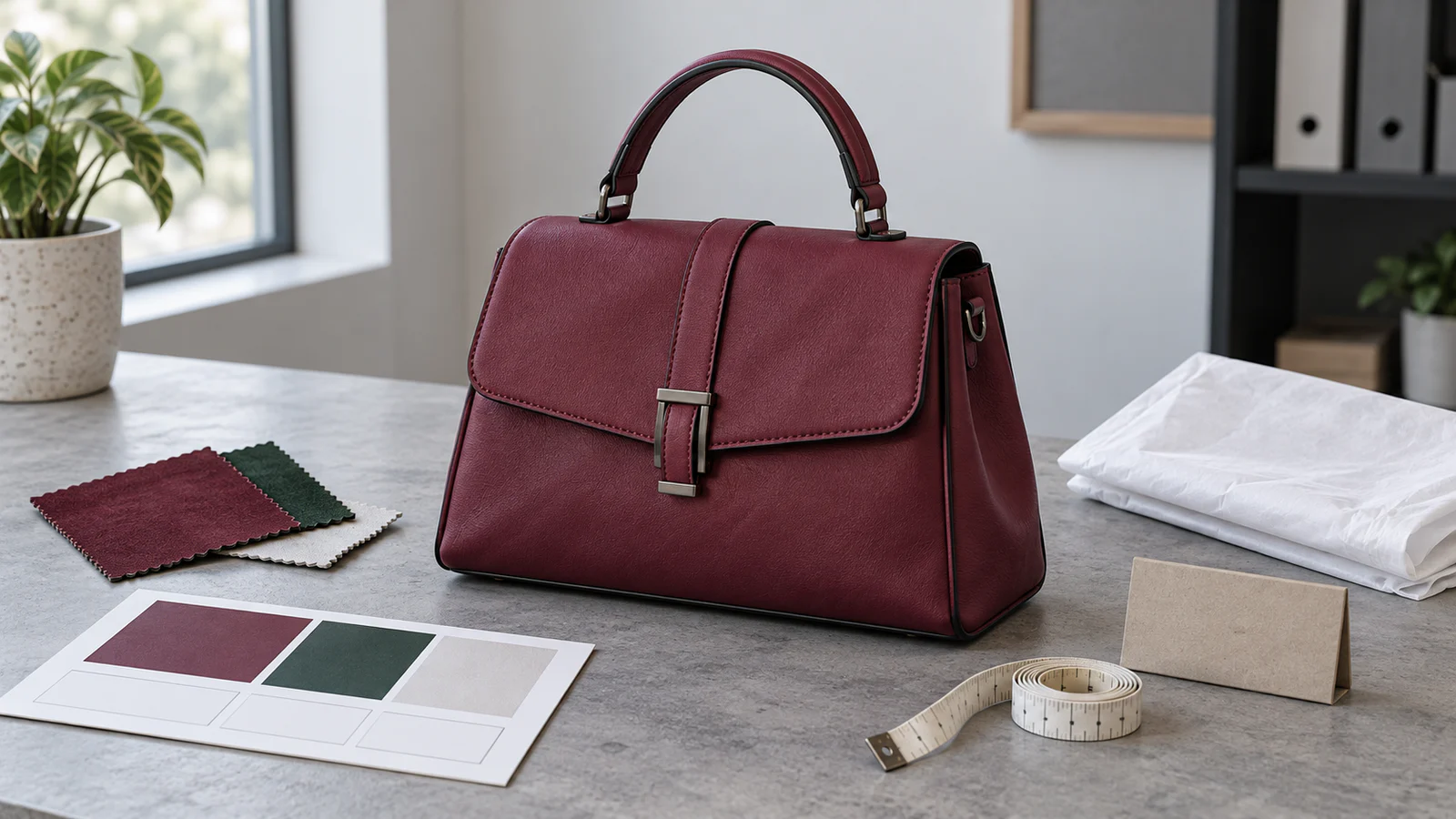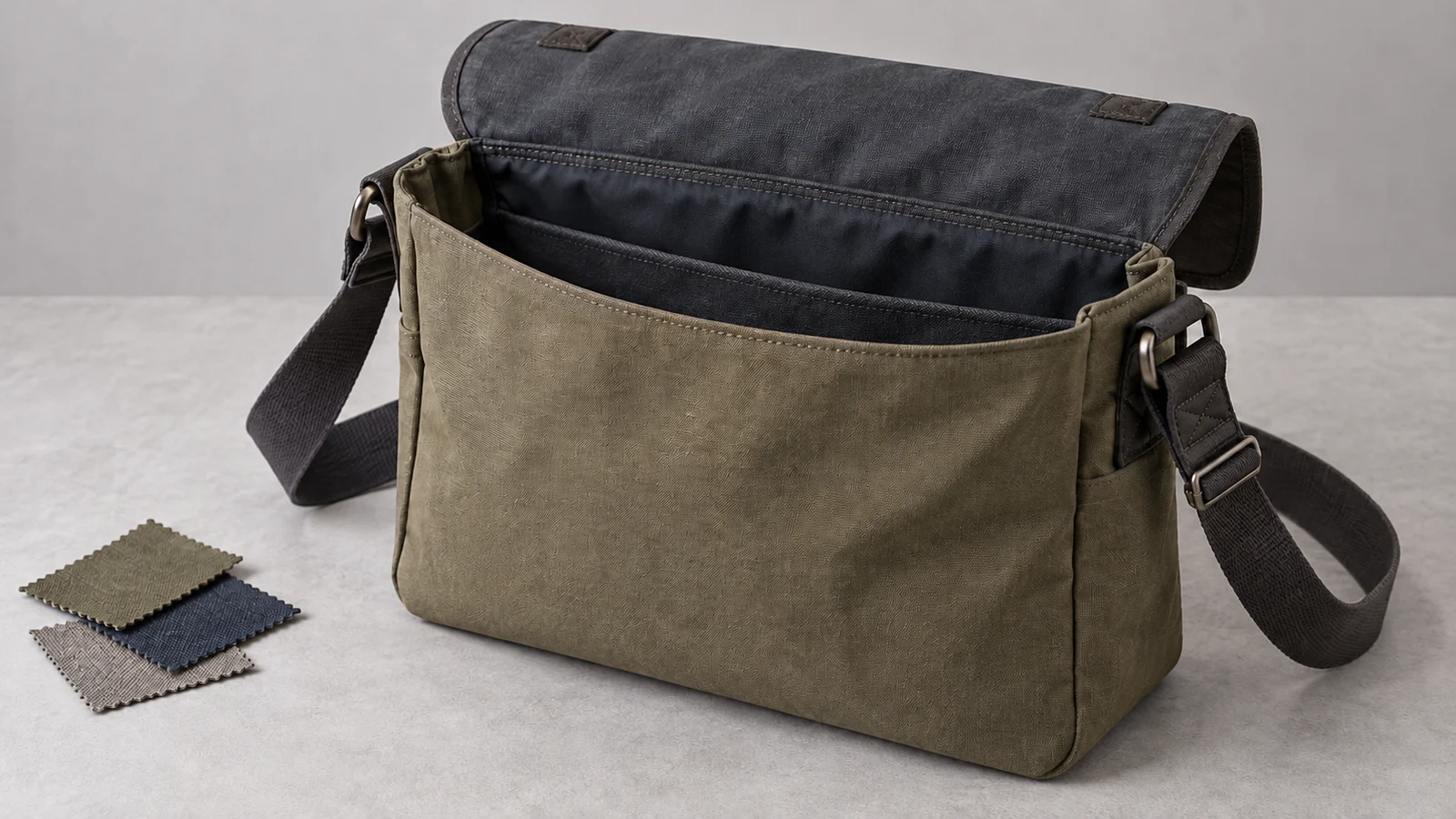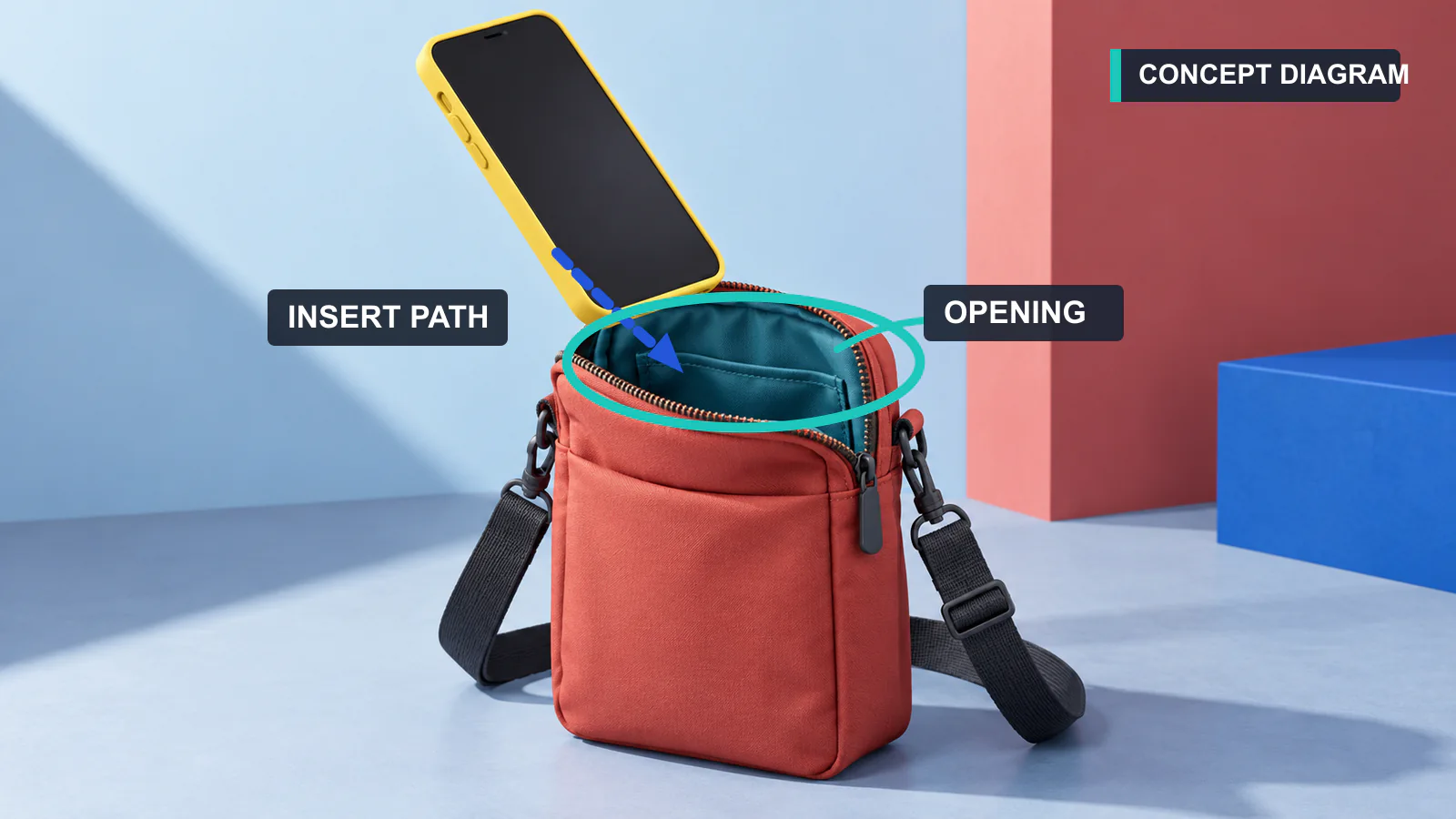
A phone crossbody bag can look generous from the front yet leave too little room to retrieve a cased device. Exterior dimensions alone do not show the usable mouth, the route past a closure or the space left when cards and keys are added.
For useful phone crossbody bags wholesale specifications, define the largest target device with its intended case, the finished internal cavity, the effective opening and the insertion direction. Then approve those together on a physical sample before claiming fit. Whether your buyer calls it a phone bag or a mini crossbody, an identified stock style needs checking; a new design needs a specification and sample review.
Start With the Target Device and Carry Scenario
Ask the buyer to measure width, height and depth with the intended case fitted. Record the measurement endpoints and units, including any protruding parts that must pass through the opening. A model name is a reference, not proof of the assembled device's dimensions.
Where several devices matter, list each device-and-case combination rather than assuming that one covers the others. Identify the largest dimensions, but retain the individual references: different corner shapes or case attachments may require separate insertion checks.
Choose the carrying scenario before deciding the interior. Is this a dedicated phone compartment with separate card storage, or a mini bag sharing space with keys? State whether the device rests upright or sideways, how it enters, and whether one-handed retrieval while worn is expected. These are buyer requirements to review, not universal features of the format.
Use the crossbody bag collection to select a style direction. A suitable-looking listing still needs a check against the specific device, case and contents.
Translate Exterior Shape Into Usable Interior and Opening
Keep four measurements separate: exterior width, height and depth; finished internal clear space; effective opening; and the insertion path between the mouth and resting position. Lining, seams, pockets and closure parts occupy space, so ask for the finished sample measurements rather than treating an unlined body as equivalent.
The crossbody bag size guide helps with broader assortment sizing. Once the phone format is selected, the decision is more specific: can the chosen device travel through the opening, settle inside and come back out without an impractical maneuver?
For example, a hypothetical sample might have enough room inside but catch a case corner at the zipper end. Tilting the device could allow insertion, yet leave its top in the closure path. That is a fit issue to record, not a reason to approve the bag from its cavity measurement alone.
Device-to-opening specification sheet
Use the following fields with the buyer's references. Project-specific dimensions and acceptable clearances remain to be confirmed until reviewed; the table supplies no standard millimeter allowance.
| Buyer-provided input | Factory/sample measurement to confirm | First-sample pass / revise observation |
|---|---|---|
| Device and intended case, bounding width/height/depth and protrusions. | Confirm the reference combination and measurement endpoints. | The reviewed device matches the listed case and attached parts; otherwise record a substitution. |
| Intended resting orientation and other required contents. | Finished internal clear space after lining, seams and pockets are installed. | The device reaches its intended resting position without displacing required interior features. |
| Opening direction and proposed zipper, flap or other closure. | Effective mouth dimensions with the closure fully operated as intended. | The case passes the narrowest usable part without needing the bag held in an unapproved shape. |
| Expected insertion and withdrawal direction, including any permitted tilt. | The path from mouth to cavity, including corners and fixed components. | Insertion and removal follow the agreed action; mark the point where a corner catches. |
| Device position when the bag is closed. | Closure sweep and remaining clear space with the device present. | The closure operates as intended; record any contact or obstruction for review. |
| Actual card/key load and intended pocket separation. | Occupied pocket space and remaining phone clearance when loaded. | Adding the stated contents does not defeat the agreed access or closing action. |
Request photographs showing the measuring points and open state. An opening measurement without its closure position is hard to compare. Keep each quote tied to the same proposed interior and closure arrangement.
Check Closure and Card/Key Separation Together
A zipper, flap, snap or open-top arrangement is a design alternative, not a safety ranking or a list of Christori's current stock. Decide what the opening must do, then review the proposed closure with the intended contents present.
For a zipper, observe access around its ends and puller. With a flap, check the path it follows and where it rests during retrieval. With a snap, check whether it can be operated while the device occupies the compartment. An open-top reference still needs an agreed carrying and access review. None of these observations establishes protection against loss or damage.
If the buyer asks for a phone pouch, clarify the format. A removable insert or strapless pouch does not automatically provide a wearable crossbody's attachment points or separate storage. Sketch the requested cardholder and key compartment on the interior view.
Load those spaces during review. A pocket that looks flat when empty may occupy part of the intended phone area once filled. Note where keys or fittings touch the case and whether cards remain accessible. Do not label the arrangement scratch-protective, RFID-blocking or water-resistant without supporting evidence.
Review a Strap System on the Assembled Mini Bag
Supply the desired carry position and either a target drop or an adjustment requirement, with the measurement method. The appropriate arrangement depends on the intended user and sample; a fixed strap recommendation would leave those assumptions unresolved.
On the assembled bag, trace the strap from one anchor to the other. Check whether a connector sits across the zipper path, pulls the mouth together or leaves a loose fitting beside the access area. Review retrieval while worn, not only with the bag lying open on a table.
Ask the reviewer to show the adjustment hardware, unused strap tail and any detachable connection in the selected position. Record visible interference and the requested change. This is a use-and-access check, not a load or durability test.
For the broader component list and attachment questions, use the crossbody strap and hardware checklist. Keep this project's comments focused on the compact body's opening and carrying behavior.
Separate Ready Stock Check From Custom Development
An identified stock style
For ready-stock handbags, start with the exact style and color. Ask for its actual usable opening, finished interior and a fit review against the supplied device-and-case reference. Confirm current availability and order quantity for that item separately.
A product label does not establish fit or stock. If a light customization is requested, list it explicitly and ask whether it is possible on the identified item. Do not assume a logo change permits changes to the opening, pocket layout or strap anchors.
A custom specification
For handbag product development, send front, side and open-interior references with fixed requirements and unresolved choices marked. Identify the shell and lining direction, closure, pockets, strap, branding positions and packing needs.
Ask which details require sample review before the quotation can be finalized. If the sample uses substitute lining, fittings or other provisional parts, record them and identify which fit observations need repeating. An approval should name the reviewed version rather than silently carrying across substitutions.
Share an estimated quantity when possible; quantity undecided is also a valid starting point for discussion. Commercial MOQ, price, sampling charges and timing require project confirmation. Custom order conditions should not be applied automatically to every stock inquiry.
Use a Fit-to-RFQ and First-Sample Review Record
Before asking for a quote
Prepare one versioned sheet containing:
- Device-and-case references, measurements, protrusions and intended orientation.
- Required internal space, opening direction and permitted insertion action.
- Closure, card/key contents and pocket separation.
- Carry position, strap arrangement and access while worn.
- Material, branding and packaging direction, plus selected stock or custom route.
- Estimated quantity or not confirmed yet, with each unresolved item assigned to the buyer or supplier for clarification.
Separate required functions from preferences. A different closure proposal needs a fit review, not merely a revised exterior photograph.
When the first sample arrives
Confirm the sample version and any substitutions. Insert and remove the actual target device with its intended case, then operate the closure with the device inside. Add the agreed cards and keys and repeat the access sequence.
Wear or hold the bag in the intended position and retrieve the device. Inspect corners, lining folds and hardware contact along that path. Photograph the whole opening before close-ups, so comments retain their location.
Record pass, revise or not tested against each requirement. If a different device was used, mark the intended combination not tested. Return one comment sheet naming the observed obstruction and requested outcome; do not turn a handling review into a protection or endurance claim.
Frequently Asked Questions
Do exterior dimensions prove phone fit?
No. They do not establish the finished cavity, effective opening or closure clearance. Review those together using the intended cased device and other contents.
Can I use a model name instead of case measurements?
Use it as a reference, but supply the actual device-and-case measurements. Record attached parts and review the same combination on the sample.
Can a stock style be lightly customized?
Ask about the identified item and exact change. Feasibility needs confirmation; an exterior branding option does not imply that the opening or interior can be redesigned.
Can I ask before quantity is final?
Yes. Send the reference and unresolved requirements, with an estimate if available. Initial discussion does not confirm stock availability, commercial terms or a finished design.
Send Your Phone-Crossbody Brief for Review
Send your target device and case measurements, opening direction, strap plan and estimated quantity for a fit and sourcing-route review. Quantity can still be discussed if undecided.