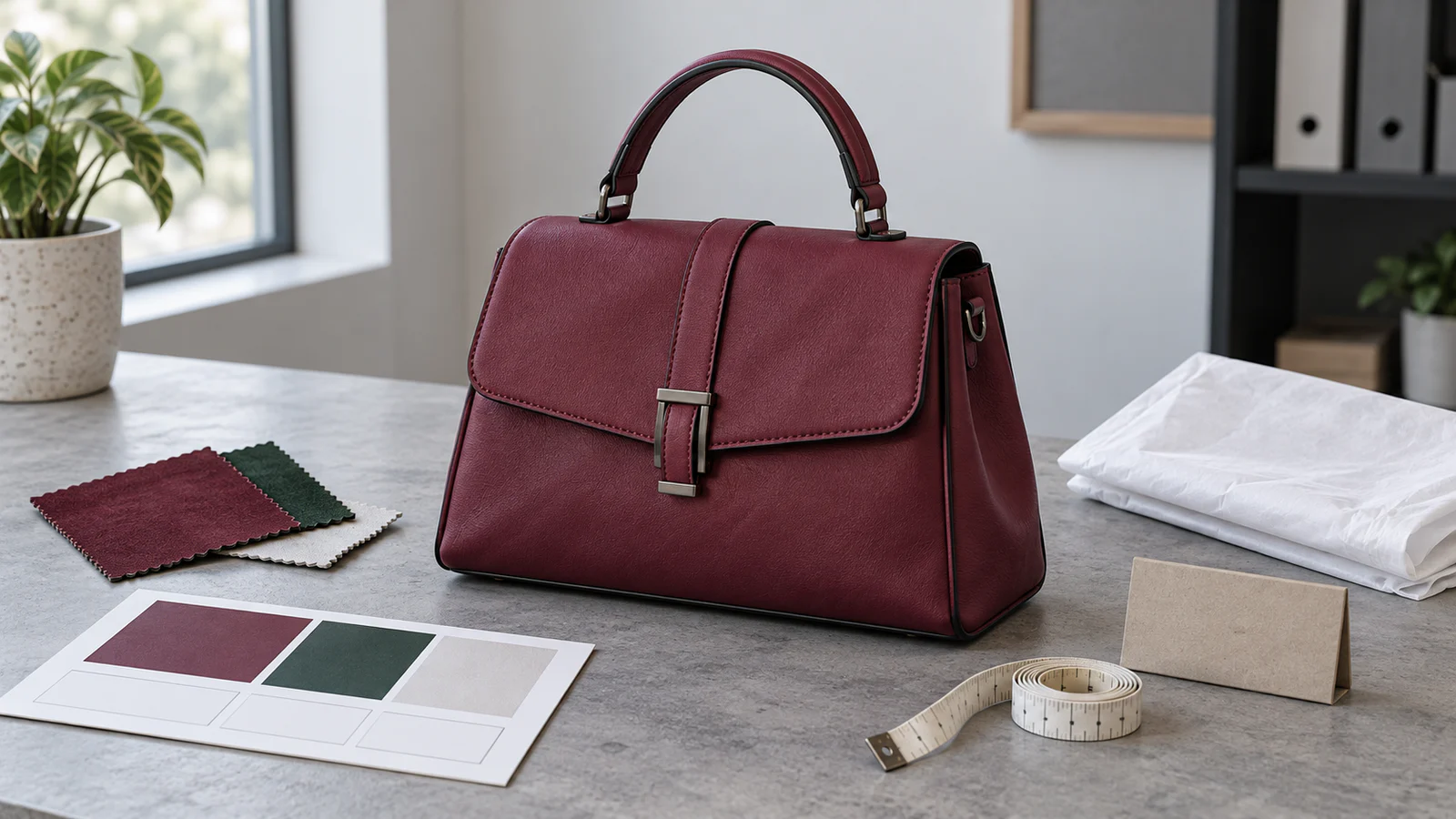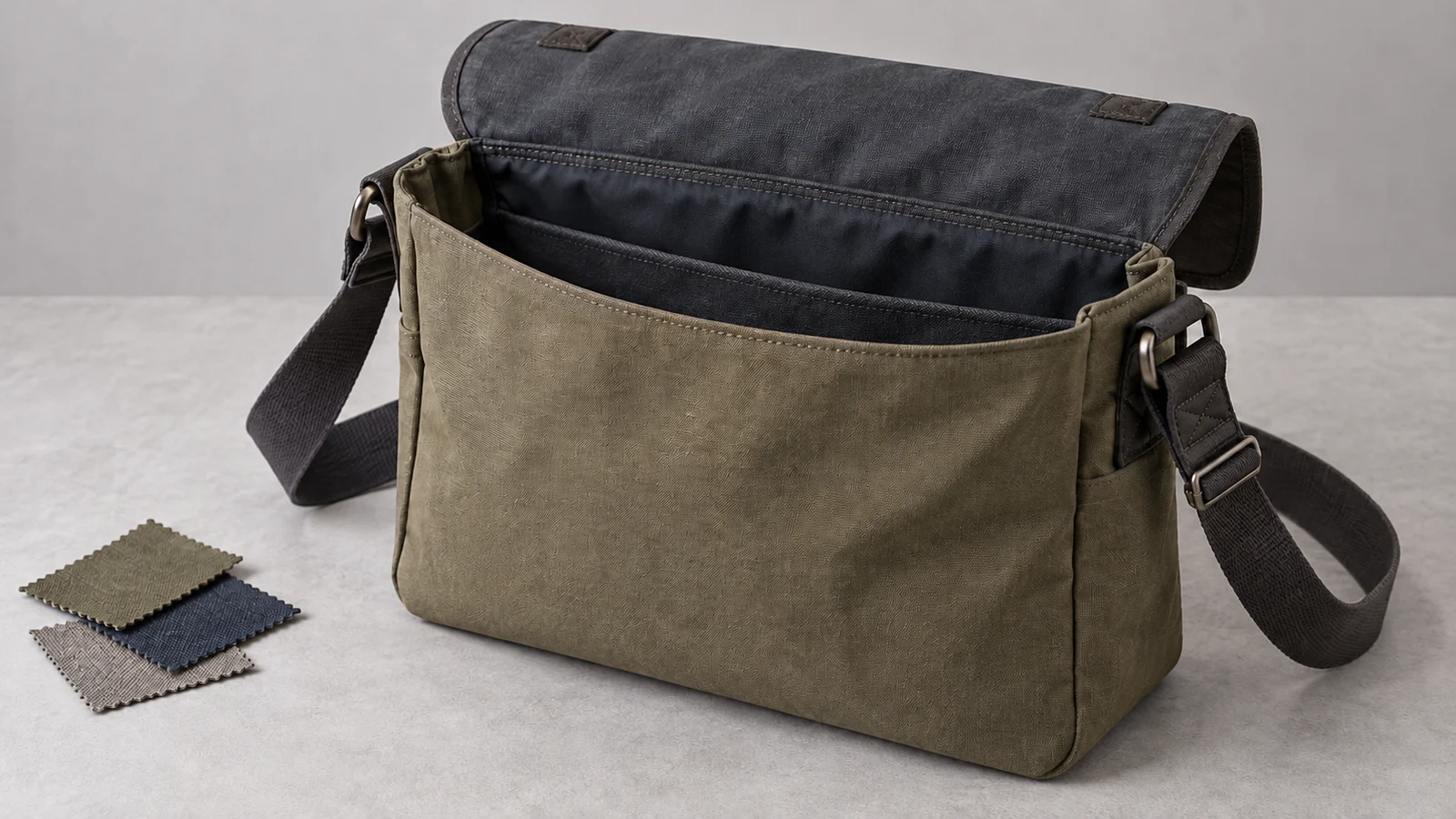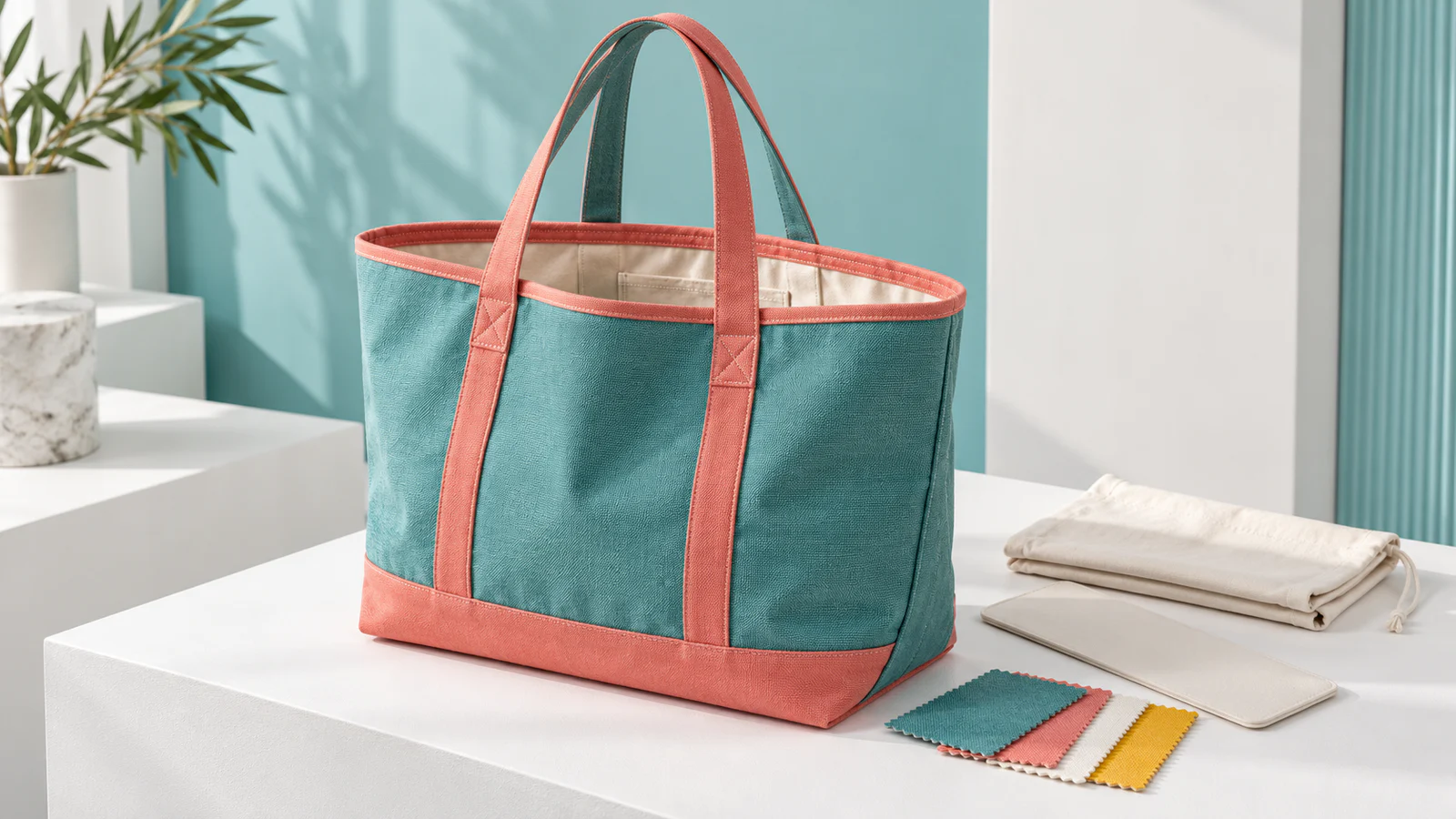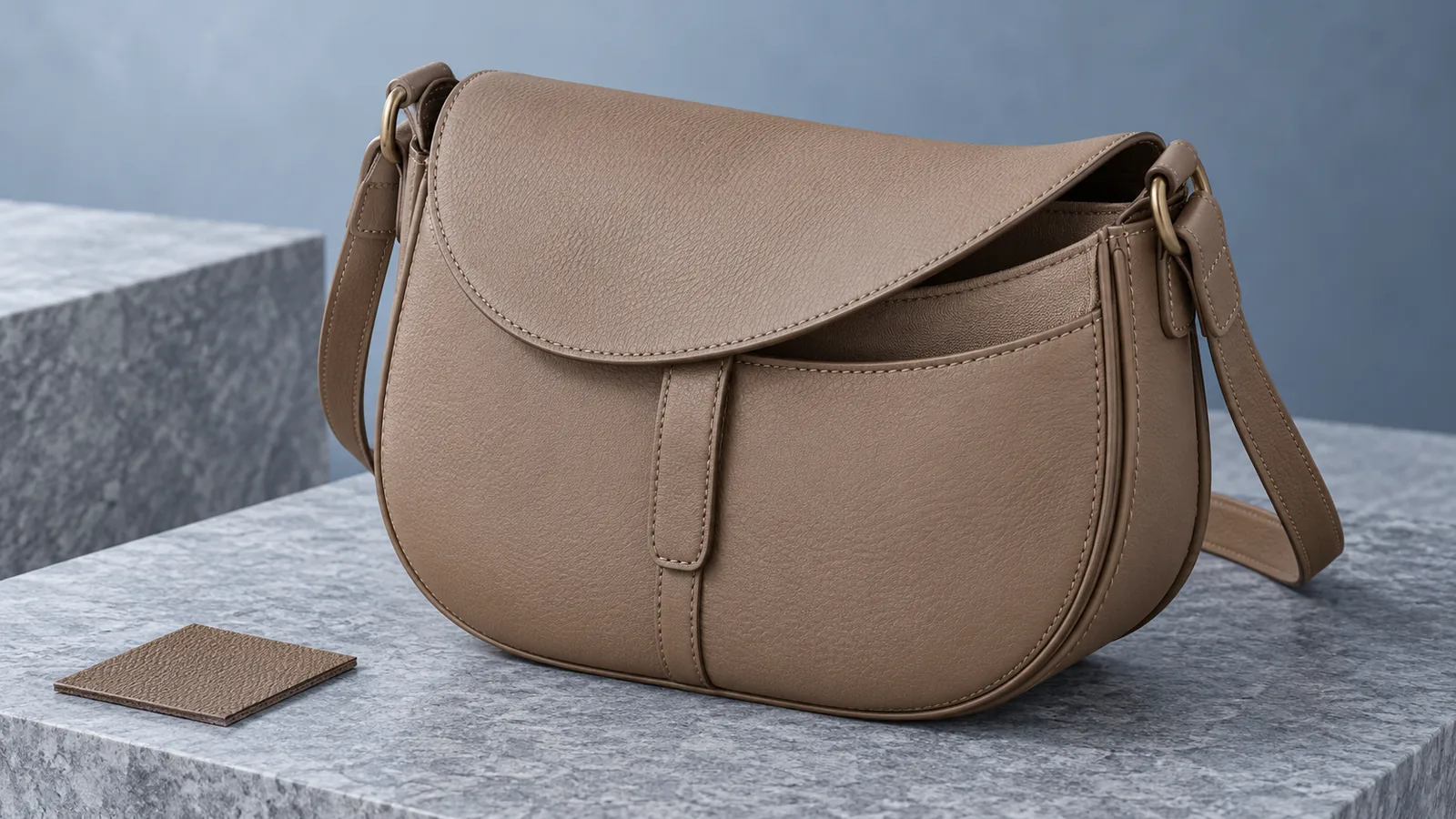
The curved flap makes a saddle bag recognizable, but it also creates the most common specification gaps. A front photograph does not define how far the flap overlaps the body, how it follows the gusset, how much room remains at the mouth, where the closure meets, or whether the strap anchors pull against the same structure. Two samples can share a similar outline and behave very differently.
Useful saddle bags wholesale specifications treat the flap, body mouth, gusset, closure and strap anchors as one geometry. Buyers should provide named dimensions, open and closed views, material direction, interior requirements and the decisions that must be checked on the first sample. Quantity may be an estimate, range or TBC for initial review. Material, construction, MOQ, price, sample cost and timing still depend on the confirmed project.
This guide is separate from compact-silhouette comparisons and the crossbody strap specification checklist. That article owns the broader strap BOM and adjustment system. This one owns saddle-specific curved-flap geometry, gusset behavior, mouth clearance and closure alignment.
Establish the Saddle Silhouette From Multiple Views
Start with a straight front view, both side views, the back, base, open mouth and underside of the flap. Mark the center line. Record finished body width, height and depth, plus the points used for each measurement. A curved top line should have named reference points rather than one ambiguous height.
Define what makes the style a saddle bag for this project. It may be the downward-curving flap, a rounded lower body, a particular gusset profile or the relationship between these elements. Do not assume the product name creates a universal pattern. If the buyer is still deciding between adjacent compact formats, the Crossbody Bags collection and Shoulder Bags collection can provide assortment references without confirming stock, construction or project availability.
Show the intended empty-bag presentation. Should the bag remain visibly structured, settle softly or keep only the curved outline? Ask the supplier to propose a construction appropriate to the selected material. Avoid prescribing an unseen reinforcement method from a photograph or claiming shape retention without evidence.
Define Flap Geometry Against the Body
Specify the flap at the center and near both sides. Useful inputs include the hinge or attachment line, center drop, side overlap, finished width, edge shape and the amount of body covered when closed. If the flap includes piping, binding, folded edges or raw-looking edges, identify the visual direction and ask the factory to confirm the feasible construction.
The flap should be reviewed in three states: fully closed, lifted enough to use the opening, and fully open. Check whether it returns to the approved center position, whether side overlap appears balanced and whether the edge meets the body consistently. These observations do not prove long-term crease resistance or durability.
Material can change the way a curved flap hangs and folds. The genuine leather guide and vegan leather guide outline sourcing questions, but a buyer still needs the actual swatch, supplier description, color reference and project confirmation. Do not infer leather grade, composition, coating, thickness or performance from the cover image or another product.
If a logo sits on the flap, position it from the flap center line and a stable edge. Review the logo only after the flap shape and closure position are established; otherwise a later geometry change can move the artwork visually.
Set Gusset Depth and Mouth Clearance Together
Gusset depth is not the same as usable opening. A deep side panel may narrow at the top, fold inward, sit behind the flap or be constrained by a zipper or lining. Record body depth at named points and provide the required mouth opening as a separate measurement or observable target.
Ask the supplier to show how the gusset meets the front, back and base. If the side is tapered, pleated, folded or built from multiple pieces, mark the approved outline. Explain whether the gusset should open freely, stay controlled or remain partly folded when the bag is empty. The factory can then identify a feasible assembly rather than guessing from one side photo.
Use this decision table to keep geometry and review evidence connected:
| Decision | Buyer input | Factory confirmation | First-sample check |
|---|---|---|---|
| Flap curve | Center line, attachment line, center drop, side overlap and edge direction. | Proposed panel and edge construction for the selected material. | Balanced curve and approved coverage in the closed state. |
| Body mouth | Target usable access, open view and any object-fit requirement. | Actual opening route and interaction with flap, lining and closure. | Clear access without forcing or trapping the lining. |
| Gusset | Depth at named points, top taper and desired empty-bag behavior. | Panel breakdown, seam relationship and support proposal if needed. | Left/right symmetry and approved fold or expansion behavior. |
| Closure | Type direction, center position, visible finish and opening action. | Actual component, backing/reinforcement proposal and alignment method. | Clean engagement, centered appearance and no obvious surface interference. |
| Strap anchors | Side/back position, orientation, strap route and removable/fixed direction. | Anchor construction and compatibility with gusset and body support. | Matching height, angle and resting position on both sides. |
| Interior | Lining, pocket positions, labels and closure-area clearance. | Lining attachment and pocket construction proposal. | Interior remains clear of the mouth, closure and gusset movement. |
If capacity matters, provide the dimensions of the intended objects and the required access path. Do not convert the exterior dimensions into a capacity claim. Curved panels, seam allowances, lining, pockets and closure placement all affect usable space.
Align the Closure Before Approving Hardware
A closure can look centered when the bag is empty and miss alignment when the gusset opens or the flap settles. Specify the closure position from the center line and named edges on both the flap and body. Ask how the mating parts will be backed and how their position relates to the mouth and interior pocket.
The closure direction may be magnetic, mechanical, zipped, tabbed or another buyer-approved solution, but the exact component requires review. Use the handbag hardware page to frame finish, size and component questions. Request the actual proposed hardware reference rather than approving only a color name such as gold or gunmetal.
During sampling, close the bag from its natural resting position. Check alignment, engagement, flap centering and whether the user must pull the body out of shape to reach the closure. Inspect the reverse side for lining interference or visible backing. If the component is changed, repeat the geometry review because size and placement can affect flap overlap.
Do not create a security, strength, plating-life or cycle claim from a few manual operations. Any performance requirement needs a separately agreed method and acceptance basis.
Integrate Strap Anchors With the Gusset and Back Panel
Saddle bags are often carried crossbody or on the shoulder, yet anchor position is part of the body structure, not an accessory decision. Mark each anchor in side and back views. Record its height, angle, distance from seams and relationship to the top of the gusset. State whether the strap is fixed, detachable or convertible and where loose hardware rests.
Provide target strap width, adjustment direction and usable length range if known. If these are still open, ask the supplier for a clearly labeled proposal. The general crossbody strap article can guide BOM fields, while this sample review should focus on how the anchor affects the saddle bag's flap, gusset and resting angle.
Look at the bag from the front while suspended only as a visual fit check under the agreed sample condition. Does the flap remain centered? Do the gussets pull unevenly? Do clips or rings touch finished surfaces? These checks help resolve geometry; they are not evidence of load capacity or wear life.
Coordinate Lining, Pockets, Branding and Packing
The lining should follow the mouth and gusset without blocking closure movement. Specify material and color direction, pocket type, finished pocket dimensions, label position and the appearance around the upper edge. If the bag has a curved or tapered interior, locate pockets from stable seams rather than saying “centered inside.”
Branding can sit on the flap, body, lining, hardware or a separate label. Provide the artwork version, method direction, dimensions, color and placement. Ask the supplier to confirm feasibility for the actual material and construction. A branding option available on one style is not automatically suitable for another.
Packing should protect the curved flap and keep hardware from pressing against the body. Tell the supplier whether the strap is attached, detached or wrapped separately; where it is placed; whether the bag needs internal support; and which unit components are required. If custom presentation is part of the brief, review the custom handbag packaging service and then confirm the actual packing proposal for this project.
Approve the packed appearance as well as the bag itself. A highly compact arrangement may reduce volume but create unwanted folds or hardware contact. The buyer and supplier need to agree the practical balance without claiming that one method prevents all transit effects.
Run an Observable Sample-Approval Checklist
The first sample should be compared with the same revision used for quotation. Review in a fixed order so a flap or closure change does not hide its effect on another area:
- Confirm front, side, back, base and open-mouth geometry against named points.
- Compare center and side flap overlap in the natural closed position.
- Open the mouth and observe clearance, gusset movement and lining behavior.
- Engage the closure and record alignment from the front and inside.
- Check left/right strap-anchor height, angle and hardware resting position.
- Verify material, trim, lining, pocket and branding references.
- Review edge finish, visible stitching direction and symmetry against the approved sample scope.
- Pack and unpack the sample using the proposed strap and hardware protection.
- List deviations as accepted, revise and resample, or unresolved; do not use silence as approval.
Photographs should include a ruler or measurement reference only where the method is clear. Record the sample version and date. If the factory proposes a construction change, preserve the earlier requirement and document the decision so the approved result can be traced later.
Send a Focused Saddle Bag RFQ
For a new geometry or component arrangement, the handbag product development service is the relevant route. Send:
- Front, back, side, base, open-interior and flap-underside references.
- Finished dimensions with named measuring points and the desired empty-bag state.
- Flap attachment line, curve, center drop, side overlap and edge direction.
- Gusset depth, top taper, panel behavior and target mouth clearance.
- Closure direction, position, finish and current component reference if available.
- Strap type, width, adjustment, anchor location and hardware direction.
- Body/trim material descriptions, swatches and color references.
- Lining, pockets, logo, labels and artwork files.
- Packing expectation, destination and any buyer-supplied retail information.
- Target quantity by style/color, or an estimate, range or TBC.
- Open questions and the required decisions before sample or bulk approval.
Ask the supplier to separate confirmed scope, proposed alternatives and unresolved items. A useful quotation should identify its assumptions. It should not be treated as proof of leather grade, capacity, stock, MOQ, timing or a final construction until those details are confirmed.
Frequently Asked Questions
How much should a saddle bag flap overlap the body?
There is no universal value. Define the desired center and side coverage, mouth clearance and closure position for the selected silhouette. Review all three together on the sample.
Does a deeper gusset always provide more usable space?
No. The opening, taper, flap, lining, pockets and internal seams affect usable access. If object fit matters, provide the object dimensions and check the physical sample.
Can I choose the closure after approving the bag shape?
You can revise it, but the change may affect flap overlap, component backing and body alignment. Review the new component and position against the complete geometry before final approval.
What quantity is needed to request a factory review?
Share the best current quantity information by style and color, even if it is an estimate, range or TBC. The factory can then review the project, while MOQ, price, sample cost and timing remain subject to the confirmed scope.
Make the Curved Geometry Quotable
A saddle bag brief becomes actionable when the flap curve, gusset, opening, closure and strap anchors are documented as connected decisions. That gives the sample team specific questions to resolve and gives the buyer visible approval points instead of relying on the product name.
Send the saddle silhouette, flap and closure reference, strap direction and quantity plan for specification review. Christori can review the available project information, with feasibility and commercial terms confirmed for the actual request.