When sourcing a straw bag or raffia bag, the first decision is not color or handle shape. It is whether the buyer is specifying a verified material or only a plant-fiber-look appearance. Product names, reference photographs and marketplace labels do not establish fiber identity, origin, natural content or moisture performance. Those facts need supplier documentation and project approval.
Clear straw raffia handbags wholesale specifications therefore separate four things: the approved material description, the visible weave or panel direction, the support and edge system, and the packing required to protect the intended shape. This approach gives wholesalers, brands and sourcing managers a practical RFQ without treating every woven-looking handbag as the same material.
Separate Material Identity From Visual Direction
Begin the brief with two fields: appearance target and material status. The appearance target can describe tone, surface scale, direction, openness and silhouette. Material status should say one of the following: buyer-specified with evidence, supplier proposal pending verification, or not yet confirmed. This prevents a visual reference from silently becoming a composition claim.
Ask the supplier to state the proposed material name and composition in the form used for the project, plus any supporting document the buyer needs to review. If several materials create a similar look, keep each proposal separate. Do not describe a synthetic plant-fiber-look material as natural, or a natural-looking construction as raffia, only because the reference has that appearance.
Also keep marketing language out of the technical approval until it is supported. Terms such as natural, sustainable, biodegradable, handmade, moisture resistant or washable require their own evidence and market review. A supplier's ability to make a visually similar sample does not validate those claims.
This article is intentionally different from the beach tote material and structure guide. The beach tote article starts from a seasonal use case across several material routes. This guide starts from a straw- or raffia-look material question and controls terminology, panel direction, edge transitions and shape protection. It is also separate from the woven leather QC guide, which addresses leather weaving rather than plant-fiber-look identity. Buyers can use the tote bag collection and shoulder bag collection to clarify the adjacent silhouette, without treating those pages as proof of a specific fiber or available style.
Map Weave Direction and Panel Relationships
A single front image rarely shows how the material should continue around the sides, base and opening. Prepare a panel map with front, back, left side, right side, base and any flap or gusset. Use arrows or annotated reference crops to show the intended visible direction. If the appearance changes by panel, say whether that change is deliberate.
Define the visual scale with a dimensioned reference rather than “fine” or “wide.” Mark the center line or other alignment point only where it matters to the design. Ask what alignment can be controlled at seams and curved transitions before setting an acceptance standard.
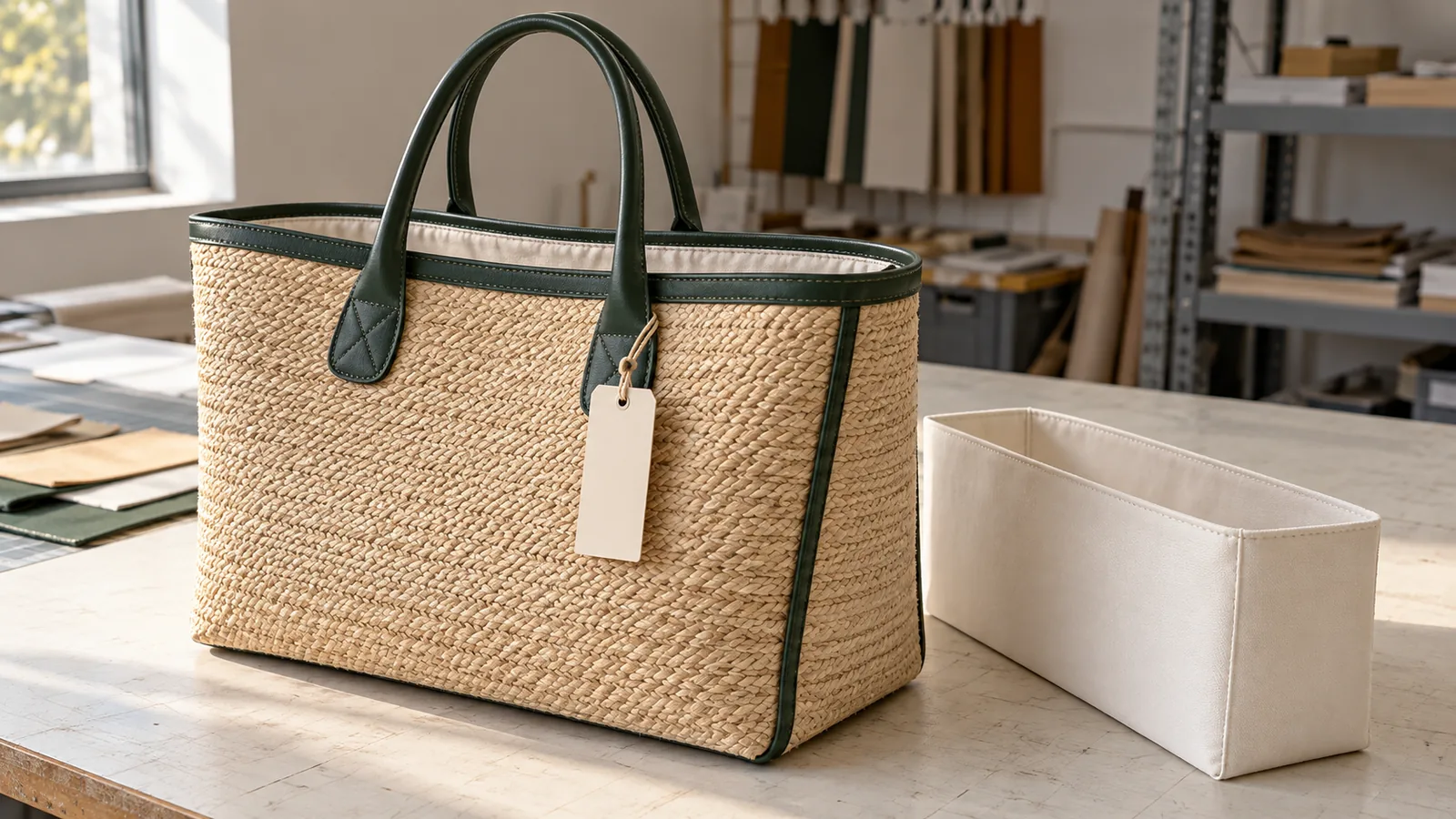
If the body combines a woven-looking panel with solid trim, define the boundary. Show where the trim starts, whether the panel edge should remain visible and how the corner or seam should look from the outside. For a straw tote bag direction, include the top edge and handle zones because these often interrupt the main surface.
Review front and back as independent panels. A sample may look balanced on the front but shift direction at the rear seam or side gusset. Photograph every view under similar conditions and compare it with the approved panel map, not with a general mood board.
Define Structure, Lining and Edge Transitions
Plant-fiber-look materials can be presented as soft, semi-structured or more defined, but the name alone does not determine the result. Specify the target silhouette when empty and when prepared for retail presentation. State whether the base should sit flat, whether the side panels should fold, and whether the top edge should remain open, draw inward or hold a defined line.
Map support zones behind the base, handles, opening, closure or hardware in the project brief. Let the supplier propose feasible materials and methods; do not invent hidden construction from an exterior photograph.
Lining has both functional and visual roles. Specify full or partial coverage, color, pocket layout and how much lining may be seen at the opening or through the outer surface. The lining material page helps buyers organize options, but the actual lining and attachment must be confirmed for the proposed bag.
At the top edge, side seam and base, ask how the outer material terminates. The solution might involve trim, binding, facing or another project-specific construction. The buyer should approve the visible width, color and continuity of that transition on the sample rather than assuming one standard finish.
Treat Handles and Hardware as Structural Interfaces
Handles can attach through solid trim, tabs, wrapped zones, rings or a support hidden behind the outer surface. The correct proposal depends on body construction and desired appearance. Specify handle drop, width, anchor spacing and carry direction, then ask the supplier to show the proposed load path in a drawing or sample explanation. This is a construction review, not a load or durability claim.
Check whether handle anchors distort the upper edge or pull the panel direction off line when the bag hangs. Look inside to see how the anchor relates to the lining and any support. Paired anchors should be compared for position and visible finish. If a detachable strap is included, define attachment location, strap length range and where unused hardware rests against the bag.
For rings, feet, closures or strap fittings, send shape and finish references and use the handbag hardware material guide to organize the component brief. Ask the supplier to confirm the actual proposed component. Do not infer base metal, plating performance or corrosion behavior from color alone.
Use a Terminology and Construction Verification Table
The following table prevents appearance words from becoming unsupported product facts. Keep the evidence and approval status attached to each quotation or sample revision.
| Item to verify | Do not rely on | Request from supplier | Buyer approval record |
|---|---|---|---|
| Material identity | Product name, color or reference photo alone. | Project-specific proposed composition and relevant supporting information. | Approved description and evidence version, or pending status. |
| Surface direction | A front view that omits sides, base and back. | Panel map or sample views showing direction and transitions. | Annotated approved views for each important panel. |
| Shape and support | The bag being temporarily filled for photography. | Proposed support zones and expected empty presentation. | Sample review condition and accepted silhouette. |
| Edges and lining | “Neat edge” or “matching lining” without a reference. | Visible edge proposal, lining coverage, color and attachment. | Close-ups and open-top/interior approval photographs. |
| Handles and hardware | Exterior appearance without the anchor relationship. | Dimensions, component proposal and inside/outside connection views. | Approved handle position, drop, finish and attachment appearance. |
| Performance wording | Natural appearance or informal supplier description. | Evidence relevant to the exact claim and destination. | Claim approved, revised or omitted. |
An estimated quantity, range or to be confirmed is acceptable for an early feasibility review. MOQ, pricing, samples and timing depend on material, structure, color split, customization and current sourcing conditions. They require a project response.
Design Packing Around Shape and Contact Risks
Packing should protect the approved silhouette without being described as a universal solution. Identify the areas most likely to be pressed or distorted in the proposed bag: upper edge, side panels, base, handles, protruding trim and hardware contact points. Ask for a project packing proposal and review it with the sample.
Specify whether handles should be upright, laid in a defined direction or separately protected. Metal components should not rub directly against the visible body if that could affect presentation. If internal support is proposed, confirm its position, removal and effect on the bag after unpacking. Do not claim that an insert guarantees shape retention during all transport conditions.
The custom handbag packaging service provides a route for discussing presentation and protective components. In the RFQ, separate unit protection, retail presentation and outer shipping requirements. State the destination and any buyer-supplied labeling or packaging rules so feasibility can be reviewed.
Conduct an unpacking review on the sample or packing trial. Photograph the packed orientation, protection points and bag immediately after unpacking. Record any pressure marks, displaced handles, edge distortion or transfer from internal materials as observations requiring review, not as a universal material conclusion.
Review the Sample With a Panel-and-Shape Checklist
Use one dated sample sheet and record the proposed material description exactly. Then check:
- front, back, side and base direction against the annotated panel map;
- continuity and symmetry where the design specifically requires them;
- visible surface variation against the agreed reference, without invented tolerances;
- top-edge, side and base transitions at every construction change;
- lining coverage, color, pockets and visibility through openings;
- handle dimensions, paired anchor positions and inside support relationship;
- closure alignment and hardware contact with the body;
- empty shape, approved presentation shape and recovery after the agreed packing review;
- logo, label and packaging placement against current files.
Every correction should name the view, location and desired result. “Use better raffia” is not a usable instruction and may repeat an unverified material term. “Revise the upper-right front panel direction to follow approved map A” is specific and observable.
If the material proposal changes, reopen any dependent approvals. Color, edge method, handle connection and packing may behave differently with the revised material. A sample approval is tied to the identified proposal, not to the article title.
Build the RFQ Around Decisions and Open Questions
Before using handbag product development or requesting a quotation, provide:
- Target silhouette and finished dimensions with measurement points.
- Front, back, side, base, opening and interior references.
- Appearance target plus the current status of material identity.
- Panel-by-panel direction and any required visual alignment.
- Structure direction, base behavior and support zones to review.
- Lining coverage, color, pockets, labels and opening/closure plan.
- Handle or strap dimensions, anchor positions and hardware direction.
- Logo artwork and placement.
- Unit protection, retail presentation and shape-protection expectations.
- Quantity by style/color, or estimate/range/TBC, and destination market.
Ask the supplier to identify assumptions, alternatives and missing evidence. The quotation should state which material and construction proposal it covers. If the buyer later changes the fiber requirement, panel construction or packing, obtain an updated response rather than comparing the new scope with an old price.
Frequently Asked Questions
Are straw and raffia interchangeable descriptions?
No. They should not be used interchangeably without evidence for the actual project material. If the buyer only knows the desired look, say “plant-fiber-look” or describe the appearance and ask the supplier to identify the proposal.
Does a woven-looking bag prove it uses a natural fiber?
No. Appearance does not prove composition or origin. Review the supplier's project-specific material description and any evidence required for buyer claims.
Can I request a structured straw tote bag?
You can specify the intended silhouette, base and support zones, then ask what construction is feasible with the proposed material. Approve the sample under defined review conditions rather than assuming the name determines structure.
What quantity should I send before asking for a quote?
Send a target by style and color when available. An estimate, range or TBC can start the review. The supplier still needs to confirm material availability, MOQ, price and timing for the actual scope.
Send the Material and Packing Brief for Verification
Send the material description or appearance target, weave reference, silhouette, handle system, lining, packing expectations and quantity plan. Christori can review the project inputs and identify the points that need supplier verification; the review does not imply current stock, a particular fiber or an existing Christori production method.