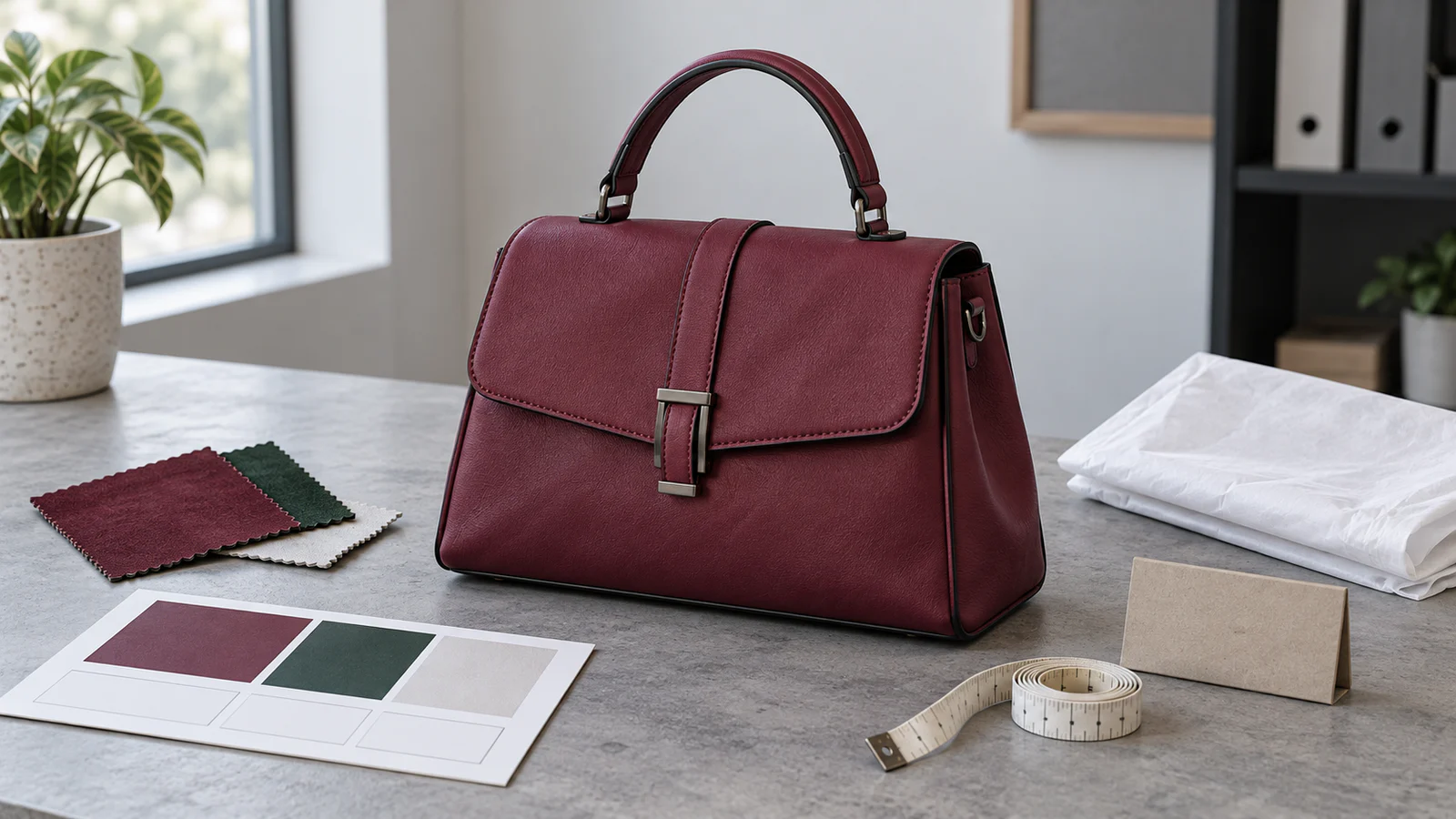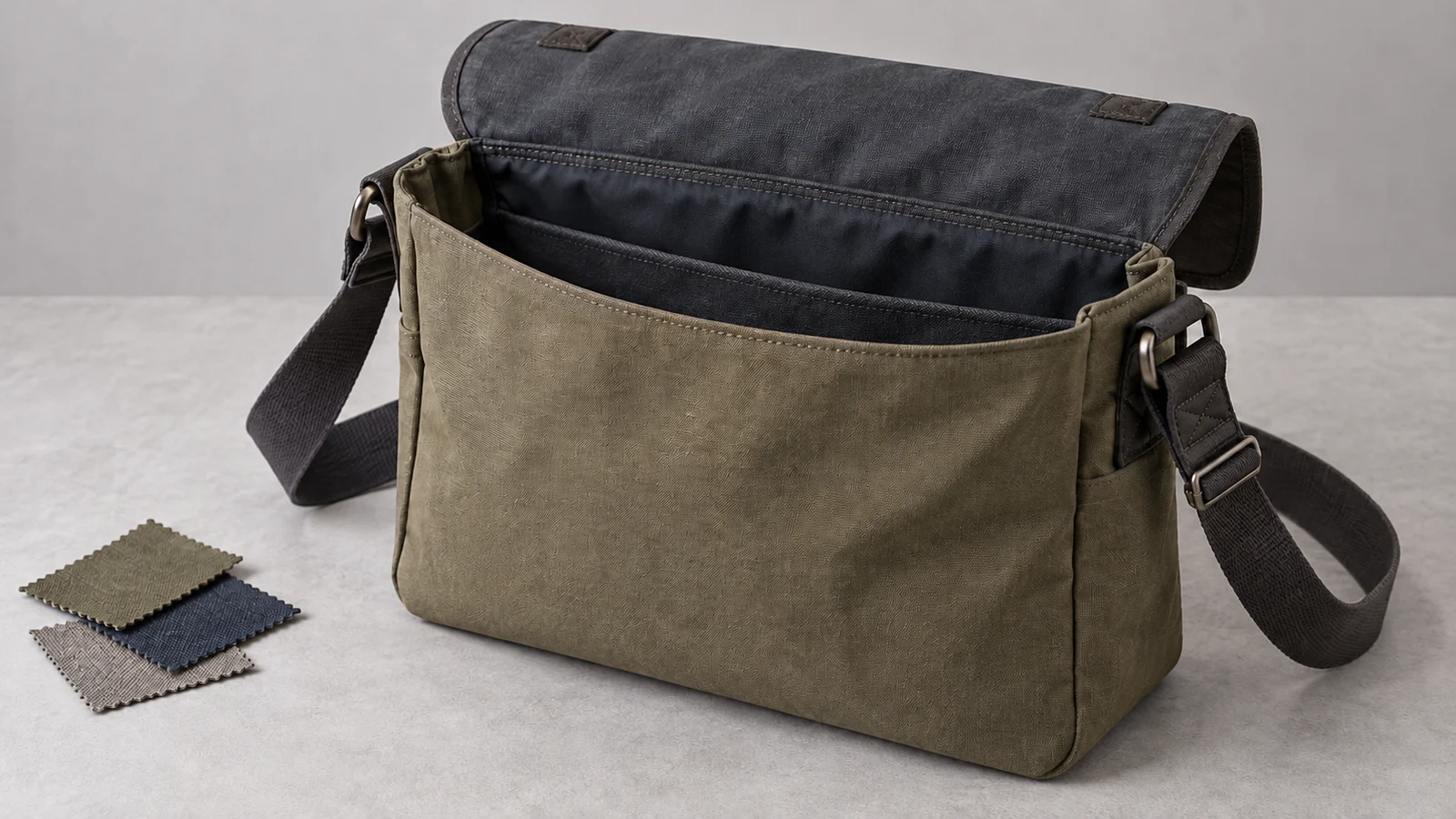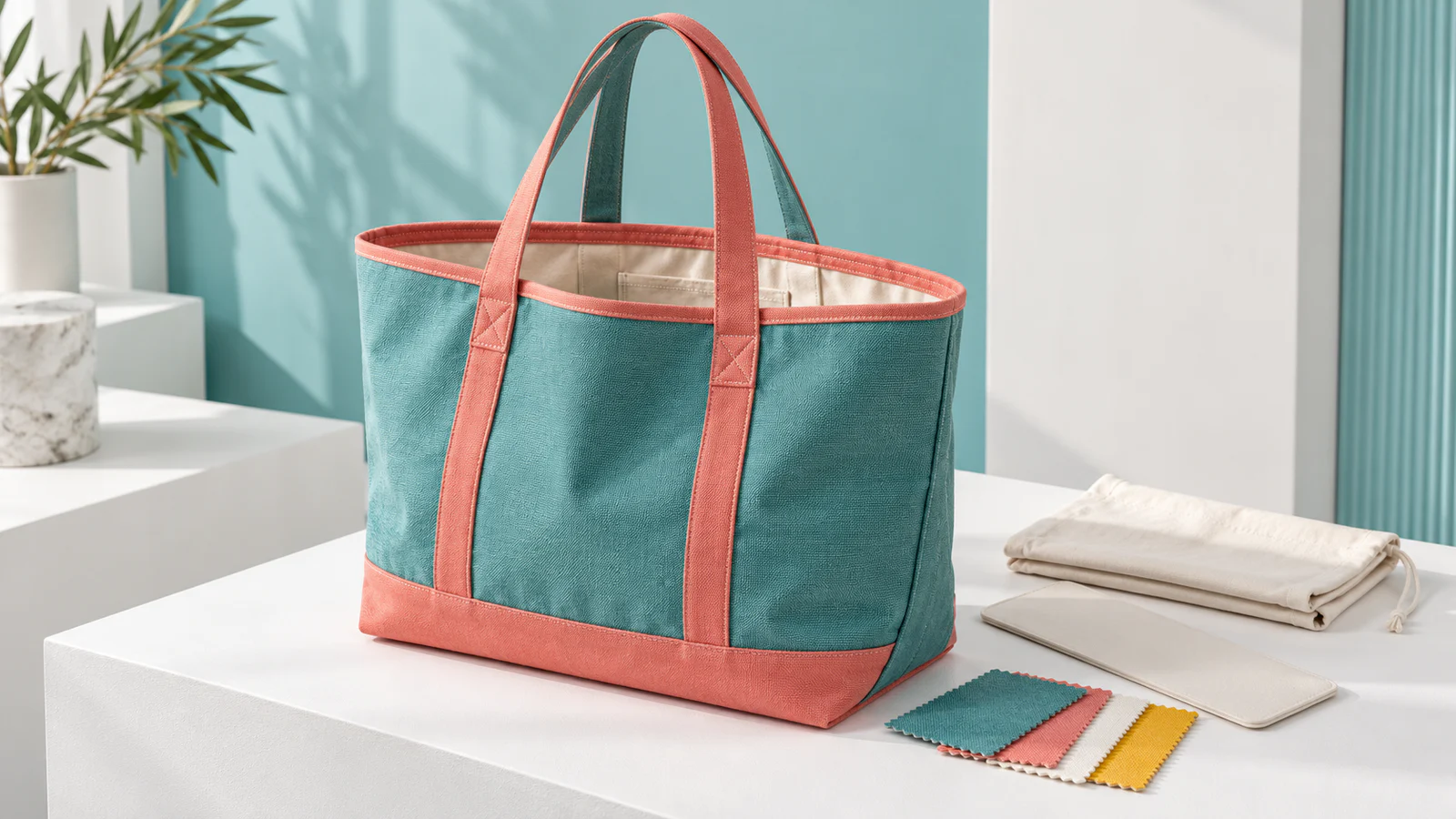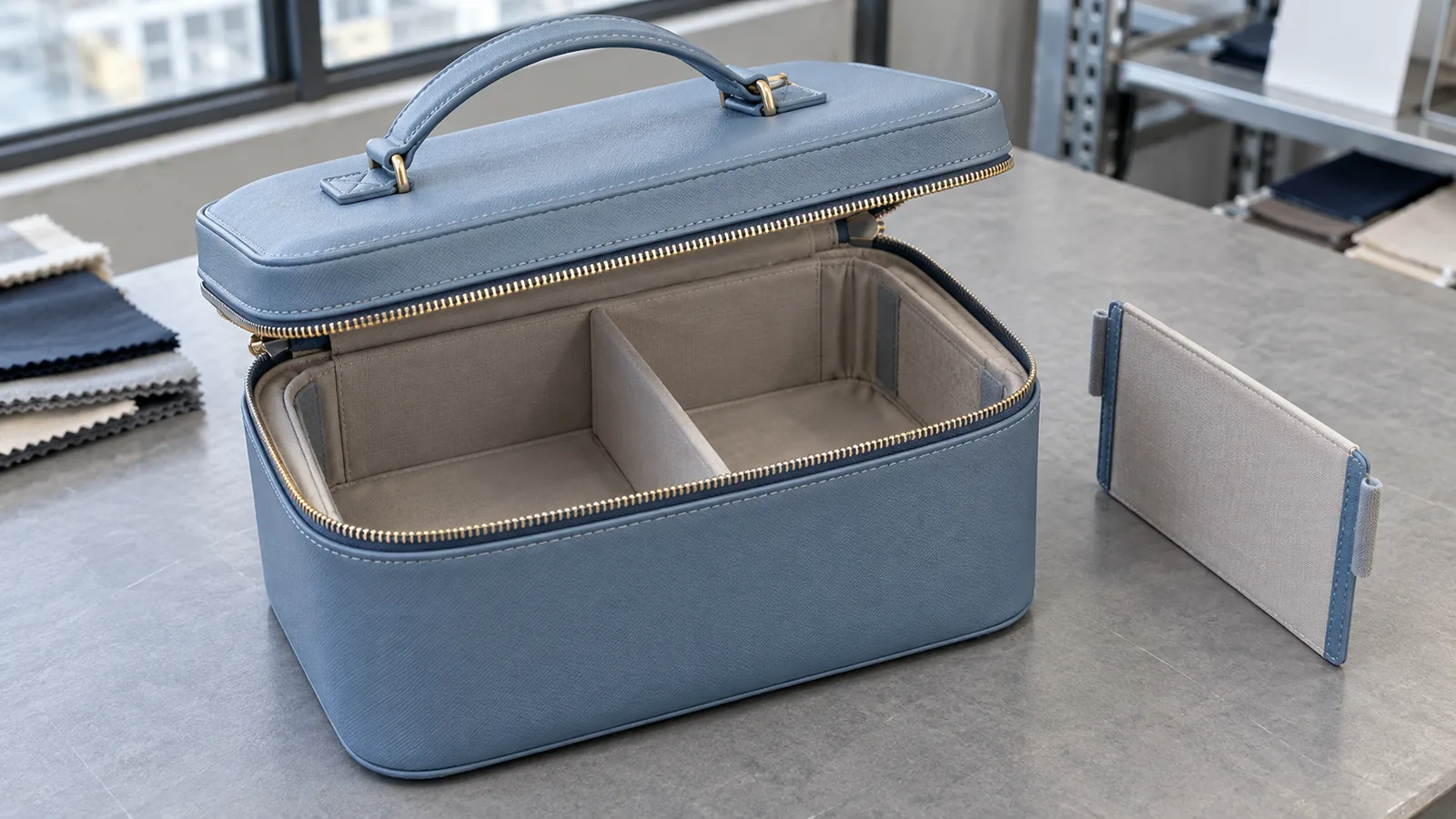
A reference image can show the general look of a vanity bag, but it cannot define how the case should open, how far the lid should travel, where a top handle should be anchored or how the interior should be divided. Those details determine whether a supplier is quoting the same product that the buyer expects. They also affect sampling, hardware selection, packing volume and the way the bag holds its intended form.
Useful vanity bags wholesale specifications therefore describe the whole case system, not only length, width and height. A buyer should document the body and lid relationship, opening route, handle geometry, interior layout, lining, hardware, branding and packing. Any value that is not final can be marked as an estimate, a range or to be confirmed. The objective is to expose decisions before sampling, without pretending that a reference photograph proves the construction inside it.
Position the Vanity Bag in the Assortment
A vanity bag or vanity case usually occupies a more case-like position than a soft pouch. It may sit near travel accessories, compact organizers, small top-handle bags or structured gift items in a wholesale assortment. That commercial position influences what buyers expect from the opening, interior visibility, presentation and packing, but it does not establish one universal construction.
Define the intended role before discussing details. Is the item a compact structured accessory, a semi-structured organizer, a decorative small case or a softer bag with a case-inspired silhouette? State whether the buyer expects it to stand for photography and display, whether the lid should remain open during access, and whether removable partitions are being considered. These are design inputs, not performance claims.
The Evening Bags collection and Top Handle Bags collection show adjacent formats that can help a buyer discuss assortment context. They do not confirm that a particular vanity construction is available. Likewise, the existing clutch bag wholesale guide explains handheld evening formats; this guide instead focuses on case geometry, lid behavior and a divided interior.
Choose the Case Structure Before Detailing the Surface
The words “rigid” and “semi-structured” are not enough for a usable brief. Identify where the shape is expected to be supported: front and back panels, side walls, lid, base, upper rim or selected anchor zones. Ask the supplier to propose a feasible build only after the intended silhouette, material direction and opening method are clear.
A soft outer material can sit over different support systems, while a visually firm case may still have flexible transitions at its lid or gusset. Do not infer board type, foam, frame material, adhesive system or thickness from an image. Those project facts require a supplier proposal and sample review. The broader handbag structure and reinforcement guide explains support zones across bag types; a vanity case adds a lid-to-body relationship and opening clearance that need their own specification.
Use the following decision table to make the required behavior visible without prescribing an unverified production method.
| Specification route | Buyer should define | Sample review focus | Do not assume |
|---|---|---|---|
| Firm case-like body | Supported zones, exterior geometry, base relationship and acceptable visual movement. | Panel alignment, corners, rim, standing appearance and transitions around the opening. | A reference image reveals the internal support material or protection level. |
| Semi-structured body | Where flexibility is acceptable and which areas must retain the approved outline. | Symmetry, side-wall behavior, lid fit and appearance when empty. | “Semi-structured” has the same meaning for every supplier. |
| Soft case-inspired bag | Target silhouette, opening shape, gusset behavior and packing presentation. | How the empty bag settles, whether the mouth distorts and how the handle affects the top. | A soft body will display or pack like a supported case. |
| Removable interior division | Number, approximate position, removal direction and whether adjustment is required. | Fit, edge finish, movement and access to the surrounding space. | A divider provides impact protection or remains fixed in use. |
Specify the Lid and Opening as One System
Start with the closed view and the fully open view. Record the opening direction, zipper or frame route, lid depth, gusset relationship and the amount of access the buyer expects. A top view alone may hide whether the lid leans backward, folds, stops at an angle or places stress on the side connection.
For a zip-around opening, define the start and end positions, intended travel around corners, puller direction and whether dual sliders are desired. For a framed or hinged concept, describe the visual opening behavior but do not assign a fixed hinge method unless it has been confirmed. Ask how the proposed closure interacts with the outer material, lining and support zones.
Opening clearance matters because an exterior dimension does not reveal usable access. Check whether the intended contents can be placed through the mouth without catching on the rim, divider or lid. If the brief includes a removable tray or partitions, review the insertion and removal path. Avoid stating that the case protects bottles, cosmetics or other contents unless a defined requirement and supporting evidence exist.
Hardware color, zipper direction, pulls and closures can be organized with the handbag hardware options page. The project still needs an approved component reference; a finish name or web image is not a component specification.
Define Handle Geometry and Anchor Zones
A vanity case handle affects both use and lid behavior. Provide handle drop, handle width, visible length, anchor spacing and target placement relative to the lid centerline. Note whether the handle should lie down, stand up or move through a limited range, but leave the attachment method open for feasibility review unless it has already been approved.
Inspect more than the handle itself. Review how each anchor meets the lid, whether the two sides appear aligned, whether the attachment interferes with the zipper route, and whether the handle changes the lid shape when the case is lifted. These are observable sample checks, not load or durability conclusions.
If a shoulder strap is being considered, specify whether it is part of the same design or an optional version. Show proposed attachment locations and confirm that they do not obstruct the opening. Do not add a strap to a reference simply because another small case includes one.
Plan the Interior Around Access and Cleaning-Claim Boundaries
An interior brief should include the lining direction, visible edge treatment, pocket count and location, divider arrangement and any elastic or retaining features under consideration. A simple sketch with numbered zones is often more useful than a long description. Label every area as fixed, removable, adjustable or still open for supplier input.
Use the handbag lining and interior guide to frame material and layout discussions, then request the actual proposal for the project. Do not describe an interior as waterproof, stain-resistant, wipe-clean or protective based only on its appearance. Such claims require specific material information and appropriate evidence.
Check the lining at the rim, lid transition, corners, divider edges and pocket openings. Ask whether visible seams, binding or turned edges are proposed. If the buyer supplies container dimensions, treat them as fit inputs rather than proof of capacity. A sample check should use the approved measuring method and exact proposed layout.
For branding, identify whether the logo belongs on the outer body, lid, lining, label, puller, plaque or packing. Provide artwork, target size, position, color and method direction. A supplier can then review feasibility rather than guessing from a mockup.
Protect the Shape and Handle During Packing
Packing should be designed around the approved case, not added as a generic note after sampling. State whether the lid is packed open or closed, whether the handle needs a keeper or wrap, and what areas must not rub against hardware or other units. If support material is proposed inside the case, identify its purpose as shape presentation and confirm the actual material and placement later.
Separate unit protection, retail presentation and shipping-carton requirements. The custom handbag packaging service provides a starting point for project discussion, but it does not confirm a specific insert, box, bag or carton arrangement. Ask the quotation to state what is included and what remains optional.
Review a packed sample for lid alignment, handle position, surface contact, pressure around closures and movement of removable dividers. Then review how the unit is restored after unpacking. Do not claim compression resistance or transit protection unless a defined test and result support it.
Select Ready Stock, Existing-Style Changes or Development
The sourcing route controls how much can reasonably be specified. A Ready Stock handbag route begins with an identified current item. The buyer should confirm the actual case, colors, quantity and packing, then ask which branding changes are feasible. A photograph of a current item does not promise availability or modification options.
Existing-style customization may allow selected changes to color, logo, lining, hardware or packing, depending on the item and project. List the requested changes individually and ask which details require a sample. If the buyer changes the lid geometry, opening route, body structure or divider system, the request may move into handbag product development.
For a development project, quantity may begin as an estimate, range or to be confirmed. MOQ depends on material, construction and customization scope. Price, sample cost and timing also require review of the actual specification; they should not be copied from an unrelated item.
Build an RFQ and Sample-Approval Record
Send one controlled brief rather than distributing decisions across chat messages. Include:
- Front, side, back, base, closed-top and open-lid references.
- Overall body width, height and depth, plus the measuring points.
- Lid depth, opening direction, closure route and desired open position.
- Intended firm, semi-structured or soft zones without inventing internal materials.
- Handle drop, width, anchor spacing, position and movement direction.
- Exterior and lining material direction, color references and edge treatment.
- Pocket and divider sketch, including fixed, removable and undecided areas.
- Hardware and branding references, with artwork version and placement.
- Unit and retail packing expectations, destination and carton-mark inputs.
- Target quantity by color, or an estimate, range or to be confirmed.
When the sample arrives, compare it with the same version of the brief. Review dimensions, case symmetry, closed lid alignment, opening access, zipper or closure operation, handle position, lining fit, divider placement, branding and packed presentation. Photograph unresolved details with a location reference. Do not convert a visual review into a claim about protection, load, abrasion or long-term performance.
Record each point as approved, revision required, supplier clarification required or not yet evaluated. If a revision changes the opening, support or handle relationship, check the connected areas again rather than approving the changed part in isolation.
Frequently Asked Questions
Is a vanity bag the same as a cosmetic pouch?
Not necessarily. A vanity bag may be structured like a small case with a defined lid and divided interior, while a cosmetic pouch may be softer and organized around a zipper mouth and gusset. Specify the actual format instead of relying on the category name.
Can a factory quote accurately from one reference image?
It can support an initial feasibility discussion, but an accurate comparison needs dimensions, opening method, structure direction, handle details, interior layout, materials, branding, packing and quantity context.
Should I specify the exact internal reinforcement material?
Only if it is a verified requirement. Otherwise, describe the supported zones and intended observable behavior, then review the supplier's proposed construction and sample. Do not infer hidden materials from an image.
Can I request removable dividers inside the case?
You can include them in the brief. State the number, arrangement, removal direction and expected edge finish, then ask the supplier to confirm feasibility and the appropriate sample review. Do not claim protective performance without evidence.
Send the Case Brief for Review
Send the vanity-case reference, closed and open views, target dimensions, opening method, handle direction, interior layout, material and branding inputs, packing expectations and quantity plan. Christori can review the brief and identify which construction and commercial details still need project confirmation.