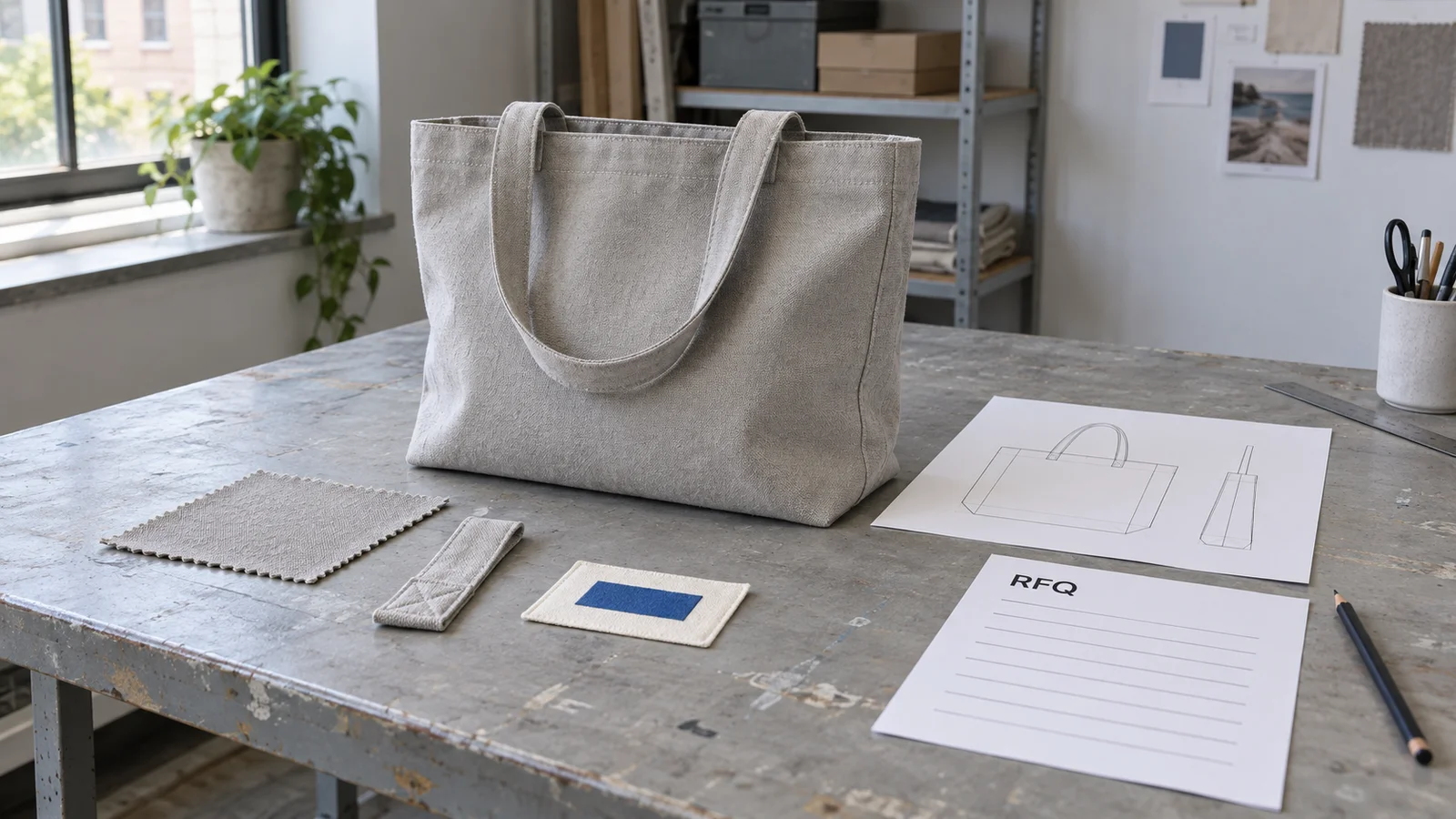
To receive comparable quotations for a custom Canvas tote, ask each factory to price the same fabric reference, finish direction, dimensions, structure, handles, interior, closure, branding and packaging. Include colors, quantity by style and color, destination and the requested quote basis. Attach a dated sketch or reference and identify every unresolved input. An early estimate can start a discussion, but it may describe a different product from another supplier's estimate. For Christori custom Canvas development, use 200 pcs per style per color as the planning reference. Ready Stock availability, quantities and allowable changes must be confirmed separately by style.
Use the checklist below to make those assumptions visible before comparing figures.
Why Two Canvas Tote Quotes May Not Be Comparable
An unlined, relaxed tote with webbing handles is not the same quotation scope as a lined tote with shape support and branded details, even when their exterior references look similar. Neither interpretation needs to be unreasonable: the RFQ may simply leave those choices open.
Check material, assembly, color quantities, logo and packing assumptions first. Also distinguish the product quotation from any proposed sampling or delivery scope. A lower figure is not automatically a better offer when the inputs differ. The buyer can control this by giving every supplier one brief and asking them to identify deviations, rather than treating an early budget discussion as a confirmed specification.
Fix the Canvas Fabric Direction Before Comparing Quotes
Composition and supplier reference
Provide the known composition, a supplier reference or an approved swatch. If these are unavailable, mark composition "to be confirmed" and describe the desired appearance and hand feel. A photograph cannot establish fiber content. The Canvas material options for custom tote bags page introduces development directions, not confirmed Canvas inventory.
Weight, thickness and hand-feel direction
Describe whether the tote should feel light and foldable, relaxed, or firm and structured. A traceable swatch is more useful than an unsupported numerical target. Ask each supplier to identify the actual fabric proposed, then confirm any measurable specification against that source. Otherwise, similarly named fabrics can leave the quotations based on different assumptions.
Finish and color direction
Record coated, uncoated or another requested finish direction without treating appearance as evidence of performance. Use a physical swatch, recognized color reference or another agreed reference for each color. Screen appearance can guide discussion but should not stand in for approval of the actual material.
If Canvas is still undecided, use the Canvas vs Nylon material and sampling guide first. This checklist begins once Canvas is the working direction.
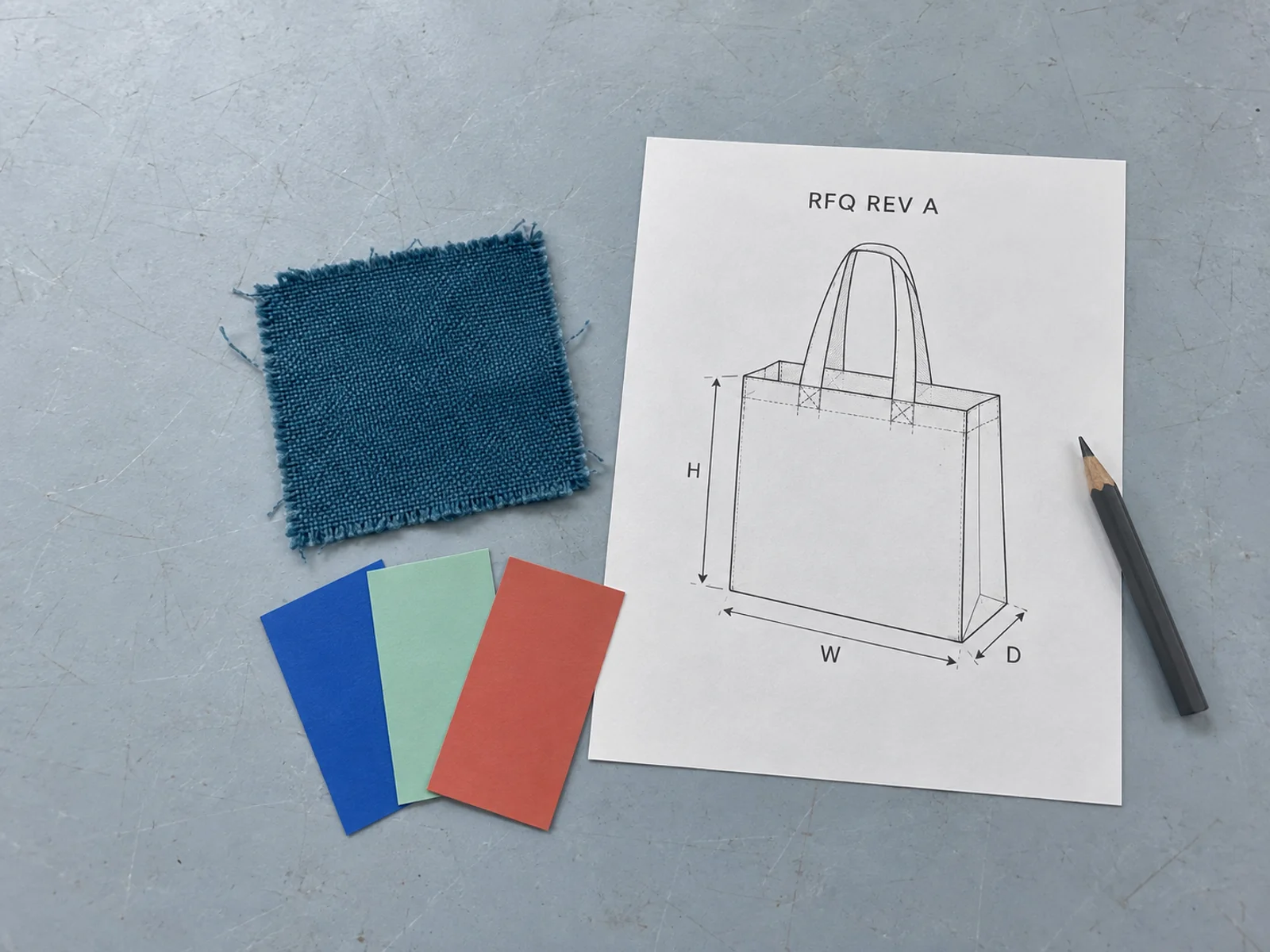
Define the Tote Structure the Factory Must Price
Finished dimensions and silhouette
Supply finished W x H x D, with units and measurement points. Describe the opening shape, base shape and intended silhouette; include handle drop and any strap length. Use the tote bag size planning guide for size selection rather than letting each supplier estimate proportions from the image.
Handle construction and attachment
State handle material, width, drop, layers and attachment direction. Explain where the handle joins the body and identify any requested reinforcement as a detail needing review. The supplier must assess that construction with the proposed fabric and intended use. A visible stitch pattern alone does not document the hidden assembly.
Lining, pockets, closure and support
Specify lined or unlined, the lining direction, pocket count and type, closure and base or panel support. Do not use "standard interior" unless you attach the reference it describes. An opening and a closure are separate inputs: show how the bag opens as well as what fastens it. The drawing below identifies seven fields, not a required construction for every tote.
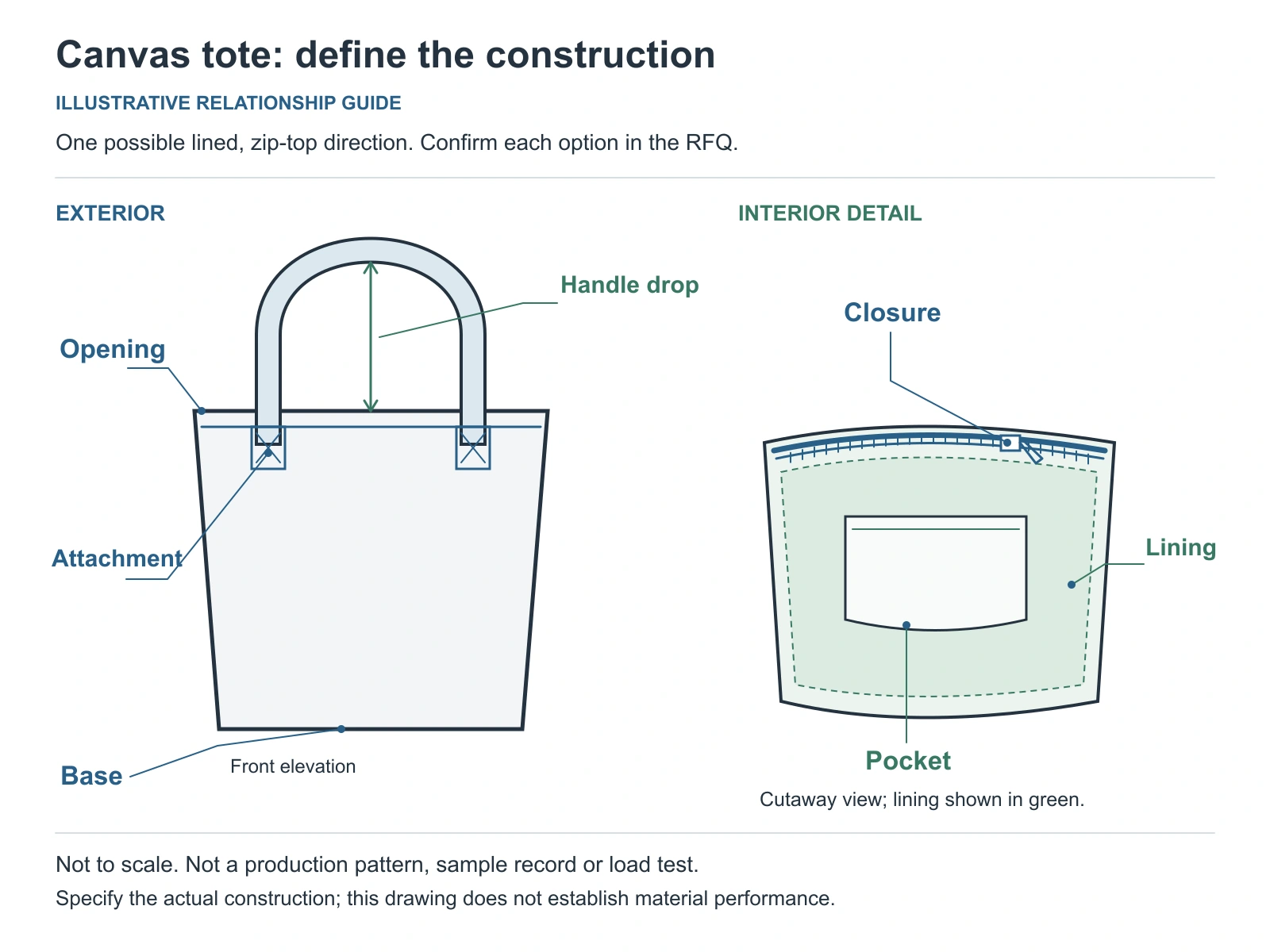
Its opening, base, handle drop, attachment, lining, pocket and closure labels should each correspond to a written RFQ entry. The pictured lined, zip-top arrangement is one illustrative direction; it does not settle your project's interior or assembly.
Specify Branding, Color Quantities and Packaging
Logo method, artwork and placement
Provide the proposed method, artwork, finished logo size, color and placement. Identify whether it belongs on the exterior, lining, label, hardware or packaging. If undecided, state the desired visual outcome and ask what can be reviewed on the selected fabric. Consult private label handbag branding options for method selection; keep this RFQ focused on the exact requested scope.
Quantity by style and color
For a custom Canvas program, use 200 pcs per style per color as the planning reference. If one style is requested in two colors, plan each color separately. This reference does not set the minimum for Ready Stock; inventory, available colors and allowable changes must be checked by style.
For a planning sheet, record "Style A / Color 1: 200 pcs" and "Style A / Color 2: 200 pcs" as separate lines, not a combined allowance. This illustrates custom Canvas planning only, not stock availability. Leave undecided colors outside the fixed comparison until their references and quantities are confirmed.
Packaging level
Name the requested components and say whether the quotation should include the proposed export packing or additional branded items. "Custom packaging" alone leaves too much scope open. Use the custom handbag packaging service for detailed options, then ask each supplier to list what its quotation actually includes.
Add Destination and Quote Assumptions
Name the delivery country and relevant city or postcode. If you have a requested trade term, include its named place and ask the supplier to confirm the basis. Say whether you need product-only pricing or a separate freight discussion; do not compare those scopes as though they were identical.
State whether you need swatches or a custom sample, your target launch window, currency and any requested quotation validity period. These are inputs for confirmation, not accepted commercial conditions. A launch window does not establish a promised delivery date. If destination details remain open, begin with a clearly defined product scope.
Use One RFQ Sheet to Compare Supplier Responses
- Date one RFQ version and identify its controlling sketch, references and attachments.
- Send that same package to every supplier.
- Ask each supplier to distinguish confirmed inputs from its assumptions, exclusions and unresolved items.
- Compare product, packaging and delivery scope before comparing unit price.
- Move open fabric, structure or branding decisions into the sample review plan.
- Update the RFQ when those decisions change, then request responses against the new version.
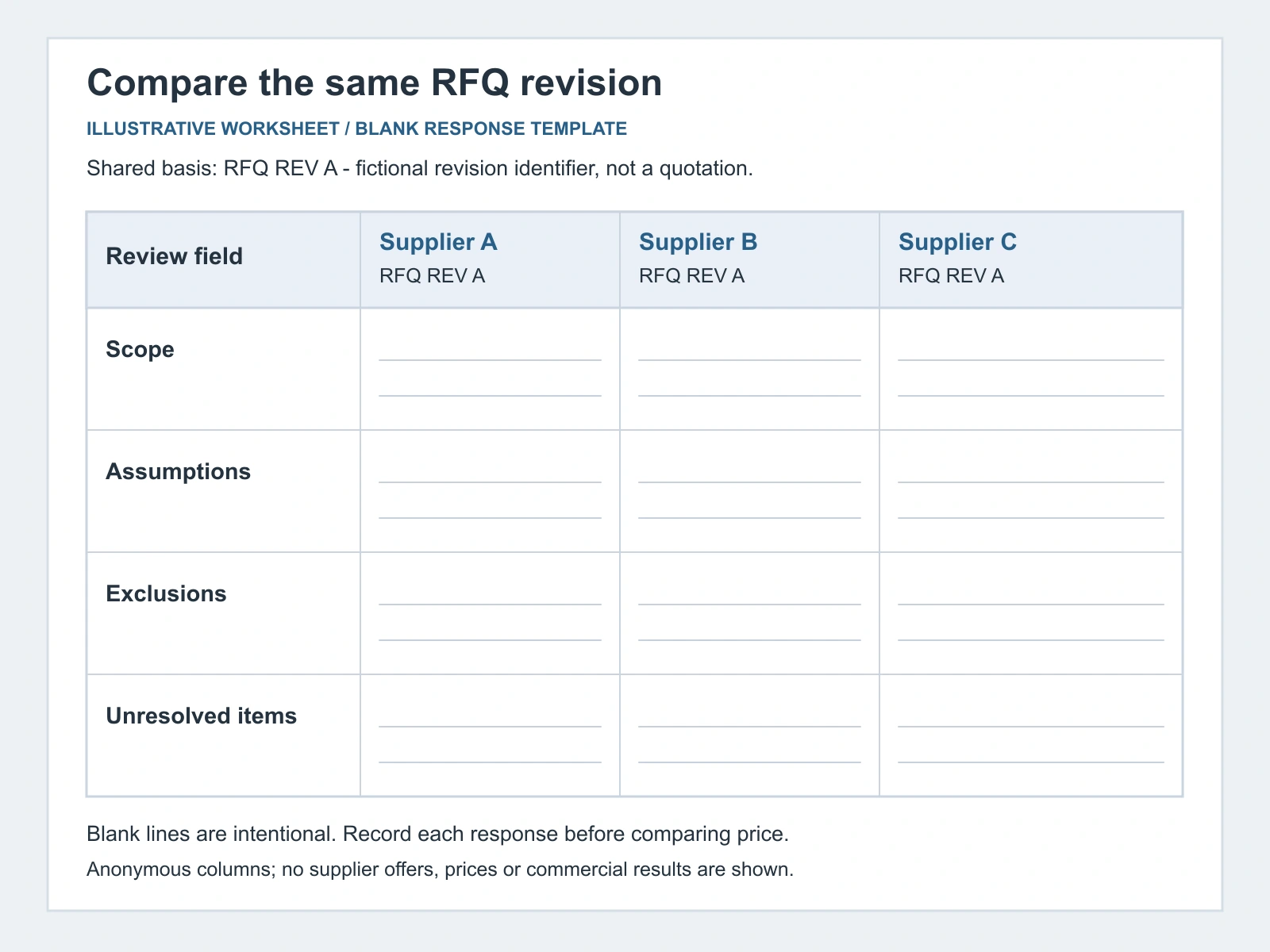
Keep any separately listed development items separate when reviewing a supplier's actual offer; do not invent a standard set of charges. A blank field should prompt a question, not be interpreted as included. The worksheet illustration groups responses under scope, assumptions, exclusions and unresolved items so differences are visible.
For an early concept, the handbag product development service can support clarification. A reference from the custom tote bag collection can communicate silhouette only; it does not establish Canvas stock or compatibility with every requested change. An adapted base under ODM and a newly developed OEM construction should not silently share the same development assumptions.
Custom Canvas Tote RFQ Checklist
Use the following text checklist as the working record. Write "to be confirmed" where needed and keep the supplier's proposed interpretation alongside the buyer's requirement.
| RFQ field | What the buyer should provide | Why it affects quote comparability | If not confirmed yet |
|---|---|---|---|
| Product reference | Sketch, reference image, sample record or base-style link | Sets direction, not the full specification | Mark it visual direction only |
| Canvas composition/reference | Known composition, supplier code, approved swatch or physical reference | Similar-looking fabrics can require different sourcing and assembly | Mark composition to be confirmed; provide a feel reference |
| Weight/thickness direction | Verified supplier reference or light, relaxed or structured direction | Defines fabric and hand-feel assumptions | Request swatches rather than inventing numerical targets |
| Surface/finish | Coated, uncoated or another appearance direction | Changes what material the supplier considers | Keep performance unconfirmed |
| Finished dimensions | W x H x D, opening, base, handle drop and relevant strap length | Prevents different sizes being priced | Provide a dimensioned sketch |
| Structure | Soft, relaxed or structured direction; base and panel support | Defines layers and assembly scope | Ask the supplier to state assumed construction |
| Handles | Material, width, drop, layers, attachment and reinforcement direction | Defines material and sewing inputs | Mark unresolved connections for sample review |
| Lining/interior | Lined/unlined, lining direction, pockets, label and support | Similar exteriors can conceal different interiors | Ask for the assumed interior in writing |
| Closure/hardware | Opening and closure type, components and finish direction | Defines component and assembly scope | List open components separately |
| Branding | Method direction, artwork, size, color and placement | Identifies the actual branding request | Ask for feasibility review against fabric and artwork |
| Color plan | Reference and quantity for each color | Keeps color-specific assumptions visible | Keep undecided colors outside the fixed comparison |
| Packaging | Proposed export packing or named branded components | Identifies what accompanies the product | Ask for an included-items list |
| Quantity | Units per style per color | Prevents a total from hiding separate color requirements | Use 200 pcs / style / color for custom Canvas planning |
| Sampling | Swatches, reference sample or custom sample requirement | Separates review work from bulk assumptions | Ask for the proposed next step |
| Destination/trade term | Country, relevant location, requested term and named place | Separates product-only and delivery-inclusive scope | Request product-scope pricing if delivery inputs are open |
| Revision/date | RFQ version and date | Aligns all responses to one brief | Reissue after material or construction changes |
FAQs
What information does a factory need to quote a custom Canvas tote?
A factory needs the fabric reference, dimensions, structure, handles, interior, closure, branding, colors, packaging, quantity by style and color, destination and quote basis. Attach the controlling sketch or reference version. A photograph helps explain appearance, but it is not a complete specification. Ask the supplier to identify assumptions beside anything still unresolved.
What MOQ should I plan for a custom Canvas tote?
Use 200 pcs per style per color as Christori's custom Canvas planning reference. Plan two colors separately rather than assuming their quantities can be combined. Ready Stock has a different availability and customization basis, confirmed style by style. This custom reference does not establish Canvas inventory or confirm that a proposed fabric or color is available.
Can a factory quote from only a reference photo?
A photo can start a feasibility or early budget discussion, but not a fully defined comparison. It leaves dimensions, actual fabric, interior, handle construction, branding and packing open to interpretation. Ask the factory to list those assumptions and the quantity basis. Resolve or align them before treating different quotations as offers for the same product.
Does the logo method affect a Canvas tote quotation?
Yes. Method, artwork readiness, size, color, placement and any backing requirements can change what the supplier needs to review and price. Ask for feasibility confirmation against the selected fabric and actual artwork, rather than assuming a method fits every Canvas. Keep accepted changes in the RFQ so subsequent quotations refer to the same branding requirement.
Should freight be included when comparing Canvas tote quotations?
Only compare offers with the same scope. Specify the destination and requested trade term with its named place, or ask for a clearly defined product-only quotation while delivery details remain open. Confirm what each response includes. A figure covering freight and a product-only figure should not be ranked as equivalent offers without reconciling their scope.
Prepare One Reviewable Canvas Tote Brief
Align the specification before comparing prices. Identify unresolved items openly and use sampling to confirm the fabric and construction decisions that the quotation depends on. Keep the accepted revisions attached to the current RFQ.
Christori can review a custom Canvas tote brief across material direction, structure, branding, packaging and quantity planning before the sample route is confirmed. Send one current RFQ version, its reference files and the quantity split for specification review.