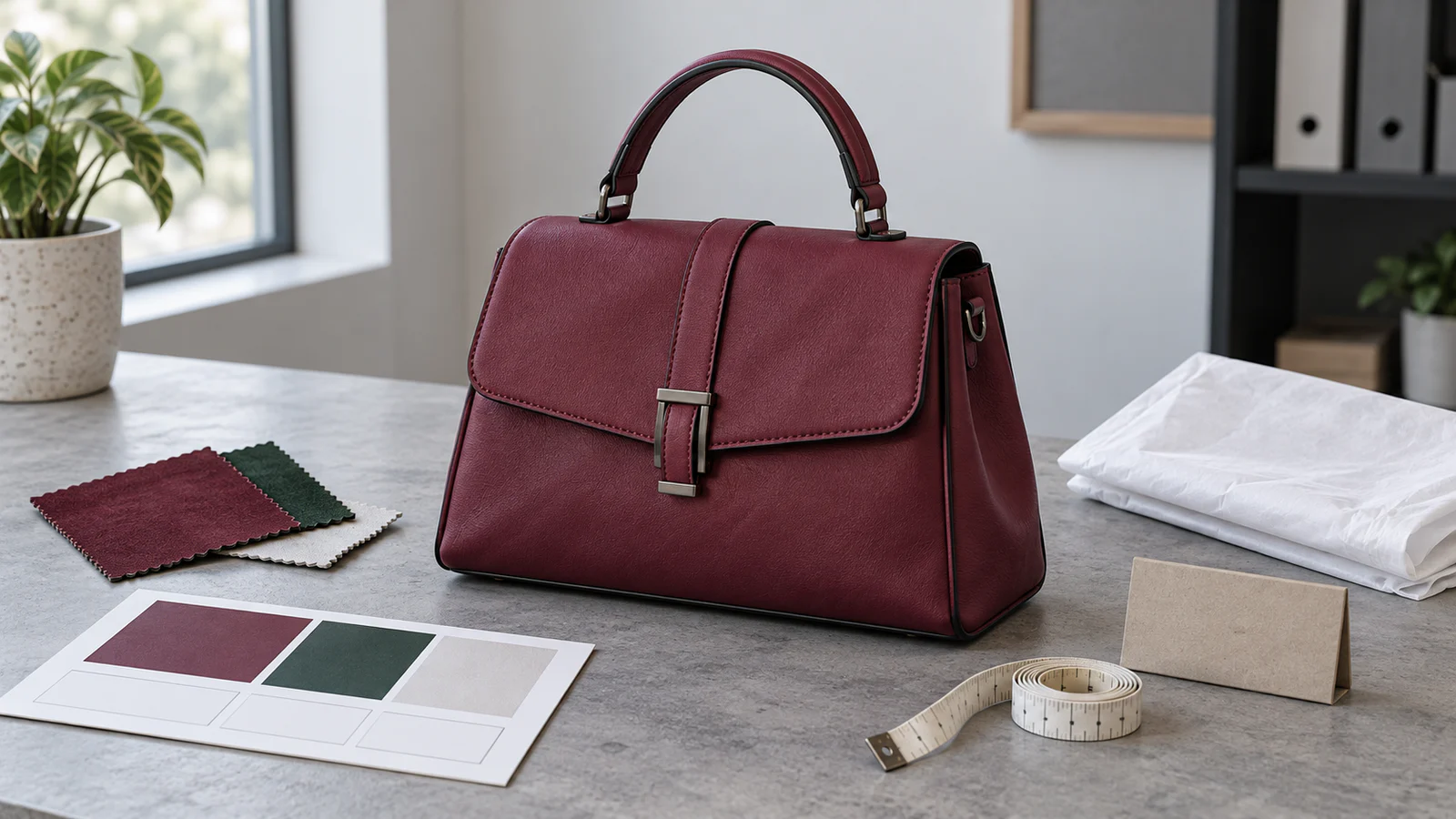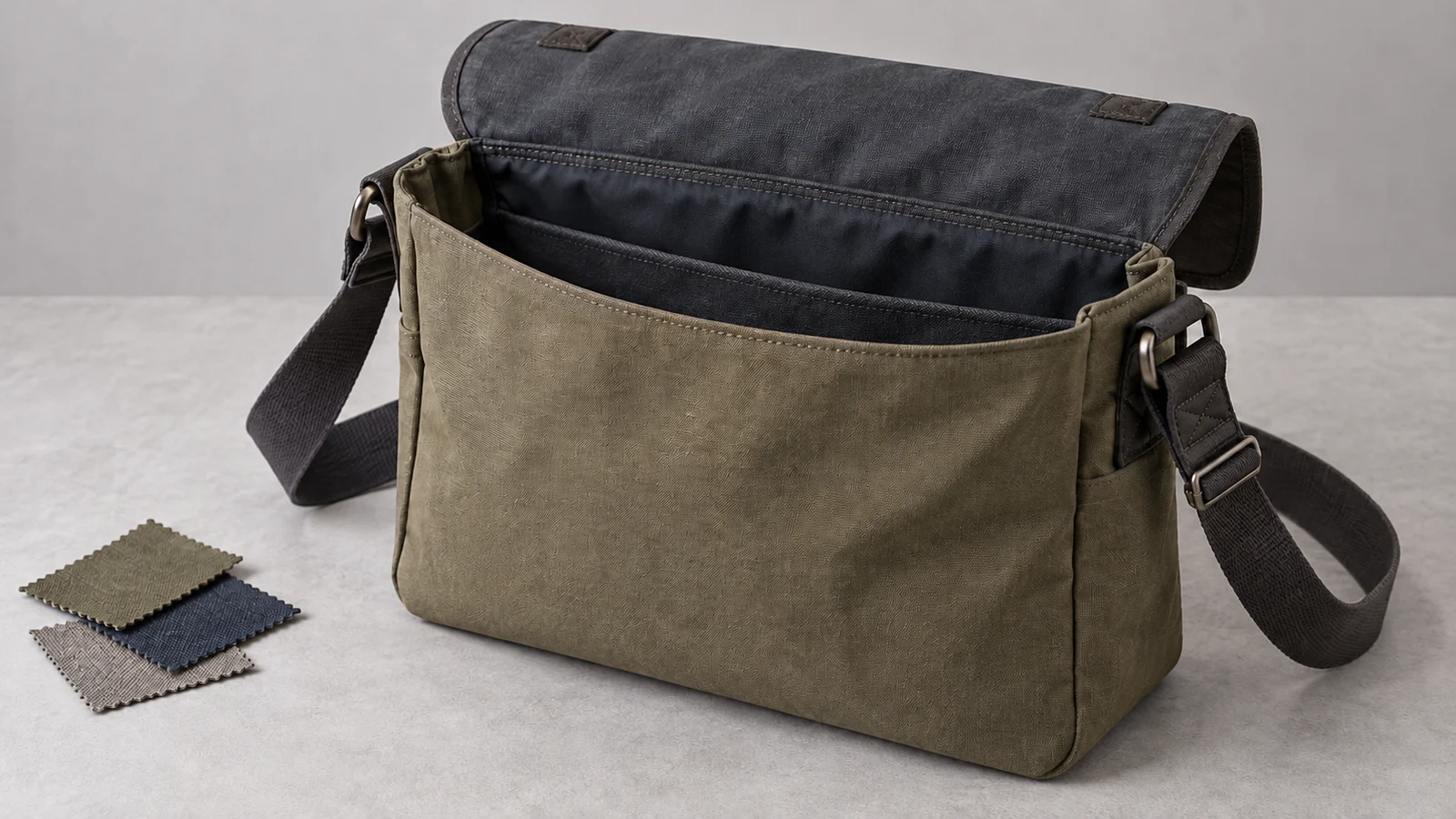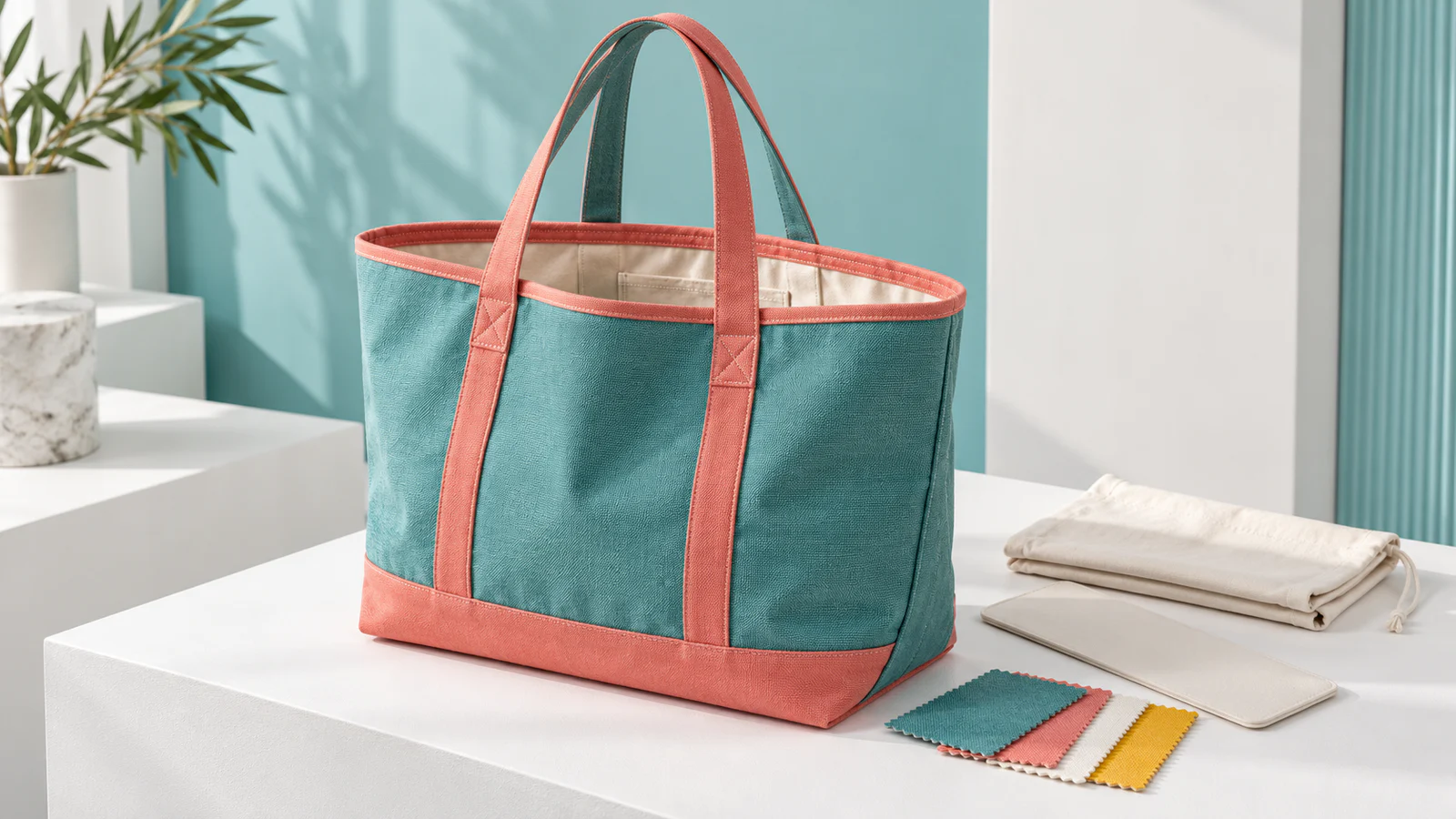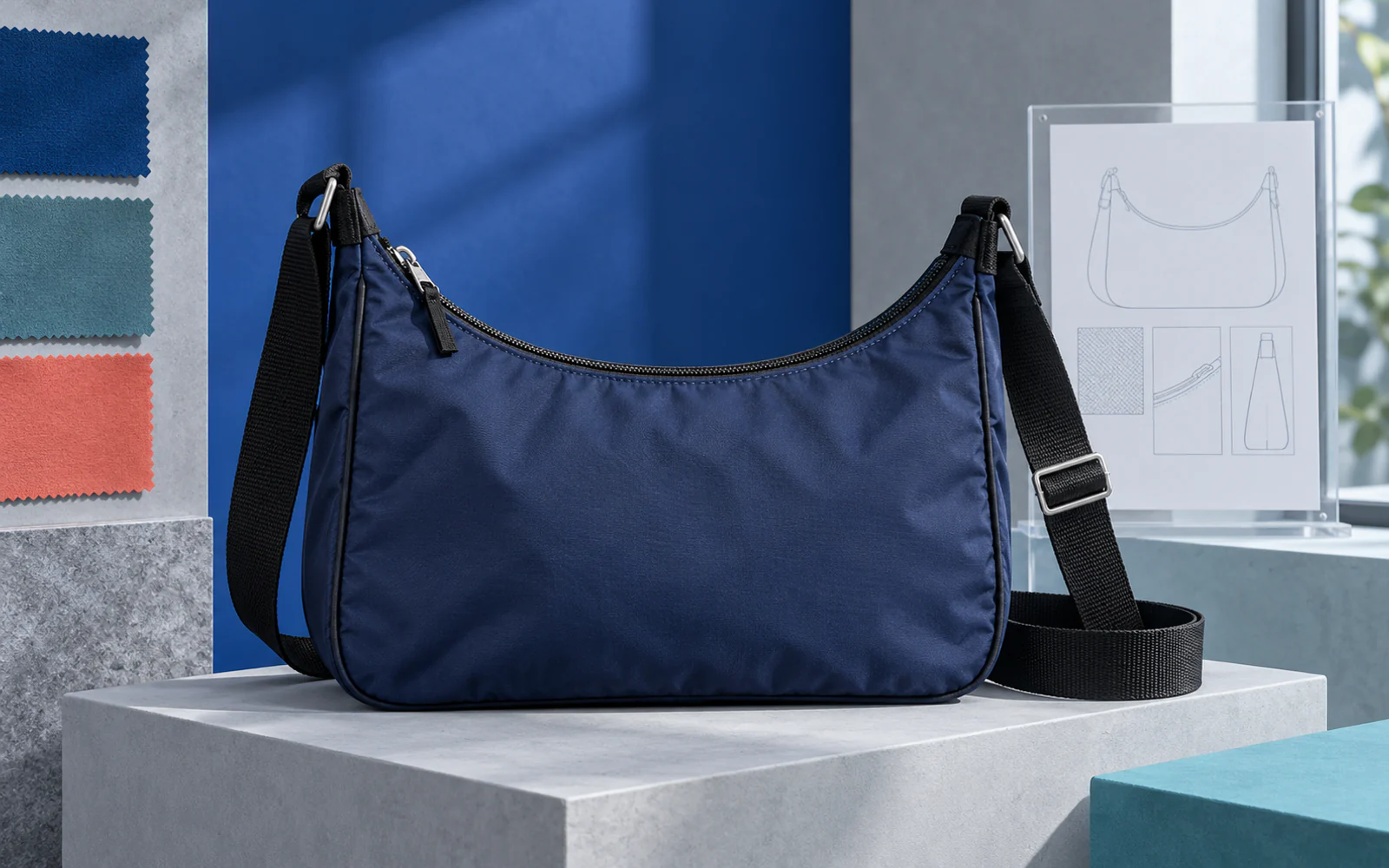
Before comparing factory quotations, give each supplier the same dated reference, silhouette and dimensions, nylon fabric direction, lining and support needs, zipper and strap arrangement, branding, color quantities, packaging and destination. Equally important, show what is undecided. Useful custom nylon handbag specifications distinguish your requirement from the material or construction a supplier has assumed for pricing. Otherwise, a quote for a soft shell with local support can look comparable to one based on a different finish and a fully supported body. You do not need every answer before making contact. Reference images and a short list of open questions can start the review; the aim is to make assumptions visible as the project develops.
Choose the Sourcing Route Before Writing the Specification
Separate an existing item's order terms from a newly developed nylon construction. For an existing style, check ready stock handbags separately: identify the exact item and ask about current availability and permitted changes. This guide does not establish that any particular nylon style is in stock.
For existing-style customization or ODM, name the base reference and list changes. Ask whether its pattern and assembly are being retained or reconsidered for your selected fabric. For OEM, make clear which dimensions, panels and components require development. A photograph alone does not resolve that division of work. Review OEM and ODM handbag development when assigning responsibility for those decisions.
If nylon itself is still undecided, compare canvas and nylon before sampling. The rest of this RFQ begins after nylon has become the working direction, not after all its specifications have been approved.
Define the Nylon Fabric Without Turning a Finish Into a Performance Claim
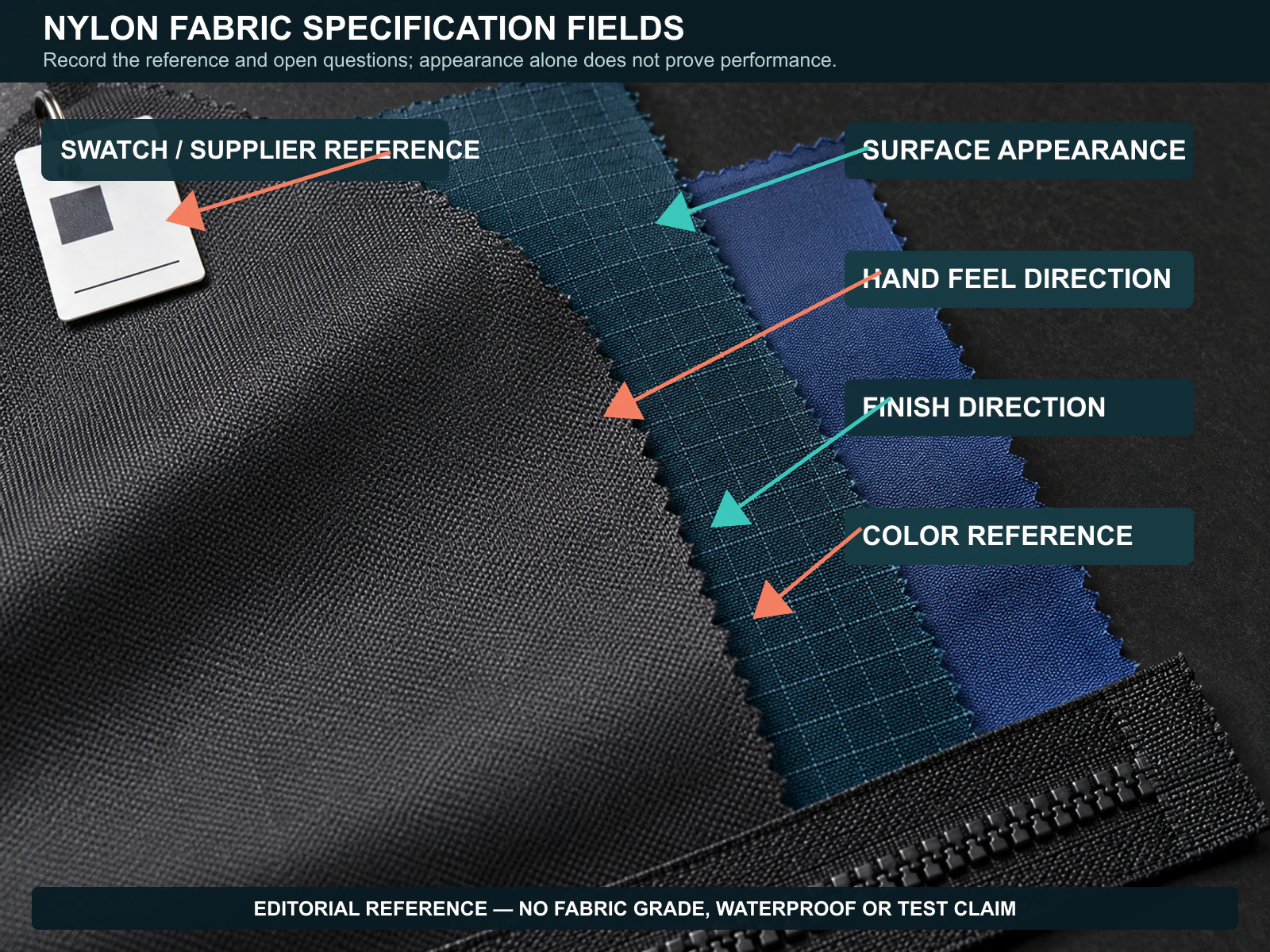
Use a swatch identifier or supplier reference wherever one exists. Record the known composition and fabric construction, desired hand feel, surface appearance, color reference and finish direction. When only a photograph is available, distinguish visible preferences, such as a subdued sheen or textured surface, from facts that need confirmation. The nylon material options for custom handbags page provides a starting point, not an inventory list.
Ask the supplier to identify the exact fabric used for its quotation. If that differs from your reference, request a separate alternative: what changed, why it was proposed and which construction questions must be reopened? A substitute that appears similar in a flat swatch should not silently inherit approval for the zipper edge, curved panels or strap junction.
Keep a water-repellent finish request separate from a finished-bag claim. AATCC's explanation of water-repellency testing describes fabric resistance to surface wetting. That scope does not establish waterproof performance for a complete handbag. This reference is not a Christori test result or certification. If performance is part of the brief, ask for a separately agreed evaluation scope; do not insert a grade based on appearance.
For an unconfirmed finish, the useful quote note is the proposed material reference and what still needs review, not simply "waterproof nylon."
Specify Silhouette, Lining and Support as One Construction System
State how the bag should look and behave at rest and when carried. Then distinguish the free panels from the areas where you want a more defined outline. A relaxed nylon body and a controlled top opening are not contradictory requests, but "soft bag" alone does not tell a supplier where support is expected.
Ask the quotation to identify its proposed support zones: opening edge, base, pocket mouth or strap connection, as relevant. Local support and a more extensively supported shell are different proposals. Neither should be treated as an invisible factory default. The trade-off to review is whether the proposed construction preserves the intended drape while giving the selected areas the definition you need.
List the lining and pocket arrangement separately from hidden support. Use handbag lining and interior options to clarify the interior direction. If a supplier proposes another lining or support approach, ask whether the opening, pocket access or body feel must be sampled again. Keep the proposed layer arrangement attached to the quotation instead of guessing it from the exterior.
Treat Zippers, Straps and Attachment Points as Connected Decisions
Price the Zipper Edge, Not Just the Zipper
Mark the opening path, zipper position, exposed or covered edge and lining relationship. Ask the supplier to price a proposed integration with the selected nylon, rather than returning only a zipper description. For a soft body, discuss where the opening needs definition and where it should remain flexible. The decision concerns the edge around the component as well as the component itself.
If the fabric or finish is substituted, carry the zipper-edge question forward: does the proposed edge construction stay the same, or is another sample arrangement needed? Do not assume a visually similar fabric will produce the same assembled outline. Reserve appearance and operating approval for the relevant sample, without prescribing stitch settings from a photograph.
Connect the Strap Proposal to the Body
Specify strap material direction, width and adjustment needs, fixed or detachable construction, attachment location and hardware appearance. Ask how the proposed connection relates to the surrounding shell, seam and local backing. A self-fabric strap and a webbing strap should be shown as distinct alternatives if both are under consideration, not hidden behind the word "strap."
Changing an attachment location may affect the hanging angle and the nearby panel; adding visible trim may change the appearance you selected nylon for. Put those questions in the sample brief. Review handbag hardware options for component direction, but keep load capacity and durability outside visual approval. No strength value follows from a neat-looking connection.
Keep Branding, Colors, Quantity and Packaging in the Same Quote Scope
Send the artwork, intended size and marked position, together with the proposed branding method or a request for options. Ask the supplier to review that request against the selected fabric and finish. If the outer fabric changes, logo feasibility and appearance remain open until reviewed on the proposed combination; do not approve a replacement fabric while forgetting the branding attached to it.
List color references and estimated quantities separately. Christori's custom nylon planning reference is 200 pieces per style/color, subject to project review; it is not a universal ready-stock minimum or a condition for contacting us. If quantity or fabric specifications are undecided, send what you have and discuss the choices first.
Name the requested packing components and destination. Ask whether packing and freight are included, excluded or awaiting information. Preferred timing is a buyer input for discussion, not an accepted delivery promise.
Compare Supplier Replies Against One Dated RFQ
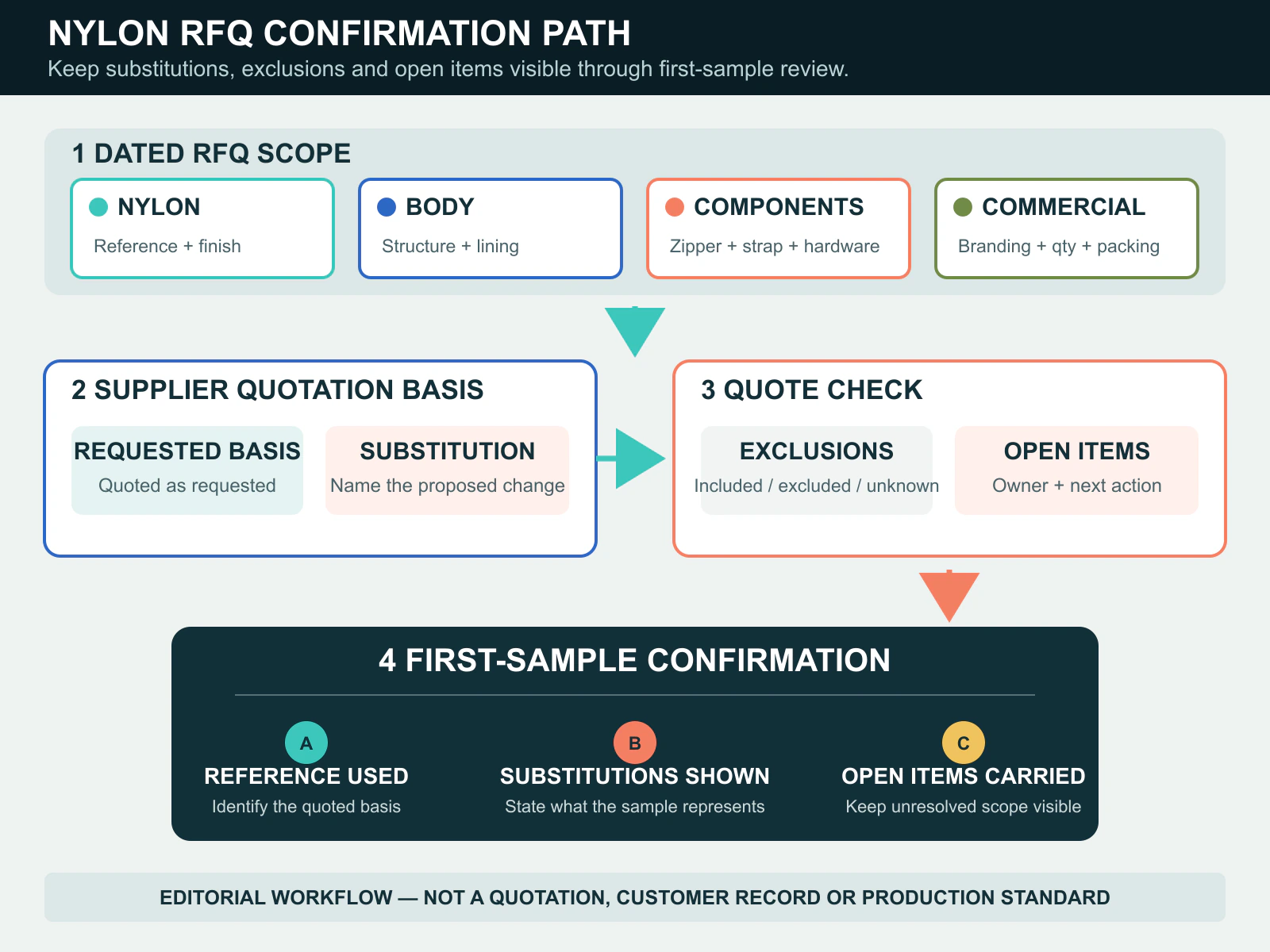
Give the reference package a version and date. For each reply, distinguish four states: requested by the buyer, assumed for pricing, proposed alternative and confirmed for the stated purpose. "Confirmed for quotation" is not automatically "approved for production."
When an alternative is offered, keep the original request alongside it. Record the replacement reference, affected details and next decision. Request a like-for-like response if the supplier can provide one; otherwise, compare the alternative as a different scope rather than ranking its figure against an unchanged design.
Illustrative unresolved-item entry, not a customer record: Item: outer finish. Buyer direction: subdued sheen from the dated reference. Supplier proposal: alternative swatch, identifier pending. Linked questions: zipper-edge support and logo appearance. Next action: supplier identifies the swatch; buyer reviews it. Status: provisional for quotation, not approved for sampling.
Keep the next action and responsible party visible. An unanswered question should remain open when the RFQ is revised, not disappear because a newer price arrived. Separate any actual supplier charges for sampling, tooling, packaging and transport from the product scope; do not assume a standard fee or that blank lines mean included. Ask which parts of the quote need updating after a material or construction decision changes.
Nylon Handbag RFQ Worksheet
Use this as a working comparison, not a requirement to complete every cell before contacting a factory. Replace the prompts with references, proposed assumptions and reply dates. Where a field is open, keep the question beside the supplier's proposed basis.
| Buyer provides | Supplier confirms | Do not assume |
|---|---|---|
| Reference/version: ___; fixed features and open choices: ___ | Drawing/date used for pricing; deviations: ___ | All reference images describe one approved design |
| Silhouette/dimensions: ___; units and measurement points: ___ | Size and body behavior assumed for quotation: ___ | A photo establishes scale or structure |
| Nylon swatch/composition/construction reference: ___ | Quoted fabric ID; any replacement reference: ___ | Similar color means identical material |
| Finish/appearance direction: ___; unresolved claim: ___ | Proposed finish and evidence still needed: ___ | Surface appearance establishes whole-bag performance |
| Lining, pockets and support targets by area: ___ | Proposed interior and support zones: ___ | Local backing equals a fully supported body |
| Zipper path, strap configuration and hardware: ___ | Edge integration, attachment proposal and substitutions: ___ | Changing the shell leaves every connection approved |
| Branding artwork, size, position and method direction: ___ | Feasibility review against quoted fabric/finish: ___ | Branding approval transfers to a replacement fabric |
| Colors and estimated quantity per style/color: ___ | Quantity/color basis and project-specific terms: ___ | An undecided quantity prevents initial discussion |
| Packing components, destination and preferred timing: ___ | Included/excluded items and open delivery assumptions: ___ | Freight or a delivery date is already agreed |
| First-sample questions and open-item IDs: ___ | What the sample represents; substitutes and limitations: ___ | One sample confirms every unresolved item |
Before asking for a revised quotation, make this short check:
- Has every supplier responded to the same RFQ version?
- Are fabric substitutions and their affected details identified?
- Are support, zipper and strap proposals stated rather than inferred?
- Are commercial inclusions separate from undecided requirements?
- Does every open point have a next action before sample confirmation?
What the First Sample Should Prove Next
Before sample making, agree which fabric, finish and components will actually be used. If a substitute is needed, record what the sample can demonstrate and which decisions remain provisional. A shape sample using a different material cannot settle the appearance of your final fabric/finish combination.
Carry the RFQ's open-item identifiers into the sample brief. Ask it to demonstrate the selected silhouette, support distribution, zipper access, strap connection, interior and branding where those details are represented. Do not turn this first visual and functional review into an unsupported performance approval.
After receipt, use the separate guide to review a nylon shoulder bag first sample for photographs and revision notes. Here, close the earlier quotation loop: record what was accepted, what remains unresolved and whether the quoted material or construction basis must change. Update the specification and obtain confirmation of the affected quote scope before proceeding on revised assumptions.
Start With the Nylon Direction You Have
Send your reference, intended shape, available fabric information and the questions you cannot yet answer. Add quantity estimates and destination when known. Christori can review the brief through handbag product development, with material alternatives and sampling scope kept explicit. A fully completed worksheet is not needed to start that conversation.