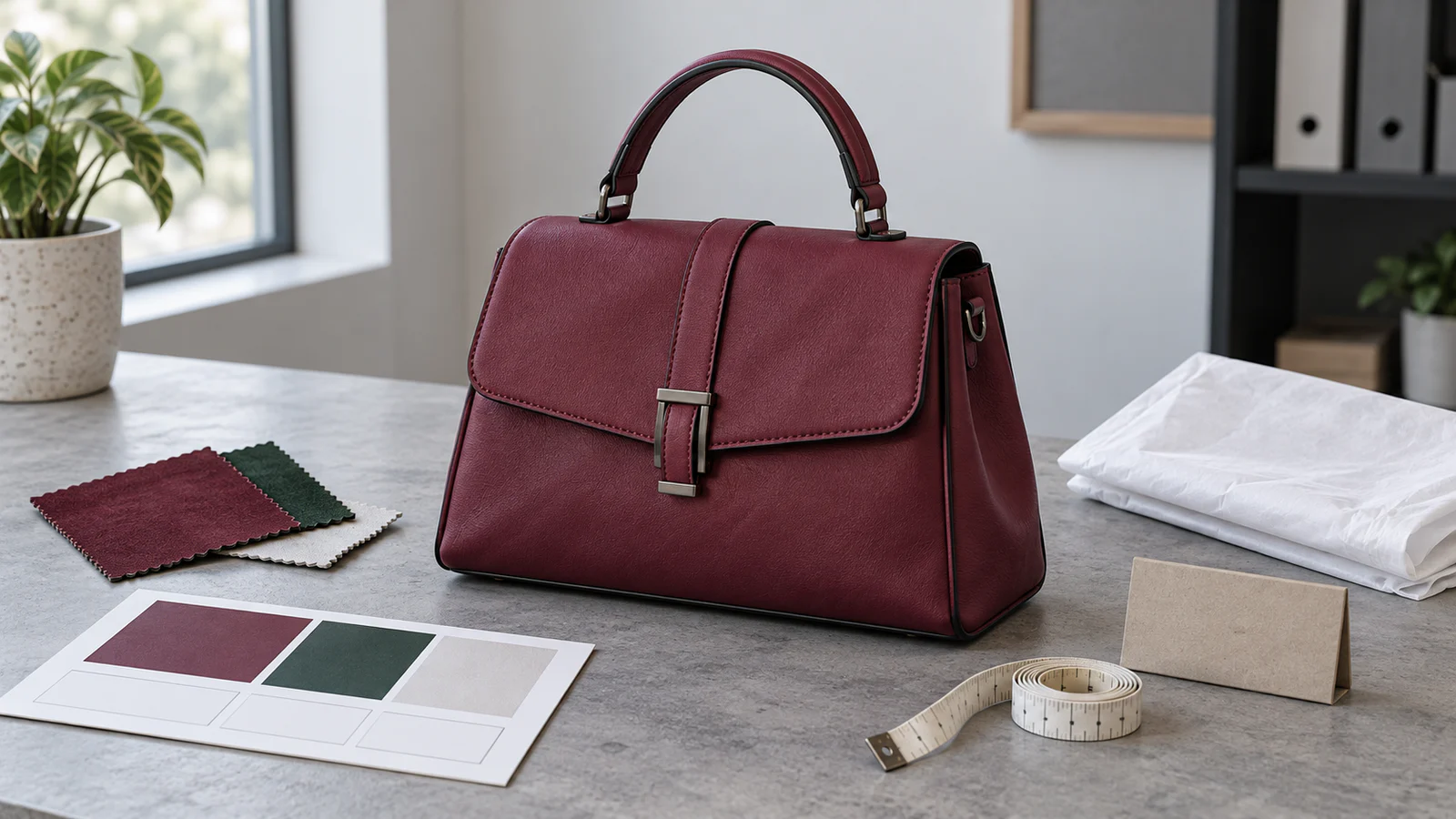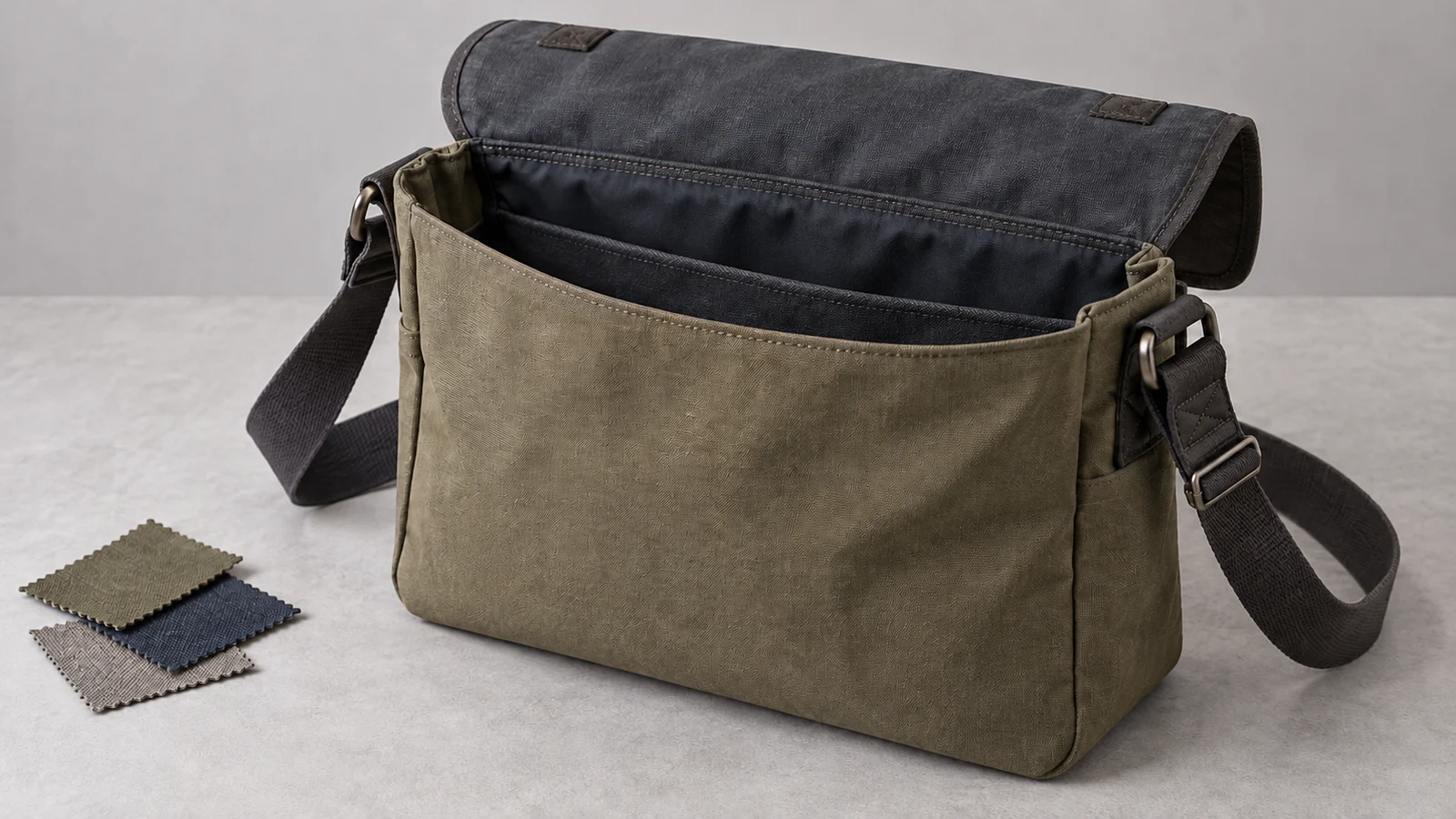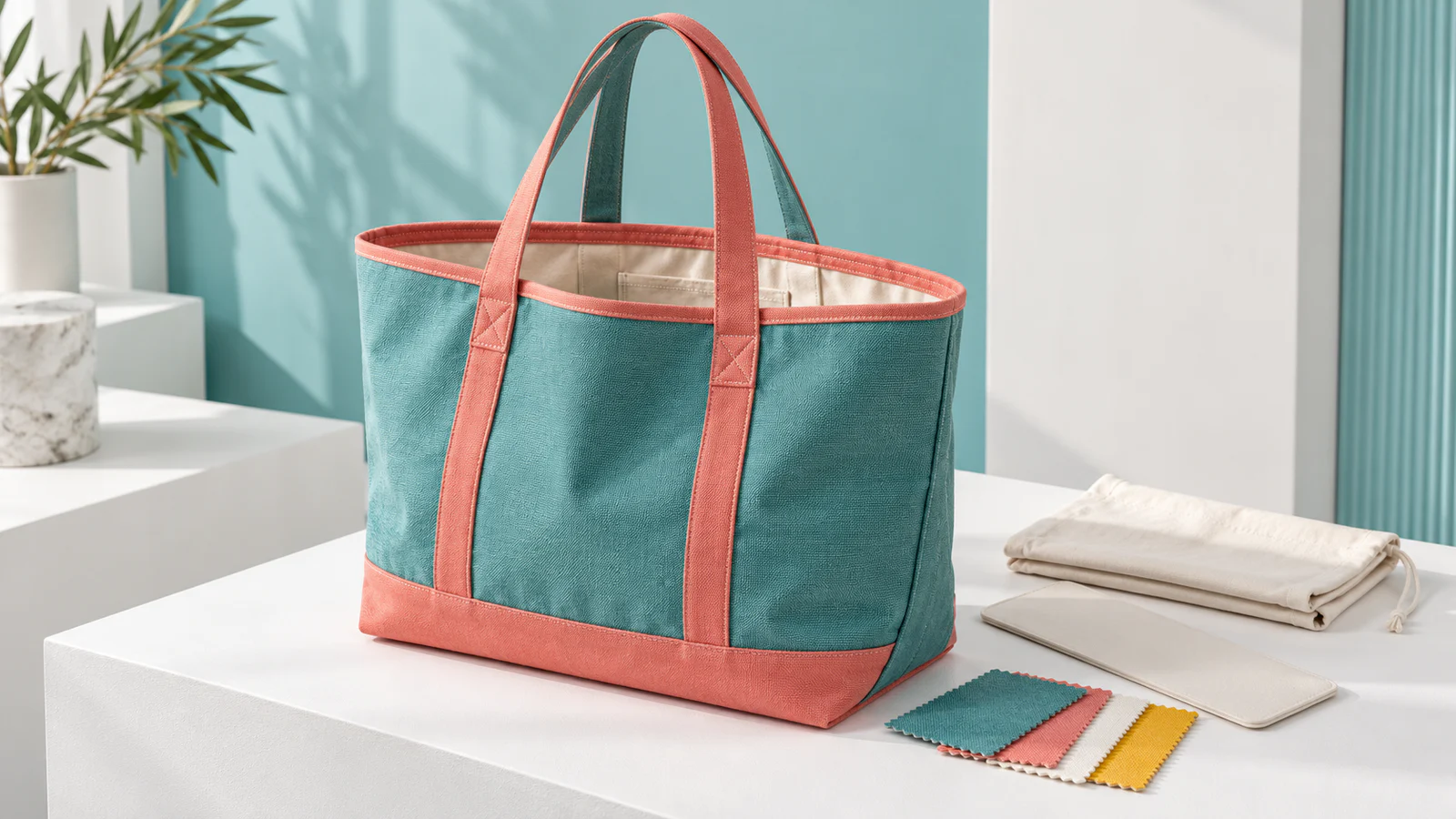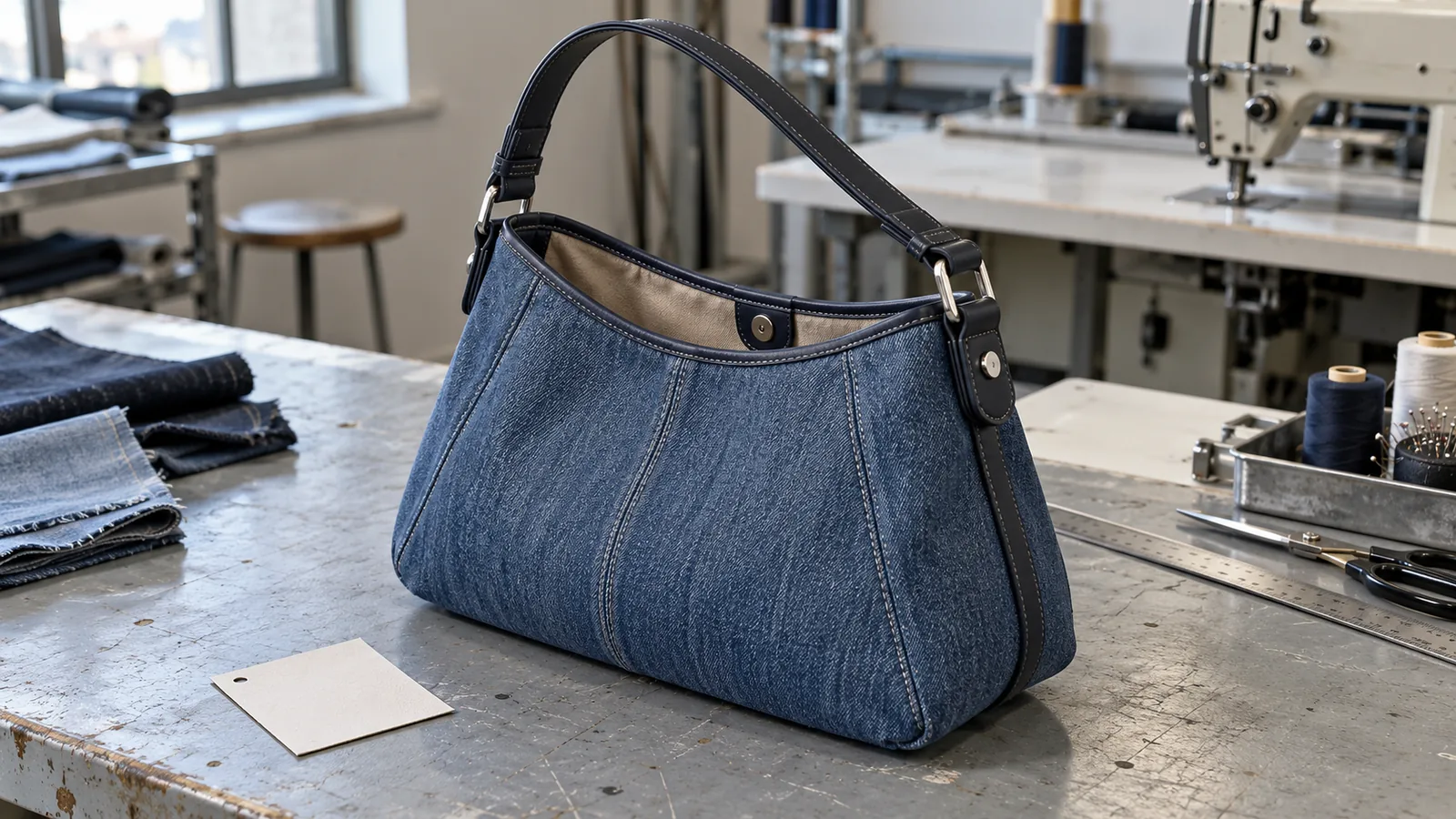
A denim bag reference usually communicates mood faster than specification. It may show an indigo tone, contrast stitching and casual surface variation, but it does not establish composition, fabric weight, weave, treatment, wash process, shrinkage, colorfastness or transfer performance. A wholesale buyer needs those unknowns separated from the appearance target before a supplier can quote or sample responsibly.
Effective denim handbags wholesale specifications identify the approved face and reverse, panel direction, shade or wash appearance reference, seam and edge treatment, reinforcement zones, trim interaction, lining and claim evidence. This gives brands, wholesalers and product developers a review system for a denim bag or denim purse without turning a photograph into an unsupported material promise.
Fix the Appearance Reference Before Discussing Performance
Build a compact appearance sheet rather than sending unrelated inspiration images. Select one primary reference for overall tone and surface character, then add separate references only for details such as contrast stitching, edge treatment or trim. Label what each image controls. If two references conflict, state which one has priority.
Photograph or scan the approved swatch with a neutral reference and record the approval date or code. Screen images are useful for direction, but lighting and display settings can change the perceived shade. Ask the supplier how physical material approval will be handled for the project.
Keep appearance terms descriptive. “Mid-indigo with visible lighter variation” is a visual direction. It is not proof of a named wash, process, fiber content or performance. If the buyer needs a particular composition or treatment, list it as a requirement to be verified through project evidence, not as something inferred from the word denim.
This article owns denim-specific visual consistency, panel direction and trim interaction. It does not repeat the canvas versus nylon material sampling guide, which helps buyers choose between two broader fabric routes; the canvas material page is also adjacent education, not evidence that denim and canvas are interchangeable. It differs from the handbag structure and reinforcement guide, which maps support zones across materials rather than controlling a denim-look surface and its claims.
Map the Face, Reverse and Direction of Every Visible Panel
Mark the approved face of the material and identify whether any reverse-side use is intentional. Then create a panel map for the front, back, gussets, base, flap, pocket, handle tabs and straps. Add directional arrows where the visible orientation matters. A supplier should not have to guess whether panels may be rotated to improve cutting efficiency.
For pockets and flaps, specify whether the visual direction should continue from the body or deliberately change. If there is a center seam, mirrored layout or topstitched panel line, show its location with dimensions from stable reference points. Avoid demanding exact visual repetition unless the material and layout have been reviewed for that requirement.
If multiple shades or denim-look materials appear in one style, give each one a code and panel assignment. “Dark on trim, light on body” is not enough when there are handle tabs, zipper ends, pocket edges and base panels. A color-coded drawing reduces the chance that a secondary material appears in the wrong zone.
Request sample photographs from front, back, side, base and open-interior views under similar lighting. Compare the complete panel map, not just the front hero view. Record whether observed variation is accepted, requires clarification or needs a revised sample.
Map the specification to the selected commercial format. A tote bag may make the base and upper opening especially visible; a shoulder bag brings handle drop and upper-body support into the same review; and a crossbody bag adds strap anchors and side-panel interaction. These collection pages clarify format direction, not current denim inventory or a confirmed construction.
Specify Seams, Edges and Reinforcement as Visible Decisions
Denim-look materials can be joined and finished in different ways, but no single method should be assumed from the category name. Mark the seams that are visible and commercially important: center joins, gusset seams, pocket edges, zipper joins, base corners and handle attachments. Use close-up references to show the intended appearance.
State the thread color direction and whether topstitching should contrast, blend or follow different zones. If a double-row appearance or another layout is important, show the rows and spacing on the drawing without inventing production tolerances. Ask the supplier to confirm what can be repeated and approve it on the sample.
Define edge treatment at raw-looking, folded, bound or trimmed areas through the desired result, then let the supplier identify the proposed construction. A deliberately casual edge appearance still needs an approved reference; it should not be described as automatically fray-proof or stable.
Mark support zones around handles, straps, closures, pocket corners and base areas. Review the proposed internal support without claiming a load rating. The sample check should look for panel distortion, seam pulling, puckering, uneven edge transitions and whether support changes the intended hand or silhouette.
Coordinate Trim, Hardware and Closures With the Body Material
Leather-look trim, webbing, tapes, labels and metal components can change how a denim handbag reads. Assign every trim to a panel and provide color, width and finish direction. Where trim crosses a seam or edge, show whether it should cover, align with or stop before that feature.
For handles and straps, give finished width, drop or length range, anchor spacing and attachment location. Ask how the connection relates to the denim-look body and any internal reinforcement. Review inside and outside views of every anchor. This is a construction checkpoint, not evidence of strength or service life.
For rings, hooks, zippers, snaps and adjusters, specify component shape, size direction, color/finish reference and required movement. Do not assume a metal's base material, plating or compatibility from its color.
Closures need opening geometry as well as a component name. Mark zipper length and path, snap position or flap relationship, then check usable access on the sample. A visually correct zipper can still create a smaller opening than the buyer expected if the side panels or facing interfere.
Use a Denim-Look Specification and Evidence Table
The table keeps visual approvals separate from performance claims. It also makes quotation assumptions visible before they become sample disagreements.
| Specification area | Buyer reference | Supplier confirmation | Approval or evidence needed |
|---|---|---|---|
| Appearance and shade | Priority swatch/image, acceptable visual range and viewing reference. | Proposed material and how sample approval will be presented. | Dated physical or agreed sample reference; no performance conclusion. |
| Composition and treatment | Required facts or claim language, if any. | Project-specific material description and available supporting information. | Evidence appropriate to the exact fact or claim; otherwise omit it. |
| Panel direction | Face/reverse designation, arrows and multi-shade assignments. | Feasible cutting and joining interpretation. | All-view sample photos against the panel map. |
| Seams and edges | Visible seam map, thread direction and intended edge appearance. | Proposed construction and repeatable checkpoints. | Close-ups of each seam and edge type. |
| Trims and hardware | Material/color references, dimensions, placements and finish direction. | Actual proposed components and attachment relationship. | Sample interaction at anchors, closures and contact zones. |
| Performance language | Exact wash, fade, shrinkage, colorfastness or transfer statement requested. | Whether supporting evidence can be provided for the approved material. | Claim-specific evidence and buyer review, or no claim. |
The requested quantity can be a target, range or to be confirmed in the initial RFQ. MOQ, pricing, sample fees, availability and timing depend on material, structure, color split and customization scope and must be confirmed for the project.
Plan Lining and Interior Details Without Hiding Exterior Effects
Specify lining coverage, color, material direction, pockets, labels and internal dividers. The actual lining must be assessed with the outer material, because pocket seams, labels and support can show through or alter the exterior.
Provide usable pocket dimensions and locations from stable points. If a pocket is intended for a defined item, send that item's dimensions and review access rather than promising universal fit. For zipper pockets, show opening length and direction; for patch pockets, show height and whether the top edge should sit flat.
At the opening, review how the facing, zipper tape, binding or lining joins the body. A dark body with a lighter lining can make uneven transitions more visible. Ask for open-top and turned-out interior photographs where practical, and log the specific detail if a revision is needed.
Brand labels and internal marks require current artwork, dimensions and position. Do not reuse an old file by assumption. If exterior branding is proposed, evaluate its attachment and any backing or seam visibility inside the bag.
Keep Wash, Fade and Color Transfer Claims Evidence-Bound
A visual sample can be approved for appearance, but it cannot by itself support washability, shrinkage, fade, rubbing or color-transfer claims. If the product description or buyer requirement includes one of these statements, write the exact claim and ask what test method, material reference, sample condition and acceptance basis would apply. Do not add a number or conclusion without evidence.
Color transfer is especially important to treat as an open verification question when dark material contacts light lining, trim, packaging or customer clothing. The correct action is not to promise “non-transfer.” It is to identify contact zones, ask what evidence is available and decide whether the material or claim needs revision.
The same boundary applies to washing and fading language. A named appearance does not prove how the material was processed or how it will change. If no suitable evidence is available, describe the approved appearance and care information conservatively rather than converting assumptions into marketing copy.
Record the material reference tied to any evidence. If the supplier changes the material, shade or treatment after approval, reopen the relevant review. Evidence for one material or sample should not be silently applied to another.
Run Sample QC Against the Approved Map
Create one revision-controlled sample sheet. Start with overall dimensions and silhouette, then review appearance by panel. Use consistent lighting and views so a later sample can be compared fairly.
Check the following in sequence:
- Material reference, face and reverse status match the approved proposal.
- Front, back, side, base, flap and pocket directions follow the panel map.
- Shade placement and any multi-material assignments match the approved drawing.
- Major seams sit at the defined locations and show the approved thread direction.
- Edge transitions are complete and visually consistent with the selected reference.
- Trim, zipper, hardware, logo and handle anchors align with their marked positions.
- Lining, pockets and labels do not create unintended exterior distortion.
- Opening and closure provide the approved access under the stated review condition.
- Packing separates contact points and presents the bag in the approved shape.
Write findings as observable differences. “Bad wash” mixes appearance, process and performance. “Front lower panel is visibly lighter than approved swatch under the agreed review lighting” identifies what needs a buyer decision. The response may be acceptance, supplier clarification, material replacement or another sample.
Prepare a Comparable Denim Handbag RFQ
For a review through handbag product development, send:
- target bag format and dimensioned front, side, base, opening and interior views;
- priority denim-look appearance reference and swatch status;
- any required composition or treatment facts marked for verification;
- face/reverse and panel-direction map, including multi-shade assignments;
- seam, topstitch and edge appearance references;
- support zones, base behavior and target empty silhouette;
- trim, handle, strap, zipper and hardware specifications;
- lining, pockets, logo and label files;
- unit packing and material-contact concerns;
- quantity by style/color, or estimate/range/TBC, destination and requested claim evidence.
Ask the supplier to list assumptions and alternatives in the reply. A quote should identify the material and component proposal it covers. When the appearance, trim or construction changes, request a revised quotation or sample record rather than comparing unlike scopes.
Frequently Asked Questions
Does a denim-looking fabric confirm cotton composition?
No. Visual appearance does not establish fiber composition. Ask for the project-specific material description and review evidence appropriate to any composition claim.
Can a sample photograph prove the wash will match in production?
No. A photograph is an appearance reference affected by lighting and display. Define the approval method, physical reference and acceptable visual checkpoints with the supplier; do not infer a process or production result from the image.
Should every panel run in the same direction?
Not necessarily. The design may use deliberate direction changes, but they should be mapped. The supplier should confirm feasibility and the buyer should approve the actual sample relationship.
How do I discuss color transfer before ordering?
Identify dark-to-light contact zones and state the exact evidence or claim needed. Ask the supplier what can be supported for the proposed material. If evidence is unavailable, do not publish or approve an unsupported non-transfer statement.
Send the Appearance Map and Evidence Questions
Send the denim-look reference, silhouette, panel map, seam and trim direction, lining, quantity plan and any wash or color-performance statements that require evidence. Christori can review the specification route and identify unresolved project inputs; this does not claim current denim inventory, a fixed material composition or verified test performance.