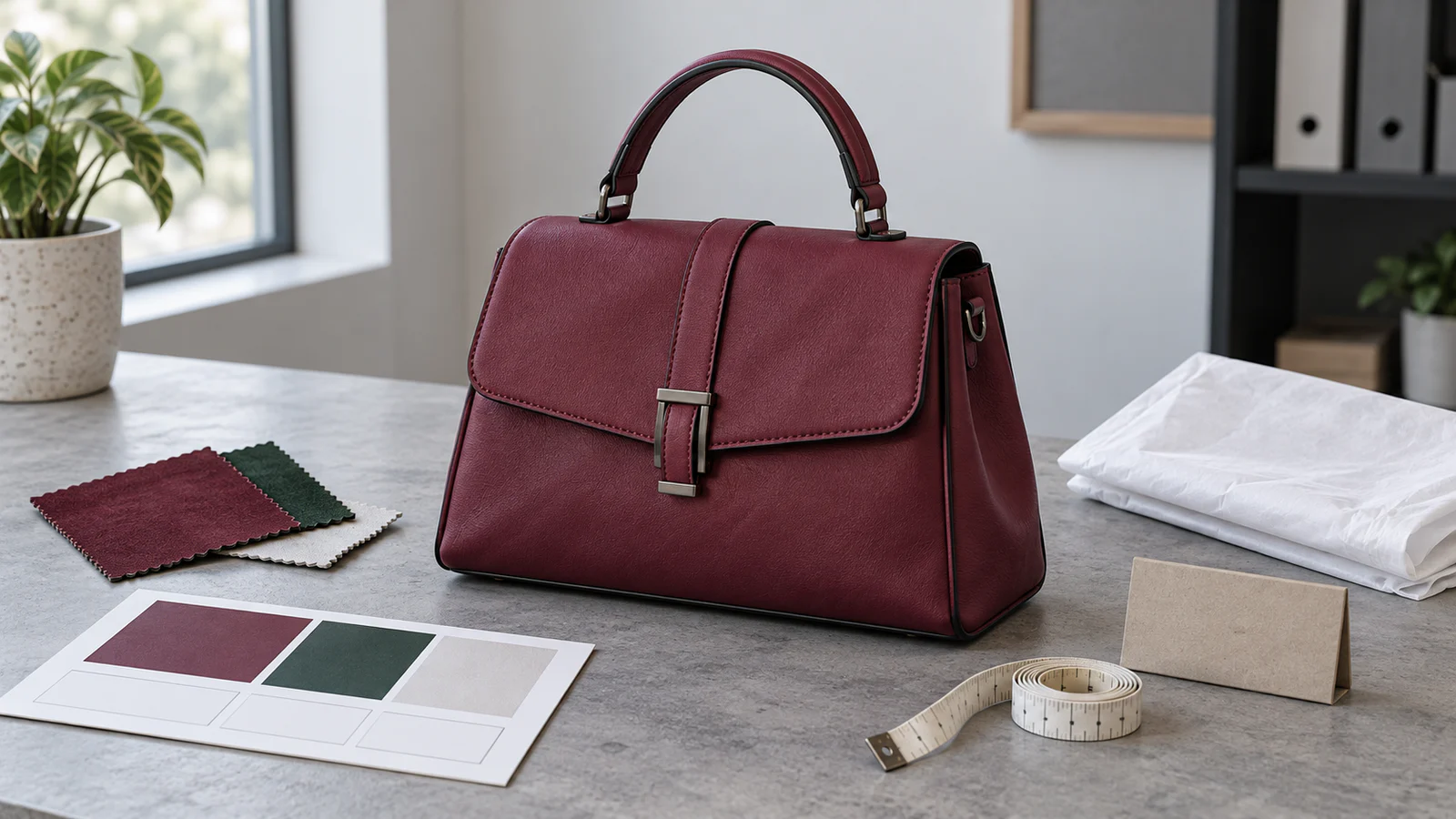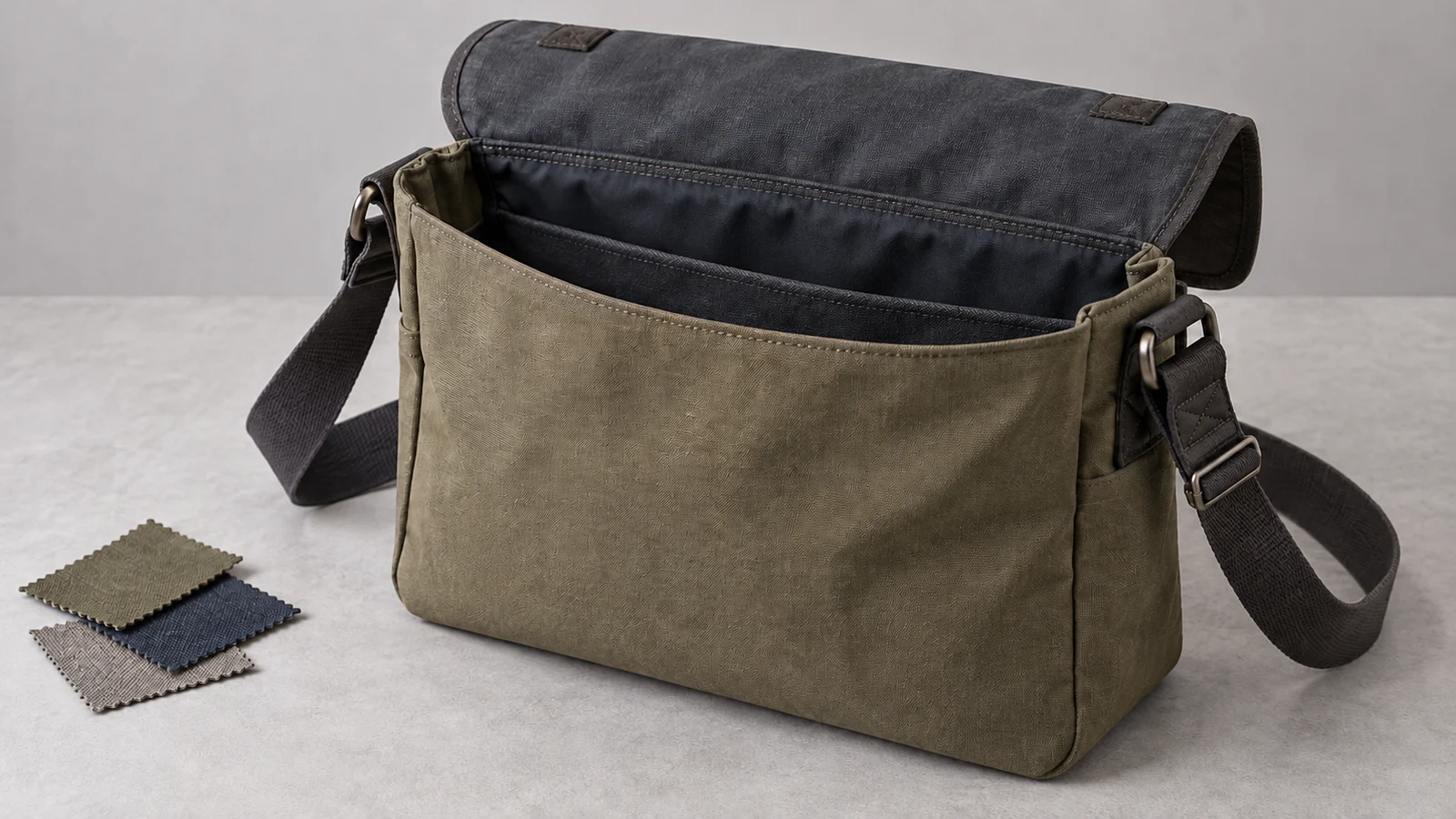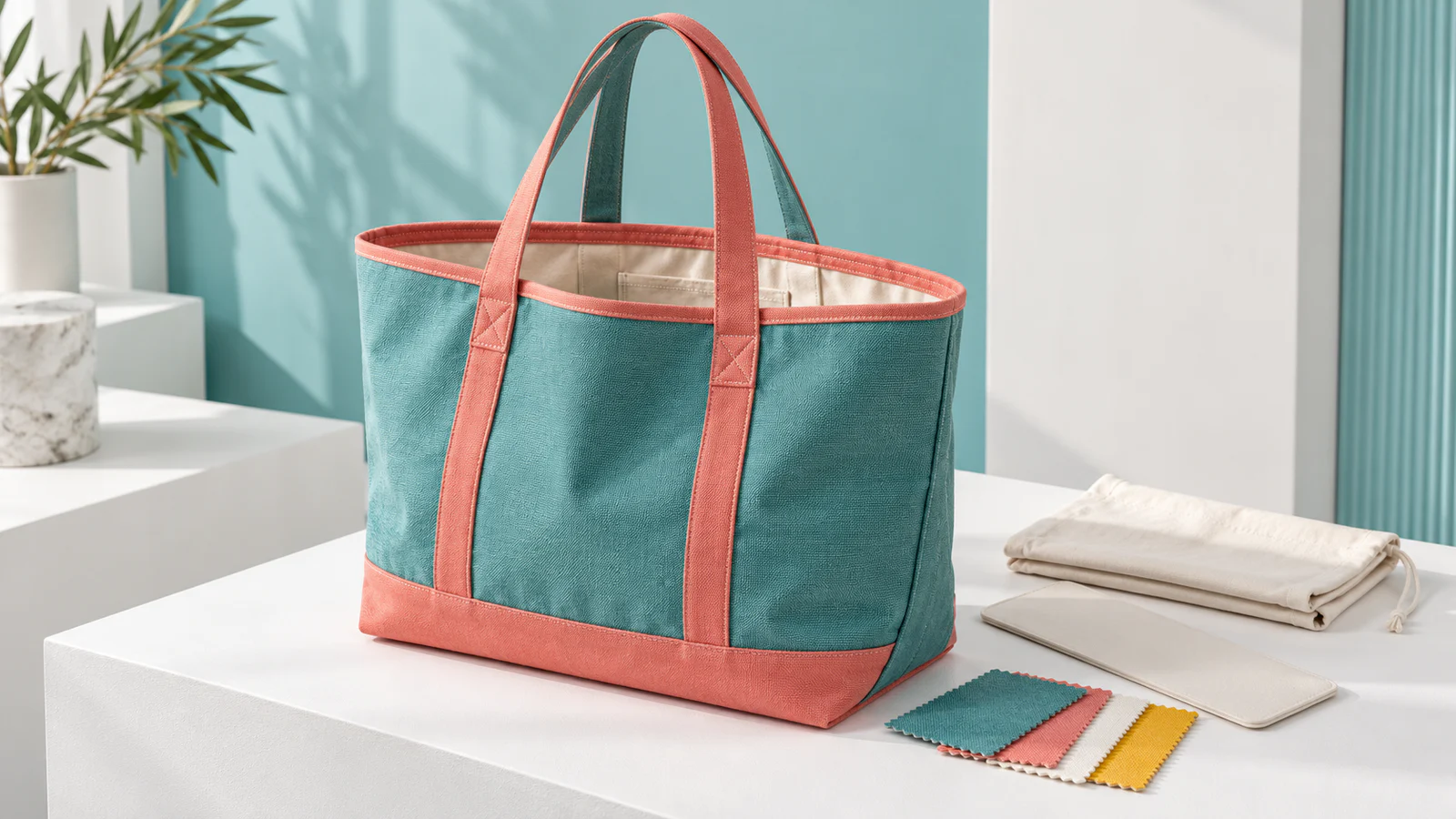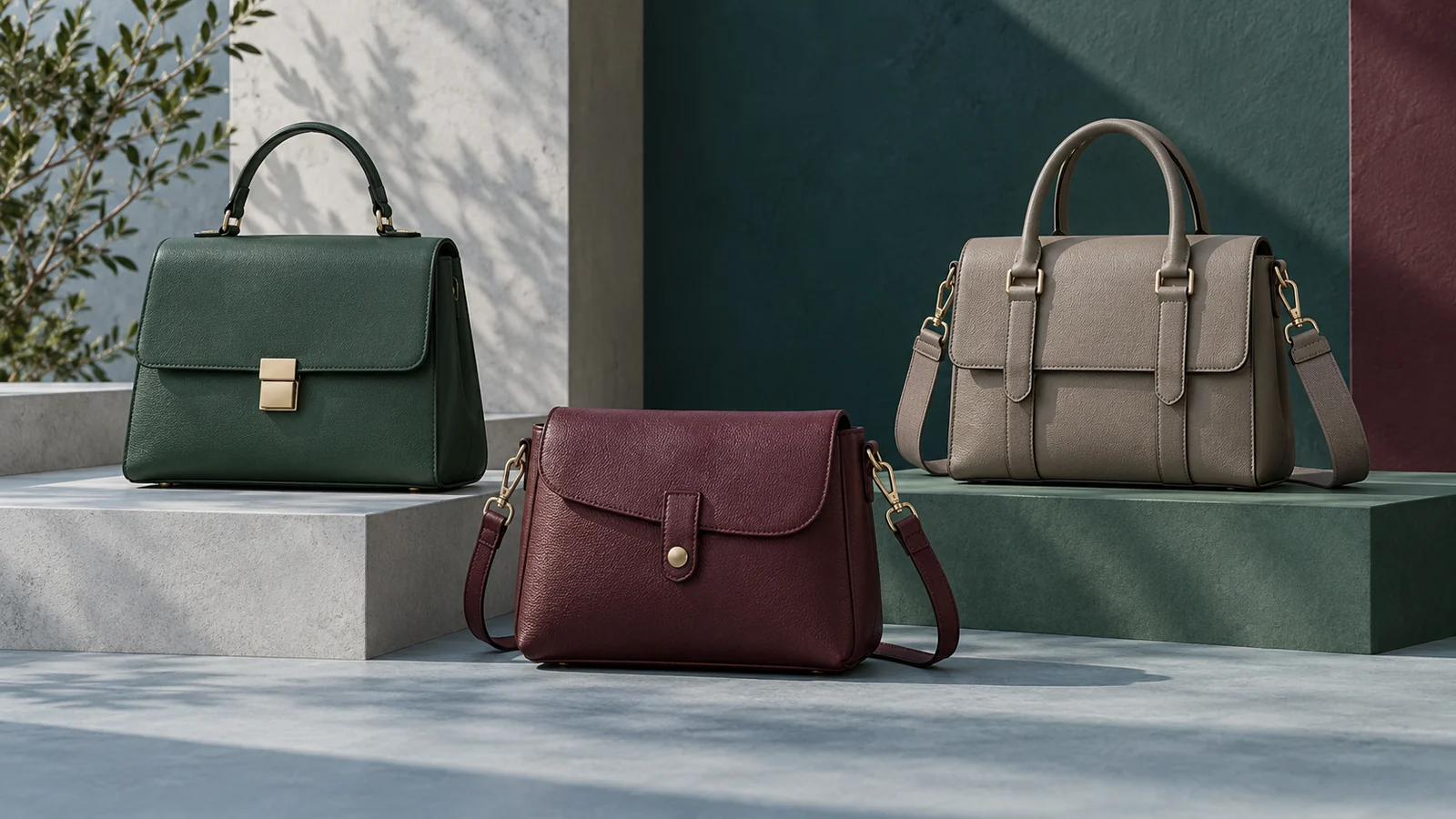
A satchel reference tells a supplier the direction, but not enough to price the same bag you have in mind. Two similar fronts can hide different flap coverage, opening widths, strap connections and compartment layouts. Those differences change what must be developed and what a buyer should inspect. Useful satchel bag wholesale specifications therefore connect four decisions: how the flap moves, how the closure meets, how the bag is carried and how its interior is divided. Start with those relationships, then add material and branding choices. This gives brand owners, wholesale buyers and sourcing managers a clearer basis for comparing quotations, without pretending that a photograph is a finished production specification.
Define the Satchel Before You Request a Quote
Mark body width, height and depth, flap depth and side coverage, and opening width with the flap lifted. State whether there is a top handle, whether the strap is fixed or detachable, the gusset shape and the compartment count. A rounded side and a divided interior should not be left for a supplier to infer from a straight-on view.
| Reference image alone | Quote-ready input |
|---|---|
| Closed front view | Front, side, back and open views with measurement points |
| Visible closure | Operating mechanism, position and finish direction |
| Strap shown in one position | Intended carry modes, adjustment and attachment details |
| A glimpse of lining | Compartment sequence and pocket-location sketch |
Label each reference with what to retain and what to change. If one photograph shows the desired flap and another the interior, say so. Otherwise, a quotation may include a feature you only meant as visual background. Mark unknown dimensions as open questions rather than inventing them.
Flap Geometry Controls Access and Shape
Full, Partial and Split-Flap Decisions
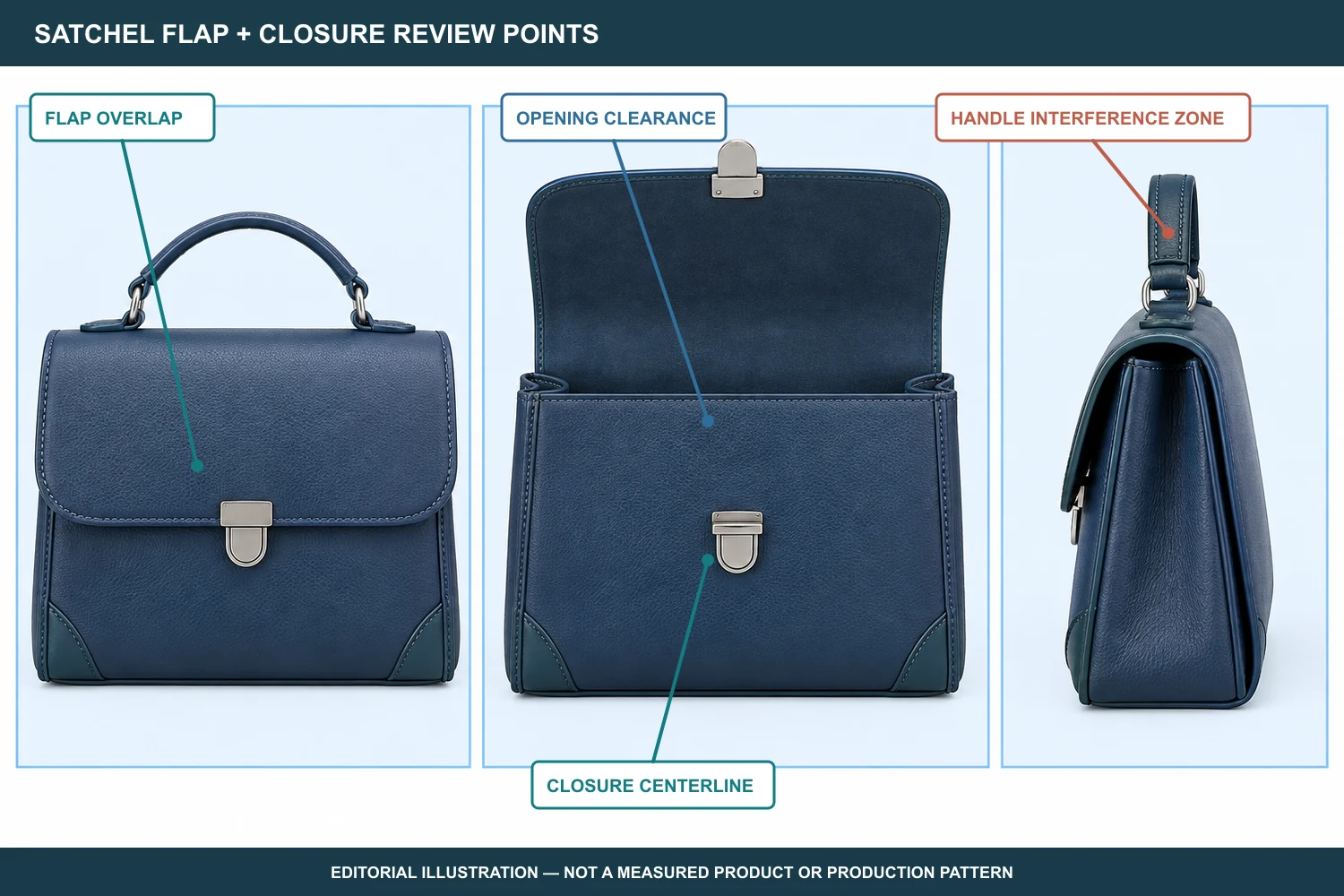
Identify how much of the front and sides the flap should cover. For a partial flap, mark the exposed area; for a split arrangement, show which parts move separately. On front and side drawings, identify overlap, corner shape and visible edge treatment. State whether the lifted flap should retain a defined line or fold back more softly. These are sample-review targets, not properties established by the silhouette name.
Opening Clearance and Handle Interference
Draw the flap in its open position, with the handle and strap attachments still visible. A closure can release correctly while the handle obstructs the flap or the opening remains awkward to reach. If you have a physical reference, a short opening video can explain the sequence better than another closed photograph. Mark the access you need without prescribing an unsupported universal clearance.
What to Check on the First Sample
View the closed bag straight on: is the flap centered, and is the visible edge reveal consistent with the agreed drawing? Open it through the intended movement and check for handle contact. Compare closure alignment both empty and with the agreed trial contents. Record any difference with photographs; forcing the closure together can conceal the issue you need the supplier to review.
Choose the Closure as a System, Not a Decoration
A magnetic snap, turn lock, buckle-style fastening and zipper under a flap create different opening sequences. Specify the actual mechanism: a decorative buckle over a hidden snap is not the same as a working buckle. Decide whether one-hand access is a sample-review expectation and how visually prominent the hardware should be.
- Magnetic snap: mark both mating positions and inspect how they meet without pulling the flap sideways. Ask how the fitting and its backing will be accommodated.
- Turn lock or working buckle: confirm operating clearance, alignment, access behind the component and the proposed backing. Review any logo detail alongside the closure position.
- Zipper under flap: show both opening paths. Check that the lifted flap leaves room to reach the pull and that the compartment arrangement does not obstruct it.
Ask which component is proposed, whether it is standard or needs custom tooling, and what replacement options would require review. Use the handbag hardware finishes guide for finish decisions. Appearance and a successful sample opening do not establish a durability test result.
Specify the Carry Modes and Their Interaction
Top Handle Only
Treat the handle as part of the opening sequence, not an isolated feature. Confirm where it rests when the flap is lifted and how the bag balances when carried. The top-handle bag specification guide covers general handle measurements and attachments; here, the priority is their interaction with the flap. The top-handle bag collection can help identify references, not confirm their internal construction.
Shoulder or Crossbody Strap
Specify fixed or detachable, the required adjustment range, attachment positions and hardware finish. State whether packing should leave the strap attached or separate. Browse the crossbody bag collection for carry-direction references, but confirm dimensions on the selected item. Do not assume that adding a longer strap converts an existing design into an approved crossbody version.
Dual-Carry Sample Review
Try both intended modes with the same agreed contents. Observe hanging angle, flap alignment, clip contact with the body and access around the top handle. If one mode works but the other does not, identify which relationship needs revision before approving the combined design.
Plan Compartments Around the Opening
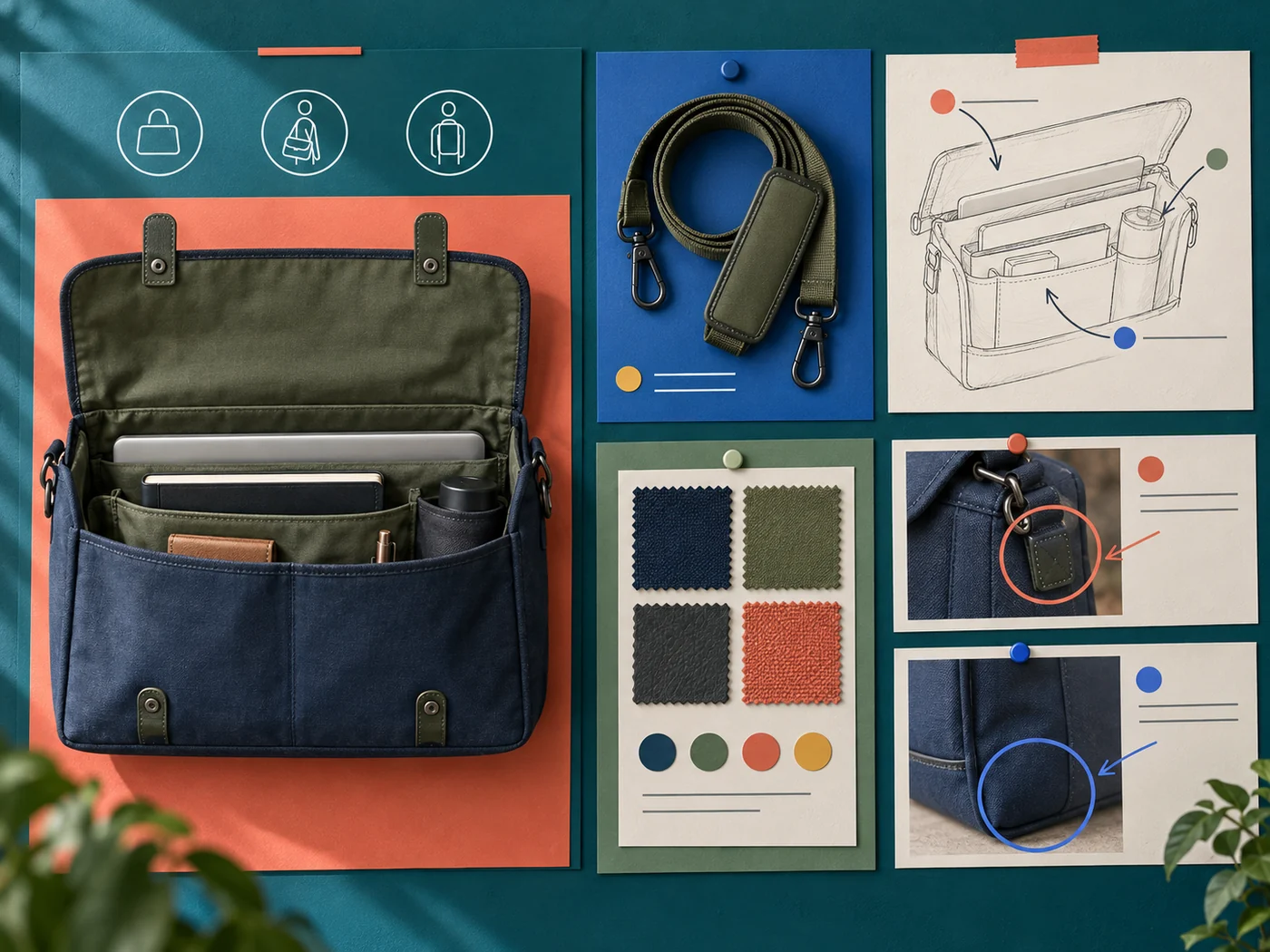
A divider, center zip compartment or thick pocket panel can leave less room to reach through the opening. Specify compartment sequence from front to back, pocket type and location, lining direction and whether the divider should be soft or help define the structure. Draw these together rather than requesting extra pockets after the exterior sample is settled.
Example input format, not a product claim: Front compartment: open; center: proposed zip divider; rear: open with one slip pocket; lining: buyer reference pending; divider support: supplier proposal for review.
For item-fit requirements, provide actual dimensions or an agreed physical reference. Check insertion and removal through the completed opening, not just space inside an unclosed bag. An interior that holds an item may still make it difficult to retrieve.
Match Material and Reinforcement to the Intended Silhouette
Compare genuine leather options, PU/vegan leather or textile directions against the same flap and body targets. A material category alone does not specify stiffness, thickness, finish or how the assembled flap will move. Review outer material, lining, reinforcement and edge construction together on the sample.
Reinforcement can help retain bag shape: Texon's bags and belts overview describes that function for its bag reinforcement materials. This is general technical context, not evidence that Christori uses those materials or has tested this design. For the broader support framework, see the handbag structure and reinforcement guide.
Describe the desired result by area: a front that holds its outline, a flap that bends at the intended point, or a divider that remains flexible. Let the supplier propose a construction for review rather than assuming that additional stiffness improves every part.
Select the Right Sourcing Route
| Route | Buyer starts with | What can be confirmed first |
|---|---|---|
| Ready Stock / Wholesale | Existing product and supplier information | Actual style, current material/color choices, order terms and packing for that item |
| Existing-style customization / ODM | Base style plus requested changes | Feasibility of logo, color, lining, hardware or packaging changes |
| OEM / Product Development | Sketch, reference, AI image, tech pack or sample | Quote range after structure, materials, dimensions and customization inputs are clarified |
For ready-stock handbags, start with the selected item rather than assuming a new flap or divider can be added. References among wholesale shoulder bags may help narrow the carry format, but current availability still needs confirmation.
For customization, separate changes to appearance from changes to geometry. Moving a closure or changing a compartment can affect the sample beyond that single detail. MOQ depends on material, construction and customization scope; ready-stock order terms are separate. Share an estimated quantity for project review, or flag it as undecided. You can begin the discussion before finalizing it.
Satchel RFQ Checklist
Send a coherent reference package, with unresolved choices clearly marked:
- Front, side, back and open-position views.
- Body width, height and depth, plus flap measurements.
- Closure mechanism, position, finish and any logo detail.
- Top-handle and strap configuration, including adjustment needs.
- Outer material, lining and color references.
- Compartment sequence and pocket-location sketch.
- Shape and hand-feel targets by area.
- Marked branding positions and available artwork.
- Packing direction, including strap placement and flap protection.
- Estimated quantity by style/color if known, destination and preferred timing for review, not as promised delivery terms.
Separate must-have functions from optional changes. Suppliers can then identify which assumptions affect a comparison instead of silently quoting different versions. Date the reference package and ask the quotation to identify its version, inclusions and unresolved points.
First-Sample Approval Checks
Review the sample against that same reference version. Photograph it before making corrections, then separate a specification mismatch from a new design preference. This keeps the next revision understandable.
| Area | What to observe | What to send back |
|---|---|---|
| Flap | Centering, overlap and edge reveal | Front/side photos with measurement points |
| Closure | Alignment empty and with trial contents | Close-up plus a short operating video |
| Opening | Access around flap, handle and zipper | Open view with the obstruction marked |
| Carry modes | Hanging angle and clip contact | Photos in each intended mode |
| Compartments | Sequence, access and agreed item fit | Interior sketch with differences noted |
| Packed shape | Flap position, handle contact and loose hardware | Before/after-unpacking photos and proposed changes |
Use the same contents and reference positions for repeat checks. Before bulk approval, confirm the revised sample or agreed corrections, material/color selections, closure component, strap inclusion, branding and packing. Make exceptions explicit. These visual and functional checks do not replace separately agreed performance or transport testing.
Frequently Asked Questions
What information does a factory need to quote a custom satchel bag?
Begin with the exterior and open-position references, target dimensions, flap and closure direction, carry modes and compartment sketch. Add material/color preferences, branding, destination and any known quantity estimate. Identify unknowns instead of filling them with guesses. A supplier can review the direction first, then clarify the details needed for a comparable quotation. A reference picture alone leaves too many construction assumptions open.
Can a ready-stock satchel be customized with a logo or packaging?
Sometimes, but confirmation belongs to the selected item and requested change. Share the exact style reference, logo placement or packing idea, and ask what is feasible. A finished bag may not offer the same access for branding as a bag under development. If a change requires altering construction, treat it as a separate customization discussion rather than assuming it is included in the stock order.
Should a detachable strap be included in the first sample?
Yes, when it is part of the intended product, request it with the relevant attachments so the carry system can be reviewed together. A body-only sample cannot show hanging angle, clip contact or how the strap interacts with the handle and flap. If the sample uses a substitute strap or fitting, record that limitation and confirm how the final combination will be reviewed before approval.
Does every custom satchel use the same MOQ?
No. Material, construction and the scope of changes affect the project's quantity discussion. Ready-stock terms apply to the available item and should not be treated as a custom-development threshold. Share a target quantity if you have one; an undecided quantity need not stop an initial review. Ask which choices affect feasibility before fixing the assortment, rather than assuming one number applies to every style and color combination.
Prepare Your Satchel Review Package
Prepare your Satchel references, target dimensions, flap and closure choice, carry modes, compartment sketch, material direction and quantity per color. Send the package to Christori for a ready-stock, existing-style customization or product-development review.
Unresolved choices can be included as questions; the first discussion does not require a finished specification.